
Žaltys: Žaltys is a revered household spirit depicted as a small, green grass snake in Lithuanian mythology.
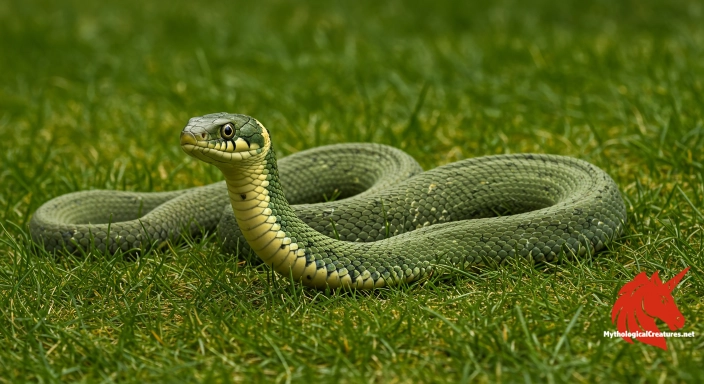
Žaltys
Žaltys - Žaltys plays a vital role in Lithuanian household traditions as a protective spirit that ensures fertility, prosperity, and the well-being of the family, while its mistreatment is believed to bring misfortune.
Origins & First Encounters
The žaltys is a captivating household spirit rooted deeply in Lithuanian mythology, celebrated as a sacred grass snake that embodies both protection and fertility. It is intimately connected to the sun goddess Saulė, forging a link between celestial power and earthly well-being. Revered as a guardian of the home, the creature’s presence was believed to secure prosperity and ensure bountiful harvests. Its origins lie within ancient Baltic pagan traditions that revered nature and the cycles of life. Over time, it emerged as a symbol of domestic stability, with households cherishing the snake as a benevolent pet positioned near the warmth of the stove. The ritual of nurturing the creature with offerings such as milk underscores its perceived role as a divine intermediary. Tales of misfortune following any harm to the žaltys further reinforced its protected status among families. The snake’s mystical allure was enhanced by its blend of everyday presence and sacred symbolism, a contrast that highlights its dual role in everyday life and spiritual practice. Its veneration is maintained by an intergenerational transmission of folklore that integrates practical agrarian wisdom with mythic narratives. The enduring legacy of the žaltys continues to shape Lithuanian cultural identity, echoing the ancient respect for natural forces that govern human life.
Source Texts & Tale Variants
Historical accounts of the žaltys are woven into the rich fabric of Lithuanian folk tradition, where oral narrations and local legends have kept its memory alive across centuries. Early ethnographic records glimpse at the creature as a benign spirit, revered in household rituals and passed down by word of mouth. Multiple story variants exist, with some versions presenting the snake as an active guardian of domestic spaces, and others casting it as an omen with a broader cosmological role. These accounts, gathered by folklorists and early chroniclers, lend depth to the myth as they capture subtle regional differences and ritual practices. Narratives often describe encounters with the snake, emphasising the practice of offering milk as a token of friendship and respect. Despite the fragmented nature of the surviving records, the recurring motif of protection against misfortune underscores the creature’s revered position. Local compendiums of folk beliefs provide diverse portrayals, some linking the snake more closely to the sun deity, while others focus on its fertility blessings. The interplay between oral tradition and later written texts has allowed the myth to adapt and endure, maintaining vibrant significance in communal memory. Variations in the stories not only reflect regional cultural nuances but also a shared understanding of the natural world’s sacred mysteries. This wealth of narrative detail confirms the žaltys as a multifaceted emblem in the Lithuanian mythological landscape.
Form & Powers
The physical depiction of the žaltys is as subtle as it is symbolic, often imagined as a modest snake with an unassuming yet graceful presence. It is generally rendered as a slender creature with a sinuous form that mirrors its association with the fluidity of life and nature. Its scales are often described as shimmering in hues of green, brown, or even copper, reflecting the radiant energy of the sun goddess. The creature’s body is marked by delicate patterns that evoke the intricacies of natural design, imbuing it with an almost ethereal quality. Observers in folklore speak of its mysterious eyes, which seem to hold a glimmer of ancient wisdom and a spark of divine light. Though not imposing in size, the snake’s gentle elegance has made it an ideal emblem for domestic protection and growth. Artistic representations over the centuries have highlighted its subtle luminance and the tactile quality of its scales, which are thought to echo the elements of the earth. In some depictions, the creature is portrayed with a slight, almost imperceptible glow that suggests its otherworldly nature. This nuanced blend of earthly form and magical aura reinforces the notion that the žaltys embodies both natural beauty and the sacred essence of life. Its physical appearance, therefore, serves not only as a biological image but also as a conduit for spiritual and cultural symbolism.
Regional Faces
Across the varied landscapes of Lithuania, the legend of the žaltys takes on distinctive local flavours that mirror the subtle differences in regional traditions. In some areas, particularly in the west, the creature is celebrated with intimate household rites that elevate it to a position of domestic honour and fertility. In the eastern regions, folklore sometimes imbues the snake with additional attributes, portraying it as a messenger between the human and supernatural realms. Such regional adaptations reflect local agricultural practices and seasonal cycles, where the presence of the snake is interpreted as an auspicious sign for the upcoming harvest. In certain communities, the rituals of nurturing the creature with milk have been refined into ceremonial acts, reinforcing the bond between the family and the spirit. Variations in its appearance, as recounted in local tales, sometimes include distinctive markings or size differences that symbolise the unique natural environment of the area. Some villages even contain specific legends that position the žaltys alongside other household deities, integrating it into a wider tapestry of protective spirits. These localized narratives enrich the overall myth by weaving together elements of nature, tradition, and community wisdom. The adaptive nature of the myth points to a rich propensity for cultural exchange within and beyond Lithuanian borders. Ultimately, the regional stories underscore how geographical and social contexts can shape and diversify a singular myth in multifarious ways.
Cultural Parallels
The role of the žaltys as a household protector and symbol of fertility finds comparable echoes in the mythologies of other cultures, revealing a cross-cultural fascination with serpentine guardians. Similar to the revered naga in South Asian traditions, the žaltys bridges the gap between the natural world and the divine, serving as a benevolent mediator in both domains. In various European folklores, serpents often appear as enigmatic figures that oscillate between representing danger and symbolising regeneration, much like the dual nature of the žaltys. The creature’s protective qualities bear a resemblance to household spirits found in Slavic myth, where lore intertwines domestic prosperity with the safeguarding presence of natural beings. Comparisons extend to ancient Mediterranean cultures where sacred snakes were venerated in temple settings, highlighting a widespread belief in the sacredness of serpentine creatures. These parallels underscore a shared symbolic language in which the natural and supernatural converge to protect the home and ensure fertility. Such comparative reflections suggest that the veneration of the snake is not isolated to one tradition but resonates across various cultural landscapes. The recurring themes of nourishment, protection, and the cyclical nature of life are common denominators that bind these mythic narratives together. Through these cross-cultural connections, the myth of the žaltys acquires a broader significance, emphasising humanity’s universal quest to harness the fortuitous forces of nature. This comparative lens enriches our understanding of the creature, placing it within a global context of myth and ritual where the sacred and the mundane are inextricably linked.
Legacy & Modern Evolution
The historical evolution of the žaltys reveals a transformation from a primarily rural, domestic deity into a modern symbol of national identity and cultural continuity. While ancient traditions cast the creature as a vital household guardian, contemporary interpretations often celebrate it as a living emblem of Lithuania’s pagan heritage and connection to nature. Modern artistic and literary works have embraced the gentle, mystical qualities of the žaltys, reimagining it as an icon of environmental awareness and domestic harmony. Contemporary festivals and cultural events occasionally feature the myth of the snake, inviting renewed interest in folk rituals and ancestral wisdom. As traditional practices have waned, there has been a conscious revival of interest in pre-Christian symbols that emphasise the sacredness of daily life. This resurgence is evidenced by new interpretations in visual arts, theatre, and community rituals, which highlight the timeless appeal of the domestic guardian. Researchers and storytellers continue to explore the layered meanings of the creature, drawing links between historical narratives and modern ecological sensibilities. The reinterpretation of the žaltys in modern contexts serves as a reminder of the enduring human need to find meaning in natural phenomena. Its myth has gradually transcended local folklore to become a celebrated part of national cultural heritage. Hence, the legacy of the žaltys represents not just a continuity of mythic tradition, but a dynamic symbol that evolves with the changing values and aspirations of society.
Interesting Fact
Killing a žaltys was traditionally believed to bring great misfortune, emphasizing its revered and sacred role in Lithuanian households.
Sponsor this space
Tasteful, fixed-fee placements for myth projects
No bidding wars or flashing banners. We offer simple placements for a small set of creators and brands aligned with our readers.
Request further detailsQuick Creature Info
Features:
Associations:
Our Mythic Legendary Rating:

Also Sometimes Known As:
Habitat:
Supernatural Powers:
Physical Attributes:
Abilities:
Behavior:
Weaknesses:
Lore:
Related Creatures, Tales or Lore
- DDomovoi
- LLares
- NNāga
References
Discover Another Mythical Legend You May Not Have Heard Of?
Uncover the mysteries of ancient folklore and expand your knowledge of legendary beings from cultures around the world.
Dare to Meet the Ifrit....

Curated by the Mythological Creatures Team
Series editor: Mythological Creatures Directory
Primary desk: Northern & European Folklore Desk
(rev. November 2025)