
Mucilinda: Mucilinda is a revered nāga from Buddhist mythology, famed for protecting Śākyamuni Buddha with his expansive hood during a torrential downpour.
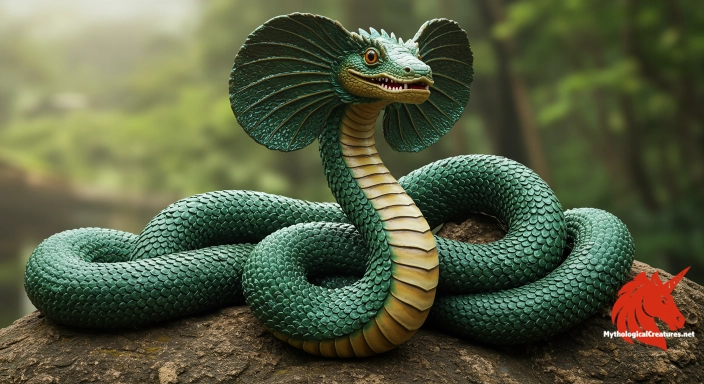
Mucilinda
Mucilinda - Represents divine protection and the interconnection between nature and spirituality in Buddhism.
Origins & First Encounters
Mucilinda is a revered nāga in Buddhist mythology whose legend centres around his profound benevolence and protective nature. Rooted in ancient Indian tradition, his earliest narrative emerges from the rich tapestry of Buddhist scripture and iconography. Mucilinda is celebrated as the guardian who sheltered Śākyamuni Buddha during a torrential storm following his enlightenment. Emerging from beneath the earth, the serpent king is depicted as a cosmic protector whose intervention symbolises both compassion and the sanctity of nature. His tale is intimately tied to the transformative moment in the Buddha’s life, marking a convergence between supernatural grace and human endeavour. Deeply embedded in Sanskrit and Pali traditions, his name resonates across centuries of devotional art and storytelling. Mucilinda’s role as a divine caretaker reflects the spiritual belief in natural forces as manifestations of higher wisdom. The myth serves not only to provide shelter but also to remind devotees of the interconnectedness between humanity and the natural world. His legend has been vividly recounted in scriptures, oral traditions, and ancient sculptures alike, securing his place in the spiritual imagination. The narrative continues to inspire, offering comfort and a timeless emblem of nature’s nurturing capacity.
Source Texts & Tale Variants
Mucilinda’s story is preserved in a variety of ancient Buddhist texts and has been transmitted through both written and oral traditions. Several canonical accounts, including portions of the Pali Suttas and later Mahayana scriptures, recount his miraculous intervention during a deluge that threatened the Buddha. Although the details may vary slightly across sources, the central storyline remains intact: a mighty serpent emerges from the depths to shield the enlightened one from the elements. Some variants of the tale place special emphasis on his subsequent transformation into human form, highlighting the dual aspects of his nature. Over time, these texts found expression in illuminated manuscripts, temple murals, and stone carvings, each adding layers of cultural nuance to the myth. The transmission of his story across diverse Buddhist communities ensured that different regions added their own stylistic and thematic touches. In some records, his protective act is interlaced with auspicious celestial signs and symbolic numerology. The narrative has been subject to reinterpretation by later commentators who sought to weave its spiritual lessons into broader cosmic themes. Multiple story variants underscore his role as both an awe-inspiring guardian and a humble servant of the Buddha. Such enduring accounts have helped cement Mucilinda’s place as a timeless figure in Buddhist lore.
Form & Powers
Mucilinda is often depicted with a sinuous, elongated body that seems to flow like water and shimmer with the mystical glow of ancient myth. His form is intricately adorned with scales that catch and refract light, often compared to the brilliance of polished gemstones. Central to his iconography is a broad, majestic hood that unfurls like a protective canopy over the Buddha, symbolising a shelter crafted by divine power. Numerous artistic renditions capture the interplay of strength and grace in his visage, merging natural elegance with regal authority. In some traditions, multiple heads surround his form, each head conveying a facet of his profound wisdom and vigilant guardianship. His overall physique, rendered as both enormous and fluid, suggests an ability to envelope and protect with a single graceful gesture. Fine embellishments along his body—such as subtle ornamental motifs and delicate vine-like patterns—further underscore his connection to the natural realm. Every detail of his appearance is deliberately designed to evoke both awe and reassurance, reflecting the dual nature of being formidable yet benevolent. His image is a blend of earthly craft and celestial design that invites contemplation of nature’s interplay with spiritual realms. Through these visual elements, Mucilinda continually comes across as both an imposing protector and a gentle nurturer.
Regional Faces
Mucilinda’s myth has travelled across cultural and geographical borders, acquiring distinctive local flavours along the way. In the Indian subcontinent, he is traditionally portrayed as a grand serpent with an expansive hood, his image often carved into the stone of ancient temples. Southeast Asian renditions, found in countries such as Thailand and Cambodia, frequently incorporate a slightly more anthropomorphic quality, reflecting local artistic sensibilities. In Chinese and Japanese Buddhist art, his portrayal has softened; delicate brush strokes and refined contours capture his compassionate essence without losing the inherent majesty of his form. Tibetan traditions sometimes fuse indigenous mythic elements with classical Buddhist iconography, resulting in a version of Mucilinda that appears both otherworldly and intimately connected to the earth. Local lore in various regions also hints at his transformative abilities, with some stories accentuating his moment of assuming human form. This diversity in depiction is often mirrored in the medium—from monumental stone reliefs to intricately crafted metal or wood sculptures. Despite stylistic differences, every regional portrayal underscores his role as a benevolent guardian who offers refuge and comfort. The variations highlight not only differing aesthetic preferences but also the universality of his message across cultures. In every adaptation, Mucilinda remains a powerful symbol of protection, resonating with devotees in a uniquely local yet globally recognisable manner.
Cultural Parallels
Mucilinda’s role as a guardian serpent finds rich parallels in mythologies around the world, making him a fascinating subject of comparative analysis. Similar to the Hindu nāgas, who are celebrated as custodians of water and earth, he embodies the inherent belief that powerful natural forces can also be gentle custodians. His protective act echoes the ancient imagery of serpentine deities from various cultures who shield sacred figures or locations from harm. In East Asian mythology, creatures such as dragons carry a dual role of fierce might and benevolence, mirroring the contradictory yet harmonious aspects of Mucilinda’s character. His ability to transform, assuming a human guise after his heroic deed, resonates with themes of metamorphosis evident in numerous mythic narratives worldwide. This chameleon-like quality not only bridges the gap between the natural and the supernatural but also emphasises a universal respect for the transformative power of nature. In many Indigenous cultures, serpents hold the status of spiritual intermediaries, a role that reinforces the symbolism inherent in Mucilinda’s legend. The cross-cultural presence of such protector figures suggests an enduring human fascination with nature as both a threat and a guardian. By comparing these diverse mythological depictions, one can witness how similar motifs surface independently across cultures. Ultimately, Mucilinda’s narrative encapsulates a universal archetype of protection and transformation that transcends geographic and cultural boundaries.
Legacy & Modern Evolution
The evolution of Mucilinda’s image reflects a captivating journey through history, from ancient scripture to contemporary reinterpretation. Initially immortalised in early Buddhist texts and temple carvings, his myth played a pivotal role in manifesting the theme of divine protection in the wake of enlightenment. As Buddhism expanded its influence across Asia, his depiction absorbed local artistic elements, making each iteration a unique blend of tradition and innovation. His presence graced everything from elaborate stone reliefs to delicate paintings, echoing the story of a protective force that transcended time. In modern times, Mucilinda has emerged as a cultural icon, inspiring artists, scholars, and spiritual seekers alike to explore the interplay between nature and higher wisdom. Contemporary artworks, literature, and even cinematic portrayals draw upon his myth to symbolise resilience and the nurturing aspects of the natural world. Modern spiritual movements often invoke his image as a reminder of the sanctuary life can offer amid adversity. His transformative journey, from a fierce guardian to a symbol of compassionate protection, has lent itself to multiple layers of interpretation in the modern era. The timeless appeal of his narrative continues to foster a sense of wonder and reverence, bridging ancient tradition with the concerns of today. Mucilinda remains an enduring emblem of the dynamic fusion between spirituality and the natural environment, illustrating the potential for myth to evolve while retaining its core message.
Interesting Fact
An intriguing aspect of Mucilinda's legend is his seamless transformation from a formidable serpent into a humble human form, reflecting the dual nature of power and compassion inherent in Buddhist thought.
Partner with us
Sponsor this space
Reach thousands of mythology enthusiasts with a curated placement on our creature pages.
Learn about sponsorshipQuick Creature Info
Associations:
Our Mythic Legendary Rating:

Also Sometimes Known As:
Habitat:
Supernatural Powers:
Physical Attributes:
Abilities:
Behavior:
Lore:
References
Discover Another Mythical Legend You May Not Have Heard Of?
Uncover the mysteries of ancient folklore and expand your knowledge of legendary beings from cultures around the world.
Dare to Meet the Hemen....
Curated by the Mythological Creatures Team
Series editor: Mythological Creatures Directory
Primary desk: Asian & Pacific Myth Cycles Desk
(rev. November 2025)