
Muladona: The Muladona is a cursed hybrid creature from Catalan mythology, combining the body of a mule with the head and features of a woman.
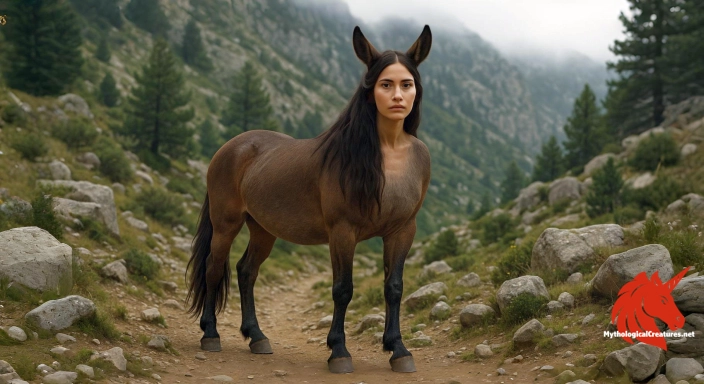
Muladona
Muladona - Represents the dire consequences of irreverence and serves as a cautionary figure in Catalan folklore.
the legend in five swipes.
the legend in five swipes.
Where in the world does the Muladona come from?
The Muladona emerges from the rich tapestry of Catalan myth as a figure both eerie and emblematic of moral consequence. She is portrayed as a cursed young woman whose irreverence towards societal and religious norms shaped her tragic transformation. Her myth is deeply imbedded in the rural imagination, evoking both fear and fascination among mountain dwellers. The creature’s dual nature – part human, part mule – symbolises the collision between human frailty and animal instinct. Her enigmatic voyage across the darkened mountain passes and mule trains underscores themes of exile and perpetual wandering. Local communities view her as a spectral presence that haunts the fringes of civilisation, mixing supernatural terror with cultural admonition. Over time, the Muladona has come to embody a cautionary narrative about the price of defying established social orders. Her story continues to inspire a blend of pity and dread, serving as a potent reminder of the consequences hidden within transgressive behaviour.
What are the earliest texts about the Muladona?
Oral tradition forms the cornerstone of the Muladona’s narrative, with many local anecdotes handed down through generations in the Catalan highlands. Folklore collected by regional scribes and rural historians has preserved variant retellings that differ in minute yet significant details. Some versions detail her origins as a young woman ostracised by her community, while others focus on the mysterious power that compels muleteers to recount her dreadful influence. Folktales and local sermons alike have highlighted her ability to unsettle even the most stoic mule herds. Chroniclers recount scenes where the creature mingles with everyday life, a spectral interloper in the mundane routines of mountain travel. Manuscripts and ballads portrayed in rustic festivals further serve as a testament to her enduring presence in popular memory. The transmission of her legend through storytelling sessions in village squares underscores a narrative shaped by community anxiety and moral instruction. Diverse story variants reinforce the notion that even within a limited corpus, the Muladona remains a fluid and multifaceted symbol.
How did the old accounts describe the Muladona?
The Muladona is described with a striking blend of human and equine features, where the familiar form of a mule is transformed by distinctly anthropomorphic attributes. Her head, unmistakably that of a woman, bears delicate yet haunting human features that contrast sharply with the rugged mule body. The flowing mane, often reminiscent of wavy hair, cascades down in a way that suggests a forgotten beauty overtaken by curse. In many depictions, her face straddles the fine line between animalistic and human, making her both mesmerizing and unnerving. Notably, she is consistently depicted with all four mule legs, though some representations merge the forelegs into a thoracic structure that complicates her form. The inclusion of feminine characteristics such as pronounced breasts serves as an unmistakable marker of her gender. Her eyes are sometimes illustrated as unearthly and luminous, radiating a spectral glow that deepens her mythic presence. The overall scale of the creature may vary in local renditions, yet every account emphasises the uncanny union of human elegance with the sturdy form of a mule.
Where is the legend of the Muladona strongest?
The portrayal of the Muladona exhibits fascinating regional nuances throughout Catalonia and its neighbouring areas. In the rugged interior, rural storytellers imbue her with an even more supernatural aspect, emphasizing her dread-inspiring aura during the nocturnal hours. In some valleys, she is seen as a tragic figure whose sorrowful gaze reflects both lost humanity and the burden of a vile curse. Coastal and urban adaptations, however, sometimes soften her menace, infusing the narrative with elements of pathos and inevitability. Different mountain communities have established unique rituals and preventive customs to ward off her disruptive influence on mule herds. Local interpretations occasionally recast her as a spectral guardian of secret nature, whose appearance foretells natural omens. The cultural canvas of the region allows her image to be fluid and adaptable, moulding to the specific social anxieties of each area. Across these diverse retellings, her core identity remains, yet every version resonates with the distinct environmental and communal sensibilities of its origin.
How does the Muladona compare to figures in other traditions?
The Muladona shares intriguing parallels with other mythic entities found across European folklore, where the boundaries between human and animal are purposefully blurred. Similar to creatures in Mediterranean legends that blend beauty with monstrosity, her form reflects the recurring theme of punishment and transformation. The duality observed in her likeness invites comparisons to werewolf myths and other shapeshifting entities, where the curse of the flesh becomes a powerful metaphor for inner turmoil. Her portrayal also bears a resemblance to hybrid figures from neighbouring Iberian narratives, albeit with a uniquely feminine twist that emphasises the dangers of social defiance. In contrast to many malevolent spirits, her story simultaneously conveys warnings and compassionate elements, recognisable in traditions that celebrate the frailty of human nature. This blend of horror and sympathy is echoed in similar cross-cultural myths where uncertainties about identity and morality are central. The Muladona’s myth, like many comparative figures, encapsulates the universal human struggle against imposed social norms. Her enduring presence in folklore mirrors a wider pattern of supernatural punishment imbued with lessons on societal conformity.
Where does the Muladona appear in films and games?
Over centuries, the image of the Muladona has undergone significant reinterpretation within Catalan cultural consciousness. Initially feared as a monstrous omen, she later evolved into a multifaceted symbol that invites both dread and empathetic reflection. Modern reimaginings have recast her not merely as a figure of vengeance but as an emblem of societal alienation and the complexities of female identity. Contemporary art and literature sometimes celebrate her as a tragic anti-heroine, whose curse reflects the harsh realities imposed by collective judgement. Local festivals and cultural exhibitions have embraced the myth, transforming her eerie narrative into an artistic exploration of transformation and redemption. The use of Muladona imagery in modern media underscores her role as a bridge between ancient myth and modern societal issues. As reinterpretations continue to emerge, her legacy offers insights into the fluid nature of folklore and its ability to adapt to changing moral landscapes. Ultimately, the Muladona endures as a potent reminder of how myth can evolve to mirror both historical anxieties and contemporary quests for understanding.
Interesting Fact
Muleteers would bake and distribute Muladona-shaped bread, a fascinating folkloric remedy designed to appease the creature and protect their mule trains from chaos.
Mythological Treasures
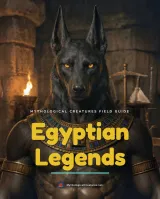
Egyptian Legends: A field guide to the gods and monsters of ancient Egypt
Guardians of the living and devourers of the dead, with the role each played in judgement.
Chinese Beasts: A field guide to the dragons and demon kings of Chinese myth
From river dragons to demon kings, with the legends that shaped five thousand years of storytelling.
Japanese Yokai: A field guide to the spirits and demons of Japanese folklore
Fifteen spirits, with the signs to watch for and what the old tales say to do if you meet one.
the legend in five swipes.
For myth educators and toolmakers
Built a resource for mythology learners?
If you offer courses, teaching tools, or research platforms focused on myth and folklore, consider a discrete placement on our reference pages.
Introduce your resourceQuick Creature Info
Features:
Associations:
Our Mythic Legendary Rating:

Also Sometimes Known As:
Habitat:
Supernatural Powers:
Physical Attributes:
Abilities:
Behavior:
Lore:
References
Discover Another Mythical Legend You May Not Have Heard Of?
Uncover the mysteries of ancient folklore and expand your knowledge of legendary beings from cultures around the world.
Dare to Meet the Lavellan....
The Mythological Creatures Book Series
Yokai, Greek, Norse, Egyptian & Chinese. Five illustrated field guides to the creatures the old stories either warned or told you about.


Curated by the Mythological Creatures Team
Series editor: Mythological Creatures Directory
Primary desk: Hellenic & Ancient Mediterranean Desk
(rev. November 2025)