
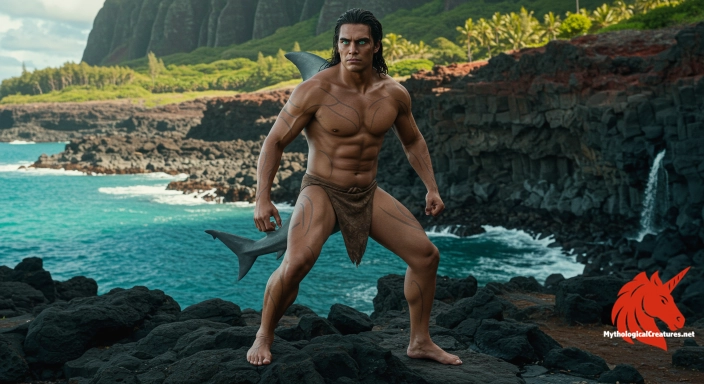
Nanaue: Nanaue is a demigod from Hawaiian mythology known for his unique hybrid form.
Nanaue
Nanaue - Represents the connection between humans and the ocean's formidable forces in Hawaiian lore
the legend in five swipes.
the legend in five swipes.
What culture created Nanaue?
Nanaue emerges from Hawaiian mythology as a captivating demigod whose story intertwines the human and the aquatic in a unique tapestry of myth and wonder. His origins are steeped in the ancient traditions of the Hawaiian people, where the forces of nature are personified and revered. Blessed – or perhaps cursed – with the mouth of a shark on his back, he symbolises the convergence of power, danger, and transformation inherent in the ocean itself. His dual nature speaks of a being who is neither entirely human nor purely marine, bridging two disparate worlds in one enigmatic figure. The myth of Nanaue is among the earliest oral traditions to explain the capriciousness of the sea and its influence on everyday life. Within the cultural context of Hawaii, his story was a reminder of the deep respect required to live in harmony with nature's unpredictable temperament. Many tales suggest that his existence was both a boon and a warning, embodying the potential for both life-giving protection and destructive force. Over time, his legend has been woven into the fabric of local spirituality, reflecting the ancient belief in a world where the boundaries between the divine and the natural are fluid and ever-changing.
Nanaue in the Historical Record
The primary sources chronicling Nanaue’s legend are rooted in rich oral traditions and ancient chants that have been passed down through generations of Hawaiian storytellers. These narratives, often recited during communal gatherings and rituals, paint a vivid picture of a demigod whose very being challenges the conventional distinction between man and beast. Early genealogies and mo‘olelo (traditional tales) mention his extraordinary features and his transformative powers, though no single written account monopolises his myth. Various versions of his story have emerged, some portraying him as a benevolent guardian of the sea, while others accentuate his fearsome and mysterious traits. In some tellings, his ability to shift into a giant shark is highlighted as a divine gift, a physical manifestation of his deep connection to the ocean. Lesser-known local variants add layers of nuance, at times emphasising his role as a mediator between the human world and the supernatural forces of nature. The fluidity of these narratives reflects the dynamic tradition of Hawaiian folklore, where each community adapted the myth to resonate with its specific cultural and environmental realities. Despite the lack of extensive written records, the oral transmission of his legend remains a crucial testament to its enduring power. The multiplicity of sources underscores the way in which Nanaue’s myth has evolved alongside changing historical and social currents in Hawaii.
What powers did Nanaue have?
Nanaue’s physical form is an arresting blend of human and marine characteristics, designed to evoke both admiration and trepidation. His most notorious attribute is the shark-like mouth positioned along his back, complete with rows of sharp, serrated teeth that seem to embody the predatory spirit of the deep sea. This unusual feature is not merely decorative; it serves as a potent symbol of the untamed forces of nature. His body is robust and muscular, suggestive of a life shaped by relentless oceanic currents and the harsh realities of both land and sea. Eyes that mirror the shifting colours of the ocean – sometimes a deep blue, sometimes a striking green – lend him an otherworldly gaze, capable of both allure and intimidation. Descriptions often mention his weathered, tanned skin, a subtle testament to the countless days spent under the tropical sun and amidst the spray of the surf. In moments of transformation, his physique transcends human limitations as he morphs into a massive, sleek shark, complete with powerful fins and a streamlined form ideal for navigating the underwater world. This duality in his anatomical design not only cements his status as a demigod but also underscores the profound interconnection between human existence and the elemental power of the ocean.
The Local Faces of Nanaue
Across the Hawaiian archipelago, variations of Nanaue’s legend reveal a rich diversity of local interpretations and adaptations. Some island communities revere him as a protective spirit whose shark-like transformations safeguard coastal villages from peril. In these regions, his myth is celebrated in local rites that honour the sea and its mysterious benefactors, reflecting the deep spiritual bonds between people and nature. Other communities depict him with a more ambivalent character, embodying both the nurturing and destructive aspects of the ocean through his unpredictable metamorphoses. In remote areas, Nanaue’s form may be rendered even more fantastical, with remote storytellers embellishing his physical features to align with local environmental symbols. This regional adaptability has allowed his myth to remain relevant, serving as both a moral and natural allegory unique to each locale. The subtle discrepancies in his portrayal highlight the multifaceted nature of Hawaiian oral traditions, where even a single demigod can be reframed to suit local cosmologies. Ultimately, the variations in Nanaue’s depiction honour the diversity of perspectives among the islands while reinforcing a shared cultural reverence for the enigmatic power of the sea.
Nanaue: Counterparts Around the World
Nanaue’s legend resonates with themes found in other mythological traditions, inviting comparisons with similar shapeshifters and sea-associated deities from lands far and wide. Much like the Maori taniwha – revered, feared, and considered guardians of their waterways – his dual nature reflects the complex balance between benevolence and ferocity. In the broader Polynesian narrative, figures such as Maui also engage with the elemental forces of nature, though Nanaue’s distinctive shark-like attribute sets him apart as singularly enigmatic. His capacity for transformation has parallels in Greek mythology, where deities often assume hybrid forms to channel the raw power of the natural world. The motif of blending human traits with those of a formidable marine creature is echoed in various cultures, symbolising the eternal human fascination with the unpredictable might of the sea. Across mythologies, such dualities emphasise the fine line between creation and destruction, echoing a shared cultural understanding of nature’s dual character. By comparing Nanaue to these figures, one can appreciate the universal archetype of transformation and the inseparable link between humanity and its environment. This comparative analysis not only deepens our understanding of Nanaue but also situates him within a global tradition of myth-making where divine metamorphosis is a timeless narrative device.
How has Nanaue changed over time?
Over the centuries, the story of Nanaue has transformed alongside the evolving cultural and environmental landscapes of Hawaii. Initially recounted through intimate oral traditions and communal rituals, his myth once played a central role in mediating the relationship between people and the natural world. With modern reinterpretations, artists, writers, and cultural practitioners have revisited his legend, imbuing it with fresh significance in an era marked by environmental concerns and a renewed appreciation for indigenous wisdom. Contemporary narratives often cast Nanaue as a symbol of resilience and transformation, embodying the spirit of a people determined to honour their heritage while facing modern challenges. Modern artistic depictions frequently highlight his striking duality – a reminder that nature, in all its beauty and brutality, remains an indomitable force. His image now appears in varied media, from visual art and literature to performance, each reimagining his attributes to resonate with current social and ecological themes. This ongoing evolution reflects the adaptability of ancient myths as they are reshaped to meet the needs of new generations. Nanaue’s enduring legacy stands as a powerful reminder of the timeless connection between myth, identity, and the natural world, continuing to inspire dialogue and creative exploration in a modern context.
Interesting Fact
Nanaue's extraordinary trait of having a shark mouth on his back challenges conventional human anatomy and underscores the rich symbolism of transformation in Hawaiian mythology.
Mythological Treasures
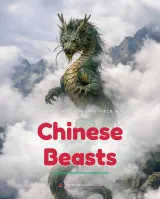
Chinese Beasts: A field guide to the dragons and demon kings of Chinese myth
From river dragons to demon kings, with the legends that shaped five thousand years of storytelling.
Japanese Yokai: A field guide to the spirits and demons of Japanese folklore
Fifteen spirits, with the signs to watch for and what the old tales say to do if you meet one.
Greek Myths: A field guide to the monsters of ancient Greece
Every monster here earned its place in legend, and each gets a full page of artwork and the story behind it.
the legend in five swipes.
Limited sponsor opportunity
One slot, carefully chosen partners
We only feature a small number of relevant sponsors at any time. If you create serious myth content, we would like to hear from you.
Partner with usQuick Creature Info
Origin:
Features:
Associations:
Our Mythic Legendary Rating:

Habitat:
Supernatural Powers:
Physical Attributes:
Abilities:
Lore:
References
Discover Another Mythical Legend You May Not Have Heard Of?
Uncover the mysteries of ancient folklore and expand your knowledge of legendary beings from cultures around the world.
Dare to Meet the Volturnus....
The Mythological Creatures Book Series
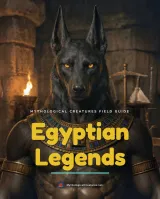
Yokai, Greek, Norse, Egyptian & Chinese. Five illustrated field guides to the creatures the old stories either warned or told you about.

Curated by the Mythological Creatures Team
Series editor: Mythological Creatures Directory
Primary desk: Asian & Pacific Myth Cycles Desk
(rev. November 2025)