
Nargun: The Nargun is a fearsome half-human, half-stone creature from Gunai/Kurnai Aboriginal legend, dwelling in the Den of Nargun in Victoria, Australia.
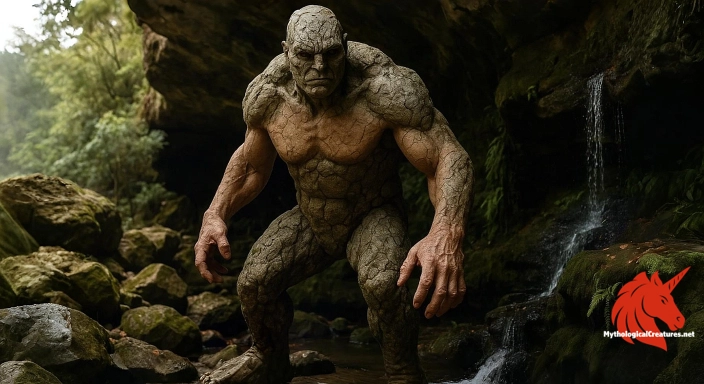
Nargun
Nargun - Serves as a warning against trespassing and disrespecting natural boundaries.
the legend in five swipes.
the legend in five swipes.
Where in the world does the Nargun come from?
The Nargun emerges as a mysterious and formidable figure rooted in the ancient Gunai/Kurnai traditions of southeastern Australia. Its legend intertwines the natural world with the supernatural by portraying a being that is both human and stone, a blend that underscores the deep connection between people and their landscape. The creature’s origins seem to reflect a profound respect for nature’s raw power, with its story set against the dramatic backdrop of Victoria’s rugged terrains. Early tellings of its myth may have served not only as cautionary accounts for unwary travellers but also as spiritual lessons honouring the land’s sanctity. The Den of Nargun, a secluded cave beneath a rock overhang and near a cascading waterfall, became the stage for this legend, symbolising both refuge and menace. As communities gathered to share oral histories, the narrative of the Nargun evolved into a layered myth reflecting survival, sacred land, and nature’s inscrutable forces. The creature’s half-stone composition evokes the image of an unyielding guardian of wilderness boundaries, while its human aspects hint at lost or hidden humanity. The enduring influence of this myth is a testament to its role in explaining the unpredictable challenges of natural environments. Integral to the cultural identity of the local indigenous people, the legend of the Nargun offers a window into an ancient spiritual relationship with the earth. Its narrative remains a powerful reminder of the reverence for nature and the respect demanded by its wild, untamed character.
What are the earliest texts about the Nargun?
The primary narrative of the Nargun is preserved through the oral traditions of the Gunai/Kurnai people, whose ancestral stories have been passed down through generations. Early accounts recorded by ethnographers provide glimpses into these vibrant oral histories, though they capture only fragments of the full myth. Stories about the creature were originally transmitted in intimate community settings, interweaving spiritual lessons with warnings about the dangers of the wild. The creature’s defining trait of turning weapons back on their wielder is recounted with variations in multiple versions of the tale. Some renditions emphasise its role as a malevolent guardian of sacred spaces, while others suggest that its fearsome power was a natural safeguard against human intrusion. Despite the limited written records, each version of the story contributes to a dynamic tapestry that has adapted over time. Occasional accounts from early colonial observers offer a snapshot of how indigenous legends were interpreted during periods of cultural contact. Variations in description, tone, and emphasis reveal that even within a single cultural context, the myth of the Nargun was fluid and responsive to local experiences. The storyteller’s art ensured that the creature was as much a symbol of the natural world as it was a participant in the community’s mythic history. Through these diverse narrative strands, the legacy of the Nargun has been kept alive and constantly reinterpreted.
What does the Nargun look like?
The Nargun is depicted as an imposing synthesis of human and rock, a creature whose form challenges the boundaries between animate and inanimate. In traditional portrayals, nearly its entire body is constructed of rugged stone that appears to have been naturally sculpted by the forces of nature. Notably, its hands, arms, and breast retain a more human, flesh-like quality, suggesting that part of its essence remains connected to human ancestry. The stony parts exhibit a rough texture with natural patterns and veining that mirror the local geological features. Its exposed limbs, in contrast, lend the creature an unsettling fluidity and a hint of lost vulnerability. Visual accounts sometimes highlight the eerie gleam in what might be interpreted as its eyes, carved into the rock, hinting at an inner consciousness. Some narratives suggest that the creature’s size can vary, sometimes towering over intruders and other times appearing as a more compact, yet no less intimidating, presence. The contrast between the immutability of stone and the animate, almost tender, human features forms a striking duality in its appearance. This physical amalgamation not only creates an otherworldly visage but also symbolises the tension between human frailty and the enduring power of the earth. Such detailed descriptions ensure the Nargun remains a uniquely vivid and haunting figure in mythic lore.
Nargun: Regional Differences in the Legend
While the Nargun is most closely associated with the Gunai/Kurnai traditions of Victoria, its myth resonates across other indigenous communities in Australia in various forms. In nearby regions, similar tales speak of enchanted beings with part-stone attributes, though the narratives might vary in detail and emphasis. Some neighbouring tribes recount stories of creatures inhabiting sacred caves or rocky outcrops, suggesting a shared cultural motif across diverse landscapes. Variations in the myth often reflect the unique environmental features of each region, with local geography influencing the creature’s attributes and the cautionary lessons of the lore. In certain areas, the entity is depicted as entirely immovable, while in others it retains a more dynamic, almost sentient quality through its partially human characteristics. The recurring motif of repelling human aggression, such as weapons being turned back, is a thread that links these versions. Diverse regional narratives have adapted the myth to serve specific cultural and ecological purposes, reinforcing the reverence for the local landforms. These adaptations illustrate how indigenous belief systems flexibly incorporate natural features and human experience. Despite these regional variations, the core essence of the myth remains a powerful reminder of the mysterious forces that reside in nature. Such widespread storytelling highlights the deep cultural interconnectedness among communities throughout Australia.
Legends Comparable to That of the Nargun
Comparative mythologies around the world reveal striking parallels to the legend of the Nargun, particularly in the motif of beings formed from the very substance of the earth. Similar to the Nargun, several global myths describe creatures that straddle the line between animate life and geological formations, symbolising a profound connection between humanity and nature. In some European traditions, for instance, animated stone guardians and gargoyle-like figures serve as protectors of sacred sites, embodying the dual function of warning and protection. The Nargun’s unique ability to rebuff attacks by turning weapons against their owner finds echoes in other tales where supernatural entities thwart human aggression with inexplicable power. The concept of a being that is both human and inhuman is also reflected in the legends of golems from Jewish folklore, where the creature is brought to life from inanimate matter to serve as a defender. Additionally, indigenous narratives from other regions, such as certain Native American legends, feature rocky spirits or stone giants inhabiting wild landscapes. These cultural parallels suggest a universal theme wherein the natural world is seen as possessing its own life force and moral order. Such comparative analysis enriches our understanding of the Nargun by situating it within a broader spectrum of earth-based mythic guardians. Through these connections, the Nargun not only represents local spiritual beliefs but also participates in a global dialogue on nature, power, and the unknown. This cross-cultural perspective underscores the universal human impulse to personify the landscape and its profound mysteries.
Nargun in Books, Film and Games
Over time, the myth of the Nargun has experienced both transformation and revival as it journeys from ancient oral traditions to modern cultural expressions. In earlier centuries, encounters with the legend were closely tied to local spiritual practices and served as a practical guide for interactions with the natural environment. As colonial records began to document indigenous lore, the Nargun was often viewed through an exotic lens that both mystified and marginalised its original cultural significance. In contemporary times, there has been a strong resurgence of interest in these traditions, with modern retellings emphasising environmental stewardship and the resilience of indigenous heritage. Artists, writers, and cultural historians have reinterpreted its image, using digital media and public installations to evoke the ancient spirit of the Nargun. The creature has also been appropriated as a symbol in debates over land rights and the protection of sacred natural sites in Australia. Educational programmes and cultural exhibitions now highlight its intricate connection to the earthly realm and the enduring power of oral storytelling. With each reinterpretation, the legend adapts to contemporary contexts while retaining its core themes of caution, reverence, and mystery. As modern audiences appreciate the myth’s layered narrative, the Nargun continues to bridge the gap between past and present. This evolving legacy ensures that the storied creature remains a powerful emblem of nature’s timeless influence on human consciousness.
Interesting Fact
The Nargun's ability to reflect any weapon aimed at it has intrigued folklorists, symbolising the unpredictable retaliation of nature against human interference.
Mythological Treasures
Chinese Beasts: A field guide to the dragons and demon kings of Chinese myth
From river dragons to demon kings, with the legends that shaped five thousand years of storytelling.
Japanese Yokai: A field guide to the spirits and demons of Japanese folklore
Fifteen spirits, with the signs to watch for and what the old tales say to do if you meet one.
Greek Myths: A field guide to the monsters of ancient Greece
Every monster here earned its place in legend, and each gets a full page of artwork and the story behind it.
the legend in five swipes.
For serious mythcraft
Your project belongs among the legends
If your work deepens how people understand, play with, or teach mythology, a sponsor placement here keeps it in front of the right readers all year.
Submit a sponsorship enquiryQuick Creature Info
Origin:
Features:
Associations:
Our Mythic Legendary Rating:

Habitat:
Supernatural Powers:
Physical Attributes:
Abilities:
Behavior:
Lore:
References
Discover Another Mythical Legend You May Not Have Heard Of?
Uncover the mysteries of ancient folklore and expand your knowledge of legendary beings from cultures around the world.
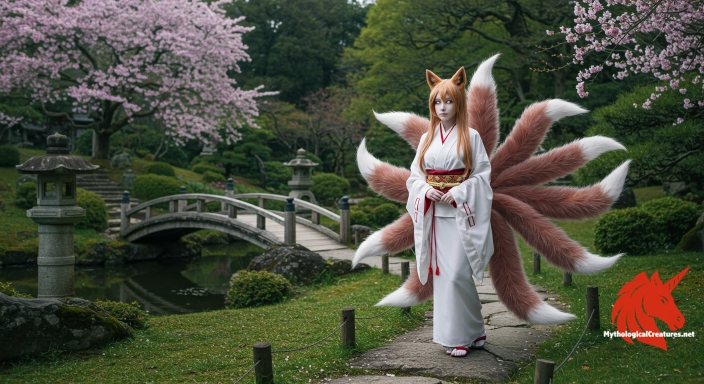
Dare to Meet the Tamamo-no-Mae....
The Mythological Creatures Book Series
Yokai, Greek, Norse, Egyptian & Chinese. Five illustrated field guides to the creatures the old stories either warned or told you about.
Curated by the Mythological Creatures Team
Series editor: Mythological Creatures Directory
Primary desk: Asian & Pacific Myth Cycles Desk
(rev. November 2025)