
Neith: Neith is an ancient Egyptian goddess associated with warfare, motherhood, and creation.
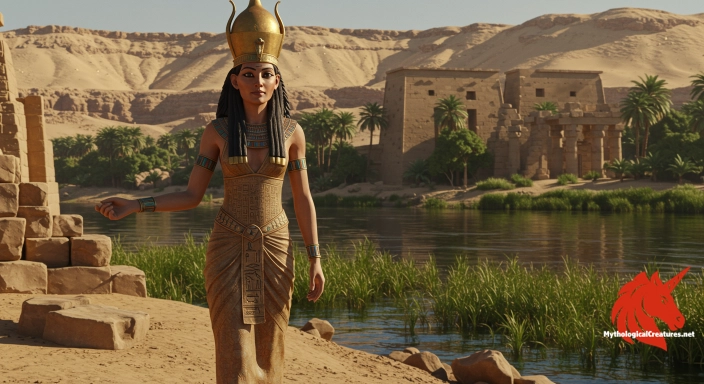
Neith
Neith - One of the earliest and most influential deities in ancient Egypt, overseeing warfare, creation, and funerary protection
the legend in five swipes.
the legend in five swipes.
The Beginnings of Neith
Neith is one of the most ancient deities of the Egyptian pantheon, her origins rooted in a time when the boundaries between the divine and mortal realms were freshly drawn. She emerged from a period of evolving religious thought, marking her first attestation during the Naqada II period and capturing the imagination of early Egyptians. Her dual nature as both a warrior and a nurturing mother gave her a unique place in the spiritual life of the culture. The goddess is renowned for her emblem of two crossed bows, which vividly symbolises her association with warfare and strategic might. At the same time, texts depict her as a creator and protector, suggesting a profound connection with the forces of life and birth. Neith’s early prominence, particularly in the city of Sais, laid the groundwork for her veneration across different eras of Egyptian history. As political landscapes shifted, her attributes were reinterpreted to suit changing societal needs, ensuring her enduring presence. The multifaceted aspects of her character allowed later traditions, including Hellenistic influences, to integrate her into broader mythological narratives.
Where can you read about Neith?
The wealth of available inscriptions and temple reliefs provides a fascinating insight into Neith’s manifold character. Ancient texts carved into stone and painted on temple walls depict her with attributes that underscore both her martial and maternal roles. Many of these accounts appear in funerary and ritual contexts where Neith is portrayed as a guardian of life and death, vividly illustrating the duality of her nature. In addition to monumental carvings, papyri and ritual hymns elaborate on her mythic origins and her role in the creation of the world. Variations in the narrative—some emphasising her prowess in battle and others her comforting, generative aspects—reveal a richness in storytelling that spans generations. The records from cult centres such as Sais and Memphis document a vibrant tradition of worship that evolved over centuries. Each version of her myth offers a unique perspective, blending local legends with overarching themes of cosmic order. Collectively, these ancient sources create a diverse tapestry that highlights the adaptability and lasting impact of her symbolism.
Neith: Powers, Strengths and Vulnerabilities
Neith is frequently depicted in ancient Egyptian art with a striking and graceful elegance that befits her divine stature. Iconographic evidence shows her wearing a distinctive head-dress, often adorned with symbolic motifs that convey her role as both creator and warrior. A pair of crossed bows, her most recognisable emblem, features prominently in her representations and serves to remind observers of her martial capabilities. Artistic renditions suggest that her form was idealised; she is shown with a slender silhouette and an aura of regality that sets her apart from mortal figures. In many statues and reliefs, she is portrayed with calm yet penetrating eyes, suggesting a profound wisdom and an unwavering vigilance. The stylistic details in her attire—often flowing garments and protective cloaks—reinforce her dual identity as a nurturer and a fierce defender. As with many deities, her physical portrayal was subject to regional artistic variations, yet the core elements remained unaltered throughout centuries of creative reinterpretation. Ultimately, the consistent use of certain motifs, particularly the crossed bows and distinctive regalia, ensures that her image remains immediately recognisable and steeped in symbolic significance.
The Local Faces of Neith
Neith’s veneration began in the Lower Egyptian region of Sais, where her cult was interwoven with the local traditions and the cultural memory of the people. In the Delta, elements of neighbouring Libyan influences blended with Egyptian customs to create a unique regional interpretation of her divine character. Different communities accentuated various aspects of her identity, with some focusing on her role as a fierce warrior and others celebrating her as a benevolent mother and creator. In Memphis, where royal power converged with religious innovation, her depiction took on additional layers of symbolism that resonated with the ideals of kingship and cosmic balance. Regional festivals and temple rituals often showcased distinctive local adaptations, such as variant ceremonial regalia and unique narrative embellishments. These localised practices not only emphasised her martial prowess but also highlighted her significance in rituals of protection and rebirth. Over time, the intermingling of local myths and state ideology ensured that her worship remained dynamic and responsive to the needs of different communities. Ultimately, these regional variations enriched the overall myth of Neith and demonstrated the flexibility inherent in ancient religious practice.
Neith: Counterparts Around the World
Neith occupies a fascinating place in comparative mythology, where her attributes have resonated well beyond the borders of Egypt. In the Hellenistic period, the Greeks identified her with Athena, linking her exceptional martial qualities and strategic wisdom to their own traditions of heroism and intellect. Similar to how other cultures venerate deities who embody both nurturing and warlike characteristics, Neith’s myth shares common threads with figures such as Artemis and Minerva. This synthesis of attributes illustrates a broader ancient trend of reconciling the seemingly contradictory aspects of protection and aggression. Cross-cultural comparisons have revealed that her role as a mother goddess and warrior has parallels in Near Eastern deities, where cycles of creation and destruction are often intertwined. Just as the Mesopotamian goddess Inanna balanced themes of love, war, and power, Neith too spans a wide spectrum of cosmic roles. Such comparative analysis emphasizes the universal appeal of deities who encapsulate the dualities of life and existence. The enduring connections between Neith and her counterparts across various mythologies serve as a testament to the timeless nature of her symbolic resonance.
How has Neith changed over time?
Throughout the long sweep of history, the figure of Neith has undergone significant reinterpretation and cultural transformation. From her early prominence as a fierce warrior and creator, her image gradually absorbed new layers of meaning during the Greco-Roman period. The assimilation of her characteristics into the figure of Athena not only broadened her appeal but also recontextualised her virtues within a classical framework. In modern times, scholars and cultural enthusiasts have revisited her myths, imbuing her with contemporary themes of empowerment and creative resilience. Her enduring legacy is evident in the way modern artistic and literary circles invoke her image as a symbol of both protection and the perpetual cycle of rebirth. Contemporary spiritual movements and neo-pagan practices have also embraced her multifaceted character, harnessing her historical symbolism to address modern issues of identity and continuity. Exhibitions, academic studies, and multimedia interpretations highlight how her iconography continues to inspire and challenge modern perceptions of divinity. In this multifaceted legacy, Neith remains a timeless emblem of the complex interplay between creation, warfare, and the enduring human spirit.
Interesting Fact
Neith's worship is one of the longest-lasting in Egyptian history, with her influence spanning from prehistoric times through multiple cultural and historical transitions.
Mythological Treasures
Egyptian Legends: A field guide to the gods and monsters of ancient Egypt
Guardians of the living and devourers of the dead, with the role each played in judgement.
Chinese Beasts: A field guide to the dragons and demon kings of Chinese myth
From river dragons to demon kings, with the legends that shaped five thousand years of storytelling.
Japanese Yokai: A field guide to the spirits and demons of Japanese folklore
Fifteen spirits, with the signs to watch for and what the old tales say to do if you meet one.
the legend in five swipes.
Mythology-aligned partners
Showcase your myth-friendly brand here
Run a store, studio, or platform that lives in the world of myth and folklore? A curated sponsor panel on these pages may fit.
Explore partnership optionsQuick Creature Info
Origin:
Features:
Associations:
Our Mythic Legendary Rating:

Also Sometimes Known As:
Habitat:
Supernatural Powers:
Physical Attributes:
Abilities:
Behavior:
Lore:
References
Discover Another Mythical Legend You May Not Have Heard Of?
Uncover the mysteries of ancient folklore and expand your knowledge of legendary beings from cultures around the world.
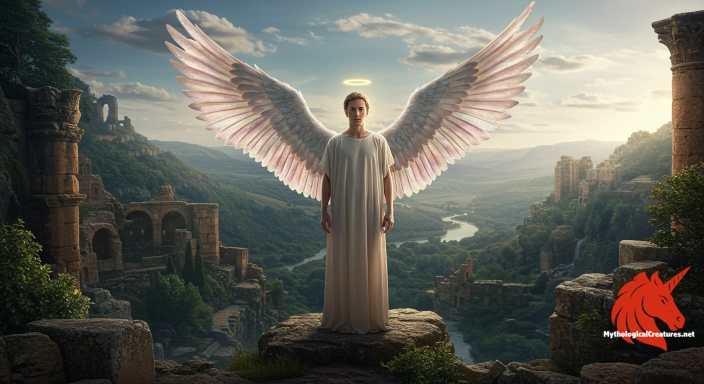
Dare to Meet the Haniel....
The Mythological Creatures Book Series
Yokai, Greek, Norse, Egyptian & Chinese. Five illustrated field guides to the creatures the old stories either warned or told you about.
Curated by the Mythological Creatures Team
Series editor: Mythological Creatures Directory
Primary desk: Hellenic & Ancient Mediterranean Desk
(rev. November 2025)