
Níðhöggr: Níðhöggr is a fearsome, dragon-like worm in Norse mythology that relentlessly gnaws at the roots of Yggdrasil.
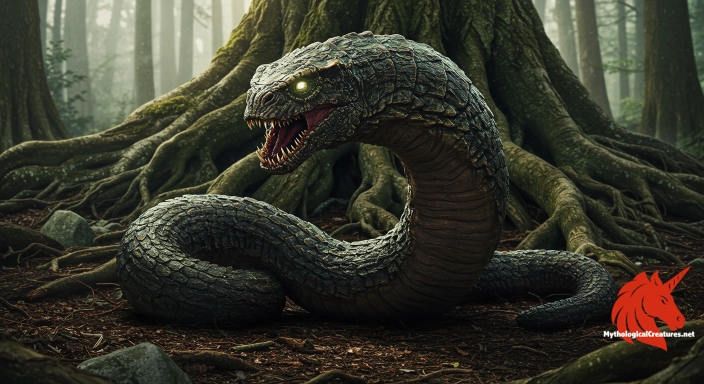
Níðhöggr
Níðhöggr - Symbolises the relentless force of decay and destruction in the cosmos, acting as a counterbalance to creation.
Origins & First Encounters
Níðhöggr, a formidable entity in Norse mythology, embodies the relentless forces of decay that threaten the cosmic order. Born from the rich tapestry of Viking lore, it has been a subtle yet enduring symbol of nature’s inevitable degeneration from time immemorial. The creature first emerges in the ancient narratives of the Poetic and Prose Eddas, where its ceaseless gnawing at Yggdrasil, the great world tree, is both feared and revered. Its origins are shrouded in the mystique of a cultural tradition that balanced reverence for life with an acceptance of entropy. The creature’s role as a destructive force is intricately tied to the cyclical nature of existence, wherein decay paves the way for renewal. Over time, Níðhöggr has come to represent more than a mere beast; it is a cosmic agent that symbolises the darker, inevitable aspects of mortality. The myth continues to captivate audiences by challenging the notion of eternal stability and highlighting the transient nature of all things. In a world where order and chaos coexist, Níðhöggr occupies a unique place as a reminder of impermanence and the inexorable pull of time.
Source Texts & Tale Variants
The earliest literary sources that mention Níðhöggr are found in the Poetic Edda, where its relentless attack on the roots of Yggdrasil is succinctly portrayed. The Prose Edda, penned by Snorri Sturluson, expands on this imagery, presenting the creature as an inevitable force of decay within the cosmos. Despite the sparse details provided by these initial texts, each reference is imbued with a compelling aura of dread and ancient power. Subsequent skaldic verses echoed this sentiment, further anchoring the worm’s role as both a symbol of moral and cosmic deterioration. Various medieval manuscripts, albeit fragmentary, hint at alternative facets of its character, sometimes casting it as a guardian of the underworld. Oral traditions that circulated alongside these writings enriched Níðhöggr’s lore with imaginative embellishments and variable narratives. This multiplicity of accounts has inspired ongoing debates among enthusiasts and scholars alike about its deeper allegorical significance. Each variant of the story collectively paints a picture of a creature whose very existence challenges the permanence of life and order. The enduring resonance of these sources attests to the broader Norse preoccupation with the duality of creation and destruction. In this way, Níðhöggr’s myth continues to thrive through both written lore and the dynamic energy of oral cultural transmission.
Form & Powers
Níðhöggr is commonly envisioned as a colossal worm or dragon, its sinuous form evoking both ancient menace and organic decay. Its rugged, deeply creased scales often mirror the gnarled bark of Yggdrasil, reinforcing a connection with the primordial energies of the cosmos. The creature’s visage, marked by a gaping maw and serrated edges, exudes a raw, untamed power that unsettles even the bravest of hearts. Some depictions portray its eyes as burning with a cold, unyielding malice, suggesting a sentient cruelty beyond mere instinct. The texture of its skin, whether imagined as slimy or leathery, speaks of eons spent in the shadows of forgotten realms. Creative reconstructions vary widely, with some artists rendering it as a modest, insidious worm, while others envision an immense, sprawling dragon darkening the edges of the world tree. Its relentless gnawing motion, full of calculated abandon, gives the impression of an unending drive to erode the very fabric of order. Even its tail, long and twisting like a coiled serpent, is depicted with intricate detail that hints at its ceaseless struggle against the luminescence of life. Rich artistic interpretations have occasionally infused hues of dark, brooding colours intermingled with flashes of iridescence, underscoring its supernatural essence. Such elaborate physical portrayals ensure that Níðhöggr remains not merely a figment of myth, but a tangible emblem of nature’s inexorable decay.
Regional Faces
Across the varied landscapes of Scandinavia, regional interpretations of Níðhöggr reveal subtle nuances that enrich its mythological persona. In the core Norse tradition, the creature’s grim duty of gnawing at Yggdrasil’s roots is acknowledged universally, though local narratives often tack on distinctive cultural elements. For instance, in Icelandic lore, Níðhöggr is sometimes portrayed not solely as an agent of decay but also as a mysterious guardian of secret, subterranean realms. In parts of Sweden and Norway, folklore expands its role further, linking it with retributive justice and the chaotic forces that unsettle cosmic order. Some regional tales even imbue the creature with a spectral quality, transforming it into a keeper of fated destinies in the wake of battle. Local art and carved runestones often depict Níðhöggr with variations in size, posture, and even markings, reflective of the community’s aesthetic traditions and existential concerns. Oral traditions in these regions have layered additional symbolism onto the creature, intertwining its destructive nature with deeper metaphors for rebirth and renewal. These geographical adaptations serve as a testament to the dynamic nature of myth, where a single figure evolves in tune with the cultural and environmental rhythms of each locality. The rich mosaic of regional narratives illustrates how Níðhöggr has been continuously reinterpreted to mirror local fears, hopes, and cosmic beliefs. Together, these varied depictions contribute to a broader, multifaceted understanding of its role in the Norse mythic landscape.
Cultural Parallels
Níðhöggr stands among a pantheon of mythological creatures that embody the timeless struggle between creation and decay. Within Norse lore, its role is intriguingly juxtaposed to that of Jörmungandr, the world-encircling serpent, with each symbolising different aspects of cosmic disruption. Across various cultures, serpentine and draconic figures similarly personify the forces of destruction that lurk beneath the veneer of order, making Níðhöggr a part of a universal mythic tradition. In Eastern mythologies, for example, dragons—even when benevolent—are revered as embodiments of nature’s immense, unpredictable power, creating an interesting but distinct parallel with the more malevolent aspects of Níðhöggr. The creature’s ceaseless act of gnawing can be likened to the themes of erosion and entropy found in diverse cultural narratives, from the Greek Hydra to the serpentine entities in Hindu stories. These cross-cultural echoes highlight a shared human preoccupation with the impermanence of life and the underlying inevitability of decay. By comparing Níðhöggr with similar figures, one uncovers layers of symbolic resonance that transcend cultural boundaries. Such comparisons reveal how different societies have articulated their fears of change and the inevitable decline of all ordered systems. In this interwoven tapestry of myth, the archetypal serpent continues to serve as a potent allegory for the inexorable cycles of life and death. Through comparative analysis, it becomes clear that Níðhöggr is not an isolated aberration but rather a vital thread in the global fabric of myth and symbolism.
Legacy & Modern Evolution
Over the centuries, Níðhöggr has transformed from a shadowy figure in ancient texts to a dynamic symbol in modern cultural discourse. In early medieval literature, its role was subtle, serving as an ever-present reminder of the forces that undermine cosmic stability. As the centuries passed and the arts evolved, later depictions enriched its image with more dramatic and detailed visual and narrative embellishments. In contemporary fantasy literature, films, and video games, Níðhöggr is often reimagined as a complex character whose inherent destructiveness is intertwined with themes of cyclical renewal. Modern interpretations have also embraced its dual nature, portraying it as a symbol both of ruin and of the natural process of transformation. This evolution in depiction mirrors shifting societal concerns—from ancient existential fears to modern reflections on environmental decay and regeneration. The creature’s enduring appeal is further amplified by scholarly debates that explore its symbolism within the framework of Norse cosmology and human morality. As new generations rediscover Viking myths, Níðhöggr’s image is continually moulded by fresh artistic insights that blend the old with the new. Its representation in digital art and modern media underlines a timeless fascination with forces that exist at the intersection of creation and destruction. Ultimately, Níðhöggr’s modern legacy is a tribute to the enduring power of myth, continually inspiring both creative reinterpretation and profound philosophical reflection.
Interesting Fact
Despite its fearsome reputation as a destructor, Níðhöggr is also seen as an intrinsic part of the cosmic cycle, ensuring that decay paves the way for renewal.
For authors, artists, and makers
Created something from the realm of myth?
If your book, deck, game, or artwork draws from legendary creatures and lore, you can showcase it here in a tasteful, year-round placement.
Share your projectQuick Creature Info
Origin:
Associations:
Our Mythic Legendary Rating:

Also Sometimes Known As:
Habitat:
Supernatural Powers:
Physical Attributes:
Abilities:
Behavior:
Lore:
Related Creatures, Tales or Lore
- FFafnir
- JJörmungandr
- TTiamat
References
Discover Another Mythical Legend You May Not Have Heard Of?
Uncover the mysteries of ancient folklore and expand your knowledge of legendary beings from cultures around the world.
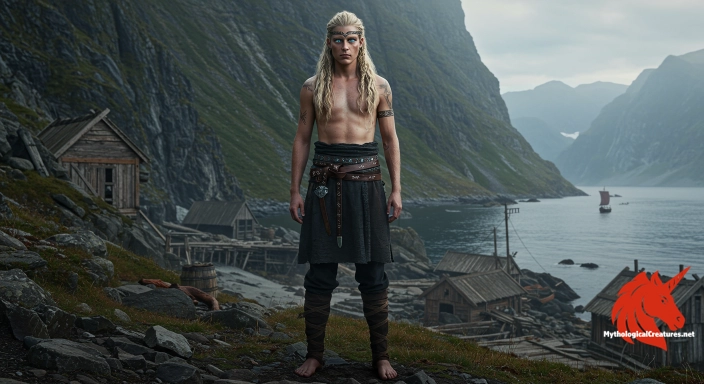
Dare to Meet the Åsa Haraldsdottir of Agder....
Curated by the Mythological Creatures Team
Series editor: Mythological Creatures Directory
Primary desk: Northern & European Folklore Desk
(rev. November 2025)