
Nittaewo: The Nittaewo are a cryptid tribe native to Sri Lanka, resembling small Bigfoot or Yeti-like hominids.
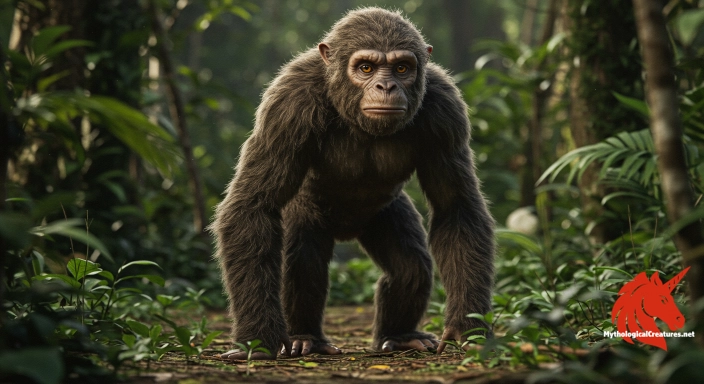
Nittaewo
Nittaewo - They serve as a symbol of the unknown in Sri Lankan indigenous lore, highlighting the rich tapestry of local myths despite the lack of scientific evidence.
Origins & First Encounters
The Nittaewo are a fascinating element of Sri Lankan cryptid lore, often portrayed as a reclusive tribe of hominid beings whose legacy has endured for centuries. They are deeply intertwined with the indigenous Veddha culture, where oral tradition has preserved their enigmatic presence through countless generations. Hailing from a time swathed in mystery, these creatures have long been encapsulated in stories that blur the lines between myth and reality. Their reputed existence, while never corroborated by archaeological evidence, has intrigued both local communities and modern enthusiasts alike. Many local narratives portray them as both elusive forest dwellers and symbolic representations of nature's untamed spirit. The earliest attestations emerge from ancient folklore that praises their secretive lives amidst the dense jungles of Sri Lanka. As the lore evolved, the Nittaewo also came to embody qualities of resourcefulness and survival in challenging landscapes. Despite contemporary scientific scepticism, their myth continues to resonate with those who value the rich tapestry of local legend. Ultimately, the Nittaewo remain an enduring symbol of cultural mystery, blending the allure of the unknown with the deep history of Sri Lanka.
Source Texts & Tale Variants
The primary accounts of the Nittaewo are primarily preserved through a rich tradition of oral storytelling among the Veddha people. These narratives, passed down from elders to youngsters, have cemented the creature’s place in regional folklore despite their absence in academic or archaeological records. In more recent history, colonial travellers and early anthropologists noted similar accounts, often embellishing the mysterious qualities of these beings. Travel diaries and folklore compilations from the 19th and early 20th centuries have also touched upon tales of small, elusive hominids inhabiting remote areas. Various versions of the story exist, with some paints the Nittaewo as proud guardians of the forests, while others hint at their tragic decline as the human world encroaches on nature. Each variant reflects subtle differences in tradition and environment, offering unique insights into the local psyche. Over time, these written and oral histories have intermingled to create a multifaceted portrait of the creature. The diversity of these sources not only underscores the flexibility of folklore but also hints at the influential role of the Nittaewo in regional cultural identity. In compiling these fragmented records, one finds a vibrant patchwork of myth that continues to captivate both locals and cryptozoologists alike.
Form & Powers
Descriptions of the Nittaewo paint a picture of a creature that is both human-like and distinctly other, with attributes that blur the boundaries between man and beast. Traditionally, they are depicted as significantly smaller than contemporary humans, often standing between four and five feet tall. Their appearance is marked by a dense covering of coarse, dark hair that seems well-adapted to the humid and shadowed environment of Sri Lanka’s jungles. Many accounts focus on their expressive, almost soulful faces, where large, reflective eyes suggest a creature attuned to the mysteries of twilight. Their limbs are described as robust and agile, ideal for both swift ground movement and the occasional climb up rugged trees. Distinctive features such as a broad, flattened nose and an earthy complexion add to the sense of their primitive nature. Variations in the lore sometimes highlight a more angular facial structure or hint at a subtle, almost mischievous smile that speaks of ancient wisdom. This blend of human and ape-like traits has inevitably led to comparisons with other hominid cryptids from around the world. Overall, the physical portrayal of the Nittaewo is as much a product of imaginative storytelling as it is a reflection of the wild, vibrant landscape they are said to inhabit.
Regional Faces
Across different regions of Sri Lanka, the myth of the Nittaewo takes on varied hues that mirror local cultural sensibilities and environmental conditions. In the heartland of Veddha communities, these beings are sometimes revered as ancestral spirits and guardians of the forest, underscoring a bond between the natural world and human existence. In certain rural locales, the legends mix with mystical folklore, painting them as elusive entities that drift between the realms of the physical and the spiritual. Some accounts even suggest that in the southern parts of the island, the Nittaewo might have once shared the land with early human settlers. The way the creature is depicted can change dramatically from one district to another, with some variants emphasising their benevolence and others their secretive and mischievous nature. These regional tales frequently incorporate local flora, climate, and history, which in turn shape the narrative of the Nittaewo. As a mirror to the diverse cultural landscape of Sri Lanka, these variations reveal how geography and tradition work together to sustain an ever-evolving myth. The adaptability of the legend also highlights the local community’s deep connection to the natural environment. Thus, the differing regional portrayals interweave to form a complex, layered picture of the Nittaewo that is as rich as Sri Lanka’s own cultural tapestry.
Cultural Parallels
When juxtaposed with other legendary cryptids, the Nittaewo stand out as an intriguing parallel to notable figures such as the Himalayan Yeti, North American Bigfoot, and the Southeast Asian Orang Pendek. Each of these creatures, coming from vastly different cultures and environments, shares common motifs of reclusiveness, primate-like features, and a mysterious relationship with the wilderness. In many respects, the Nittaewo echo the allure of these creatures, with tales that mix awe with a trace of caution towards the unknown. The similarities in physical descriptions and behavioural attributes across these myths have spurred discussions about a shared human instinct to explain unexplored natural phenomena. Comparative folklore studies suggest that these cryptids often emerge in cultures that live in close connection with nature’s untamed borders. However, the Nittaewo maintain a distinct identity by intertwining with the unique spiritual and cultural traditions of Sri Lanka. Their myth is enriched by local elements that are absent in the other cryptid legends, such as ties to indigenous cosmologies and regional biodiversity. All these comparisons serve to highlight both the universality and specificity of human storytelling, where local narratives meet global mythic archetypes. In a broader cultural context, the Nittaewo demonstrate how legends can transcend geographic boundaries while still retaining unique indigenous flavours.
Legacy & Modern Evolution
Over time, the legend of the Nittaewo has evolved from its humble beginnings in oral tradition to become a potent symbol of cultural mystery and natural heritage. The ancient tales once recounted by remote tribes have gradually seeped into modern literature and have even found a place in local tourism narratives that celebrate Sri Lanka’s enigmatic past. Contemporary cryptozoologists and enthusiasts often revisit these myths, searching for traces of truth hidden behind layers of folklore and artistic reinterpretation. In modern depictions, the Nittaewo are sometimes portrayed as guardians of the natural world, a living reminder of the ancient wilderness that still thrives in secluded corners of the island. Their narrative has inspired artistic expressions ranging from documentaries to illustrated stories, each reimagining the creature in ways that resonate with today’s audiences. The shifting depiction of the Nittaewo reflects broader changes in how society perceives the balance between modern civilisation and untamed nature. In some circles, they have also become a symbol for ecological conservation, representing the fragile remnants of a primeval world. This blend of myth and modern cultural relevance continually breathes new life into the ancient legend. Ultimately, the enduring legacy of the Nittaewo is a testament to the timeless power of folklore to inspire wonder, curiosity, and a deep respect for the mysteries of the natural world.
Interesting Fact
One intriguing aspect of the Nittaewo legend is their pervasive presence in ancient local lore, despite a complete lack of physical evidence, which emphasises the enduring power of myth in shaping cultural identity in Sri Lanka.
Sponsor this space
Tasteful, fixed-fee placements for myth projects
No bidding wars or flashing banners. We offer simple placements for a small set of creators and brands aligned with our readers.
Request further detailsQuick Creature Info
Origin:
Features:
Our Mythic Legendary Rating:

Also Sometimes Known As:
Habitat:
Physical Attributes:
Behavior:
Lore:
References
Discover Another Mythical Legend You May Not Have Heard Of?
Uncover the mysteries of ancient folklore and expand your knowledge of legendary beings from cultures around the world.
Dare to Meet the Little People of the Pryor Mountains....

Curated by the Mythological Creatures Team
Series editor: Mythological Creatures Directory
Primary desk: Asian & Pacific Myth Cycles Desk
(rev. November 2025)