
Numakulla: Numakulla are revered Australian Aboriginal sky gods who created all life on Earth and later transformed into lizards.
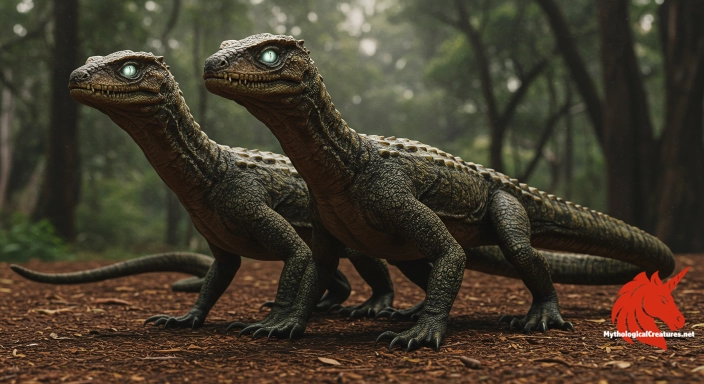
Numakulla
Numakulla - They are central to the creation narrative in Australian Aboriginal mythology, symbolising the bridging of divine and natural realms through transformation.
the legend in five swipes.
the legend in five swipes.
Numakulla Origins: The Earliest Accounts
The Numakulla occupy a central role in the rich tapestry of Australian Aboriginal mythology, embodying the mysterious forces of creation and cosmic balance. They emerge from the ancient Dreamtime as powerful sky gods whose very presence is interwoven with the origins of life. Their earliest narratives, passed along through generations of oral tradition, depict them as the divine architects who brought forth humans and myriad forms of life from the enigmatic Inapertwa. This creation story, cherished and preserved in sacred songs and ceremonial practices, has been a cornerstone of indigenous cultural identity. The Numakulla are frequently portrayed with a dual nature, reflecting a unity that transcends the notion of two separate deities. Their transition from celestial beings to incarnations in the form of lizards encapsulates the dynamic interplay between the spiritual and the earthly realms. This transformative journey highlights the transient nature of existence, symbolising both creation and renewal. As enduring symbols in Aboriginal lore, the Numakulla continue to captivate the imagination by representing the seamless bond between the divine sky and the nurturing earth.
Numakulla: The Written Sources
The primary sources detailing the Numakulla emerge from the oral histories and ceremonial traditions of Aboriginal communities across Australia. Sacred narratives, maintained through generations of storytellers, have immortalised these sky gods in a series of myths that blend historical memory with spiritual truth. Traditional art forms such as rock paintings and bark art serve as visual records of their creation and subsequent transformation, providing a rich tapestry of symbolic imagery. Early accounts by indigenous elders and cultural custodians continue to inform the modern understanding of these celestial figures. Although early anthropological records provided only fragmentary insights, the revitalisation of interest in indigenous knowledge has brought renewed appreciation for the deep cultural significance of the Numakulla. Variations of their story exist among different groups, each adding layers of interpretation and local colour. The narrative often weaves together motifs of celestial power, metamorphosis, and the mysterious origins of life. This multiplicity of sources underscores a tradition that values diversity in storytelling while uniting communities under the shared legacy of creation and transformation.
Numakulla: Form, Powers and Weaknesses
The physical depictions of the Numakulla are as fluid and enigmatic as the myths that describe them, merging transcendent celestial features with distinctly earthly characteristics. In their earliest portrayals as sky gods, they were endowed with a luminescence that captured the vastness of the cosmos. With their later transformation into lizards, artistic representations began to emphasise sinuous, elongated forms that evoke both grace and primal power. Their scales are often described as shimmering with an array of colours that mirror the brilliance of the twilight sky and the earthy tones of the outback. This blend of celestial radiance and reptilian features creates a striking duality that captivates the viewer. Some depictions present the Numakulla as imposing figures whose presence bridges the gap between divine authority and natural vitality. The visual details vary across different traditions, with some communities highlighting a more mythical, almost ethereal quality, and others opting for a grounded, robust image of a guardian creature. Such richly detailed portrayals underline the importance of physical form in manifesting the power and mystery inherent in the dual aspects of these deities.
Numakulla Across Different Regions
Across the vast and varied landscapes of Australia, the interpretation of the Numakulla adapts to the unique perspectives of different Aboriginal groups. In northern regions, these deities often assume a role that emphasises their stature as the originators of life and as custodians of sacred knowledge. In contrast, communities in other parts may focus more intently on their transformative nature, celebrating the shift from celestial beings to lizard forms in visual and oral traditions. Local adaptations frequently incorporate elements of regional geography, with the imagery of the Numakulla reflecting the distinctive flora, fauna, and landforms of each area. The dual-aspect nature of the deities is sometimes interpreted as a representation of harmony between opposing forces, such as light and dark or sky and earth, tailored to resonate with local cosmologies. In some regions, ritual ceremonies specifically honour their role in maintaining the equilibrium of the natural world. Differences in iconography—ranging from abstract patterns in rock art to detailed, figurative depictions in body art—illustrate how regional beliefs shape the myth. Despite these variations, the underlying themes of creation, transformation, and balance remain strikingly consistent throughout the diverse Aboriginal cultural landscape.
Are the Numakulla unique, or found elsewhere?
The Numakulla share intriguing similarities with dual-aspect deities and creator figures found in various cultural mythologies around the world. Their narrative of cosmic creation and subsequent transformation resonates with themes observed in Native American, Polynesian, and even some South American traditions. Much like the dual gods found in other indigenous stories, the Numakulla exemplify a metaphysical balance between celestial origins and earthly embodiment. The metamorphosis from sky deity to lizard is reminiscent of other myths in which divine beings adopt animal forms as symbols of renewal and the cyclical nature of existence. This transformation parallels the motif of the serpent or reptile seen in many cultures, where such creatures often embody wisdom, power, and the eternal process of rebirth. The integration of duality in their character invites cross-cultural comparisons regarding the interplay between creation, destruction, and regeneration. In the broader scope of global mythology, the Numakulla stand out for their ability to encapsulate both the ineffable vastness of the cosmos and the tangible vitality of the earth. Such cultural parallels underscore a universal human fascination with the mysteries of origin and the enduring, cyclical nature of life.
Numakulla: How the Legend Lives On
The enduring legacy of the Numakulla reflects an ongoing dialogue between ancient myth and contemporary cultural expression. Over time, their image as celestial creators who transformed into lizards has been continuously reinterpreted by both indigenous communities and the wider art world. This enduring narrative has found fresh relevance in modern Aboriginal art forms, where traditional symbols are interwoven with new stylistic expressions. Contemporary portrayals often highlight themes of environmental stewardship and the vital importance of maintaining harmony between humans and the natural world. Modern reinterpretations emphasise the transformative essence of these deities, serving as metaphors for resilience, rebirth, and adaptive change. The Numakulla have inspired a range of creative endeavours, from visual arts and literature to performances that explore the interplay between myth and modernity. Their story remains a dynamic part of cultural festivals and educational programmes that seek to bridge ancient wisdom and current ecological challenges. As a symbol of enduring spiritual strength and creative power, the Numakulla continue to captivate new generations, ensuring that their mythic presence remains as influential today as it was in the ancient Dreamtime.
Interesting Fact
A striking aspect of Numakulla is their dual-aspect identity, where a divine sky deity seamlessly transforms into a lizard, challenging conventional distinctions between the sacred and the natural.
Mythological Treasures
Chinese Beasts: A field guide to the dragons and demon kings of Chinese myth
From river dragons to demon kings, with the legends that shaped five thousand years of storytelling.
Japanese Yokai: A field guide to the spirits and demons of Japanese folklore
Fifteen spirits, with the signs to watch for and what the old tales say to do if you meet one.
Greek Myths: A field guide to the monsters of ancient Greece
Every monster here earned its place in legend, and each gets a full page of artwork and the story behind it.
the legend in five swipes.
For indie creators
Give your myth project a permanent home
Indie authors, artists, small studios, and makers can secure an annual, non-intrusive sponsor slot that meets readers where they explore.
Obtain more informationQuick Creature Info
Origin:
Associations:
Our Mythic Legendary Rating:

Also Sometimes Known As:
Habitat:
Supernatural Powers:
Physical Attributes:
Abilities:
Behavior:
Lore:
Related Creatures, Tales or Lore
- RRainbow Serpent
- BBaiame
- BBunjil
References
Discover Another Mythical Legend You May Not Have Heard Of?
Uncover the mysteries of ancient folklore and expand your knowledge of legendary beings from cultures around the world.
Dare to Meet the Clauneck....
The Mythological Creatures Book Series
Yokai, Greek, Norse, Egyptian & Chinese. Five illustrated field guides to the creatures the old stories either warned or told you about.
Curated by the Mythological Creatures Team
Series editor: Mythological Creatures Directory
Primary desk: Asian & Pacific Myth Cycles Desk
(rev. November 2025)