
Oceanus: Oceanus is a primordial Titan in Greek mythology, embodying the vast, encircling river that represents all bodies of water.

Oceanus
Oceanus - As the father of river gods and Oceanids, Oceanus symbolizes the origin and continuity of all water bodies, underscoring an eternal cosmic order.
the legend in five swipes.
the legend in five swipes.
How did the legend of Oceanus begin?
The figure of Oceanus emerges from ancient Greek cosmogony as a preeminent Titan who personifies the encircling river of the world. He is traditionally considered one of the earliest children of Uranus and Gaia, a lineage that underpins his formidable connection to the natural and cosmic order. His earliest attestations appear in foundational texts such as Hesiod’s Theogony, where his role as both a literal and symbolic river is outlined. In the vibrant tapestry of myth, Oceanus is celebrated not merely as a deity but as the very embodiment of life-giving water and the perpetual renewal of nature. His union with his sister Tethys produced the river gods and the Oceanids, extending his influence throughout the ancient landscape. The great river that he represents is seen as a circle of water, symbolising the eternal cycle of birth, life, death, and rebirth. His myth bridges the gap between tangible natural phenomena and the divine, capturing the imagination with its blend of mystery and order. Though his narrative is relatively tranquil compared to the dramatic exploits of other deities, his presence marks a profound respect for nature’s continuous flow. Ultimately, Oceanus’s legend stands as a testament to the ancient reverence for water as both a sustaining and boundary-defining force.
What sources tell us about Oceanus?
Ancient literary traditions such as Hesiod’s Theogony introduce Oceanus as a foundational Titan, outlining his origin and cosmic role. Early Greek poets offer sparse yet significant details that have shaped our understanding of his mythic stature. While these initial texts focus on his divine lineage and the spawning of numerous minor deities, later sources subtly vary in their portrayal of his character. Fragments of lost epic narratives suggest a more personal aspect of Oceanus, hinting at a deity whose calm and measured nature provided balance to a turbulent divine world. Some scholia and poetic commentaries even blend his identity with that of the physical river, reinforcing his dual role as both a cosmic and terrestrial force. Variations in the narrative reveal an intriguing duality, presenting him alternately as the vast, encircling river and as an omnipresent custodian of natural order. This multiplicity in sources has offered modern interpreters a rich tapestry from which to discern the layers of his legend. Each variant adds nuance and depth, contributing to the enduring enigma that surrounds Oceanus. In this way, the ancient texts and their later reworkings collectively highlight his significance in myth as well as in symbolic tradition.
Oceanus: What the Legends Describe
Artistic depictions of Oceanus often merge the tangible and the ethereal, portraying him as both a mighty river and a majestic, anthropomorphic Titan. His visage is frequently rendered with a flowing, well-groomed beard that mimics the motion of cascading water. Imagery associated with him commonly features robes in deep blue and silver hues, evoking the shimmering quality of moonlit tides. Sculptures and vase paintings capture his form with elongated limbs that gracefully dissolve into curling ripples and endless streams. His eyes are often described as possessing the calm, reflective quality of still water, underscoring his omnipresence in the natural order. In some traditions, his form is a seamless fusion of human features and the ever-changing character of water, blurring the line between flesh and fluid. The robust yet graceful physique attributed to him suggests immense strength combined with the dynamic fluidity of a natural current. Some depictions vary in scale, ranging from an immense cosmic presence to a subtler personification of nature’s enduring force. Through these varied and detailed representations, Oceanus is continually reimagined as a being whose physical essence inspires awe and wonder.
Oceanus Across Different Regions
The myth of Oceanus has been adapted across various regions of the ancient Mediterranean, each community imbuing his story with local cultural resonances. In several Greek locales, he is revered as a protective boundary that encircles the known world, reflecting local maritime concerns. Eastern Hellenic communities often emphasise his role as a nurturing force integral to the fertility of their lands and waters. In Hellenistic and later Roman traditions, his identity sometimes merges with that of the vast sea, encouraging a syncretic interpretation that links him with other water deities. Local narratives have adapted his myth to highlight either his calming influence or his power as a natural boundary. In certain areas, smaller water deities or local spirits are interwoven with his legend, adding layers of complexity to his overall persona. These regional adaptations reflect the interplay between the universal symbolism of water and specific environmental or cultural priorities. The diversity in his portrayal underscores how natural phenomena are interpreted through the unique lens of regional experiences. Consequently, Oceanus remains a multifaceted figure whose myth is enriched by the local colour and varied traditions of the communities that recount his tale.
Does another culture have a figure like Oceanus?
The figure of Oceanus finds intriguing parallels in numerous world mythologies where water is venerated as a primordial force. Comparable to the Mesopotamian embodiment of primeval waters, which is sometimes linked to deities like Tiamat, Oceanus captures the dual nature of water as both life-giving and chaotically powerful. In the Egyptian cosmogony, the concept of Nun—the all-encompassing, primordial abyss—resonates with the idea of a boundless, cyclic river that encircles existence. Similarly, the Vedic deity Varuna, with his dominion over the waters and cosmic order, shares a thematic kinship with Oceanus. These cross-cultural comparisons reveal a common motif in which water is not merely a physical substance but a powerful metaphor for creation, continuity, and renewal. While the specific attributes and stories differ, the symbolic merger of natural and divine characteristics appears consistently. The mutable and ever-adapting nature of water is central to all these deities, whether manifested as a flowing river or an expansive ocean. Such comparative analysis highlights the universality of water symbolism and its capacity to transcend cultural boundaries. In this light, Oceanus joins a broader pantheon of water deities whose enduring appeal reflects humanity’s timeless fascination with the elemental force of water.
Oceanus: The Legend's Second Life
Over the millennia, the depiction of Oceanus has undergone significant evolution, shifting from a central figure in ancient cosmogony to a broader emblem of nature’s vastness. Classical sources initially presented him as the great river encircling the earth, a tangible feature of the mythological landscape. During the Renaissance, artists and writers rediscovered his myth, reimagining him as a poetic embodiment of the infinite, mysterious ocean. This reinterpretation allowed his image to evolve into an allegory for the cyclical nature of time, life, and the world around us. In modern literature and art, Oceanus is often portrayed as a guardian of ecological balance, symbolising the relentless and transformative power of water. His narrative has been adapted to address contemporary concerns about the environment, merging ancient myth with modern ecological awareness. As a result, he has transitioned from a background figure in mythology to a potent metaphor for nature’s enduring, dynamic spirit. The evolution of his myth mirrors shifting cultural and philosophical sensibilities throughout history. Today, Oceanus continues to flow through modern narratives, his ancient waters inspiring both reverence and renewed ecological insight.
Interesting Fact
Oceanus uniquely blurs the line between deity and geographical feature, serving both as a personified Titan and as the literal embodiment of the world-encircling river.
Mythological Treasures
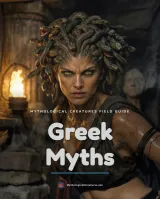
Greek Myths: A field guide to the monsters of ancient Greece
Every monster here earned its place in legend, and each gets a full page of artwork and the story behind it.
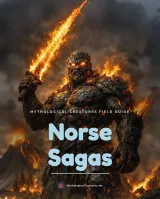
Norse Sagas: A field guide to the beasts of the Viking world
Drawn from the saga accounts themselves, with the powers, weaknesses and doom of each being set out.
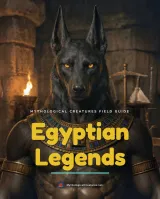
Egyptian Legends: A field guide to the gods and monsters of ancient Egypt
Guardians of the living and devourers of the dead, with the role each played in judgement.
the legend in five swipes.
Curated sponsor space
One subtle banner. Thousands of myth lovers.
We offer a small number of curated sponsor spots for relevant books, courses, games, and art. No clutter, just well-matched partners.
Partner with usQuick Creature Info
Origin:
Features:
Associations:
Our Mythic Legendary Rating:

Also Sometimes Known As:
Habitat:
Supernatural Powers:
Physical Attributes:
Abilities:
Behavior:
Lore:
References
Discover Another Mythical Legend You May Not Have Heard Of?
Uncover the mysteries of ancient folklore and expand your knowledge of legendary beings from cultures around the world.
Dare to Meet the Pasithea....
-d93913ad-b93c-458c-98db-627ce72d9041_small.webp "Depiction of Pasithea")
The Mythological Creatures Book Series
Yokai, Greek, Norse, Egyptian & Chinese. Five illustrated field guides to the creatures the old stories either warned or told you about.

Curated by the Mythological Creatures Team
Series editor: Mythological Creatures Directory
Primary desk: Hellenic & Ancient Mediterranean Desk
(rev. November 2025)