
Ōmukade: Ōmukade is a giant centipede yōkai from Japanese mythology.
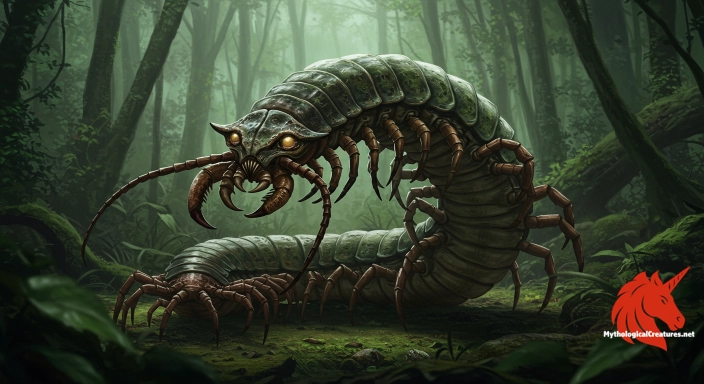
Ōmukade
Ōmukade - Acts as a cautionary figure symbolising the dangers of nature and the supernatural.
Origins & First Encounters
Ōmukade is a striking figure in Japanese folklore, known as the giant centipede whose very name evokes both awe and dread. Born from a confluence of Shinto animism and ancient superstition, this yokai embodies the unpredictable forces of nature. Its earliest mentions are found in medieval narratives and early Edo-period art, where it was depicted as a creature of both curse and consequence. Over time, Ōmukade became a symbol of the uncontrollable aspects of the natural world, serving as a reminder of humanity’s vulnerability. It is traditionally seen as a punitive spirit, emerging when societal norms are disrupted or nature is disrespected. The creature’s legend has been nurtured through oral traditions and written accounts alike, merging rural lore with sophisticated literary aesthetics. It occupies a unique cultural space where terror meets respect, underscoring the belief that nature itself can enact justice. Its mythic presence is a testament to the enduring power of folklore in shaping cultural identities. Modern retellings continue to explore its dual nature, both monstrous and mysteriously sympathetic.
Source Texts & Tale Variants
The primary sources concerning Ōmukade are as diverse as they are ancient, ranging from handwritten kaidan scrolls to richly illustrated Edo period compendiums. Early texts, including various yōkai encyclopaedias, mention the creature in passing, often as an ominous sign of natural retribution. Oral narratives, passed down in rural communities, embellish these accounts with dramatic encounters and warnings against disturbing nature. Multiple story variants exist which describe Ōmukade either as a malevolent force or as an oddly protective spirit within specific territories. Certain local chronicles recount eerie sightings in isolated mountain paths and abandoned shrines, each story layering additional mystery onto its legend. The creature’s narrative was also adapted into popular theatre and literature, where its persona evolved with the changing tastes of the audience. In some versions, Ōmukade is portrayed as the incarnation of a vengeful spirit, while others suggest it is a corrupted natural guardian. Contemporary reinterpretations in books and films build upon these traditional texts, sometimes mixing myth with modern horror tropes. The multiplicity of sources ensures that no single account can claim absolute authority over its myth, enriching its mystery and allure.
Form & Powers
Physically, Ōmukade is depicted as a massive centipede with a body composed of countless segmented parts that convey both grace and menace. Its exoskeleton is traditionally rendered in dark, earthy hues, accented by hints of iridescence that catch the light in an almost supernatural glow. Detailed illustrations often show an intricate texture on its carapace, with each segment bearing cryptic markings that may allude to ancient runes or elemental symbols. The creature's many legs are both numerous and powerful, enabling swift, darting movements that belie its great size. Its eyes, often depicted as glowing with a sinister light, add to the unsettling impression of a creature that sees more than human eyes perceive. In some portrayals, Ōmukade’s head is equipped with fearsome mandibles or pincers that further accentuate its predatory nature. Variations in its depiction sometimes exaggerate its proportions, suggesting a being capable of engulfing even the most stalwart adversaries. The detailed physical attributes contribute to a visual narrative that blends natural anatomy with paranormal embellishments. Such vivid descriptions ensure that every encounter with this yokai leaves an indelible mark on the imagination.
Regional Faces
Regional interpretations of Ōmukade reveal an extensive array of local adaptations that colour its mythos with distinct cultural flavours. In parts of rural Japan, the creature is seen not solely as a force of malevolence but also as a natural regulator of the ecosystem, its presence heralding both caution and reverence. Some communities recount that its appearance is linked to seasonal changes or acts as an omen forewarning of agricultural misfortune and natural disasters. In central regions, legends sometimes attribute the creature with the power to curse or cure, depending on the circumstances of its encounter with humans. The symbolism of Ōmukade also morphs with local geography, often being described as roaming through ancient forests, remote mountain passes, or desolate country ruins. Variations in its appearance—such as the number of legs or the intensity of its gaze—can be traced to the distinct narrative traditions upheld by different regions. Local festivals and rituals have occasionally been organised to appease or celebrate the creature, reflecting a multifaceted relationship with the natural world. This regional diversity enriches its myth, making Ōmukade a fluid symbol that adapts to differing ecological and societal needs. Through these local lenses, the giant centipede emerges not only as an emblem of danger but also as a repository of collective memory and regional identity.
Cultural Parallels
Across various cultural landscapes, Ōmukade finds intriguing parallels with other mythological creatures that embody the terror of the natural world. Much like certain European legends of monstrous arthropods and other hybrid creatures, its form challenges the boundaries between the familiar and the uncanny. While Western folklore often features giant insects as harbingers of decay and pestilence, Ōmukade represents a more enigmatic fusion of nature’s beauty and brutality. Similarities can be drawn with Chinese mythological beasts that are depicted with exaggerated physical traits and supernatural abilities, underscoring a universal fascination with creatures that dwell beyond the ordinary. Comparative analysis reveals that both Eastern and Western traditions utilise such creatures as metaphors for the untamed aspects of their environments. The interplay of symbolism and literal natural phenomena invites a cross-cultural understanding of how societies personify nature’s latent dangers. In many mythic traditions, giant centipedes or similar creatures act as custodians, enforcing moral order in societies by punishing hubris. Such parallels stress that Ōmukade, while uniquely Japanese in its origins, participates in a global dialogue about the power and unpredictability of the natural world. Its comparative study not only enriches our understanding of yokai but also highlights shared human anxieties and reverence for the wild.
Legacy & Modern Evolution
The evolution of Ōmukade’s narrative over the centuries offers a fascinating glimpse into the shifting aesthetics of fear and fascination in Japanese culture. In the early periods, the creature was largely confined to grim tales and cautionary folklore, warning against the disruption of nature’s fragile balance. As Japan modernised, Ōmukade’s image was transformed by reinterpretations in literature, theatre, and visual arts, where its monstrous form became both a metaphor for natural disorder and a character of tragic allure. The post-war period saw its integration into horror films and manga, reflecting a broader trend of reimagining traditional folklore to address contemporary anxieties. Modern depictions often blend traditional motifs with cutting-edge technology and visual effects, positioning the creature as a symbol of both environmental crisis and the resurgence of mystical tradition. Contemporary popular culture has embraced Ōmukade in various formats, from video games to anime, where it oscillates between being a formidable villain and an emblem of misunderstood natural power. Artistic exhibitions and academic discussions continue to explore its multifaceted legacy, examining how centuries-old myth adapts to modern narratives. The enduring appeal of Ōmukade underscores a timeless intrigue with creatures that challenge the limits of human understanding. Thus, this ancient yokai remains a potent bridge between traditional myth and modern cultural expression, preserving its relevance in an ever-changing world.
Interesting Fact
An interesting aspect of Ōmukade is its dual nature as both a physical predator and a supernatural curse, reflecting the complex interplay between nature and the spirit world in Japanese folklore.
For authors, artists, and makers
Created something from the realm of myth?
If your book, deck, game, or artwork draws from legendary creatures and lore, you can showcase it here in a tasteful, year-round placement.
Share your projectQuick Creature Info
Features:
Associations:
Our Mythic Legendary Rating:

Also Sometimes Known As:
Habitat:
Supernatural Powers:
Physical Attributes:
Abilities:
Behavior:
Lore:
Related Creatures, Tales or Lore
References
Discover Another Mythical Legend You May Not Have Heard Of?
Uncover the mysteries of ancient folklore and expand your knowledge of legendary beings from cultures around the world.
Dare to Meet the Bhaga....

Curated by the Mythological Creatures Team
Series editor: Mythological Creatures Directory
Primary desk: Asian & Pacific Myth Cycles Desk
(rev. November 2025)