
Oozlum bird: The oozlum bird is a legendary creature from British and Australian folklore noted for its absurd and self-referential flight patterns.
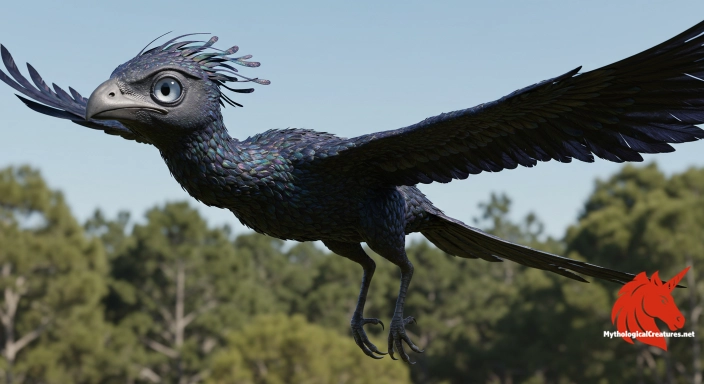
Oozlum bird
Oozlum bird - Used as a humorous allegory for circular reasoning and as a symbol of self-referential logic in literature and popular culture
the legend in five swipes.
the legend in five swipes.
When did people first speak of the Oozlum bird?
The oozlum bird is a legendary creature that captivates the imagination with its whimsical abilities and peculiar flight patterns. Its origins are found in a rich tradition of Australian and British storytelling, where humour and absurdity entwine with myth to create a character both enigmatic and entertaining. Emerging in recorded texts as early as 1858, its first attestation adds a sense of historical curiosity to an otherwise fantastical tale. The bird is renowned for its bizarre airborne antics, which include flying in ever-decreasing circles or even backwards, behaviours that challenge the laws of nature while delighting the listener. Folktales praise its eccentric methods as much as they jest at its inherent absurdity, weaving the creature into the larger fabric of cultural myth. The narratives often blend wit with a touch of self-mockery, reflecting on the peculiarities of life and logic. Its presence in folklore serves as a playful metaphor for self-reference, where the journey of the bird becomes a symbol of circular reasoning. Endlessly entertaining, the oozlum bird continues to inspire creative retellings that celebrate both its mystique and its humorous defiance of natural order. This enduring myth encapsulates the tradition of transforming the bizarre into an emblem of cultural identity.
The Documented Accounts of the Oozlum bird
Various texts and media have immortalised the oozlum bird through a multitude of humorous and imaginative portrayals. One of the earliest references appears in the Oxford English Dictionary, which records its existence from as far back as the mid-nineteenth century. The bird’s legacy is further cemented in literature, notably in the poem penned by W. T. Goodge, which celebrated the creature’s peculiar aerial abilities. British cinema also embraced the myth with the film Carry On Up the Jungle, where its absurd nature found a vivid new expression on screen. Radio comedies, such as the memorable episode of The Navy Lark, showcased recurring jokes that played on the bird’s inexplicable antics. Alongside these, folklore has spawned variants including the mutated weejy weejy bird, known for its single-winged, tighter circular flight. In a transatlantic twist, American stories have contributed the featherless oozlefinch—another creature that challenges conventional physics by flying backwards at tremendous speeds. These varied sources depict a creature at once timeless and adaptable, with each version adding layers to its mythic identity and humorous appeal.
What did the Oozlum bird look like?
The physical portrayal of the oozlum bird is as varied as it is imaginative, blending elements of majesty with outright farce. Some tales describe the bird as having a magnificent plume and an eye-catching tail that it admires during its backward flights. Other descriptions claim it is remarkably large, reputedly strong enough to bear the weight of a man while in full flight. Its wings are often depicted as unpredictably arranged, enabling it to spin in ever-diminishing circles that escalate to a comedic climax. The weejy weejy variant, which is sometimes considered a mutation, is specifically noted for having only a single wing that forces it into tighter, more frantic loops. Meanwhile, the American oozlefinch is envisioned as a featherless marvel, propelling itself in reverse at supersonic speeds and even engaging in fantastical aerial combat. With such divergent accounts, every retelling adds a unique twist to its physical characteristics, incorporating both the elegant and the absurd. The descriptions often oscillate between a creature of wondrous size and an icon of comic exaggeration, reinforcing its dual role as a subject of myth and satire. In essence, the oozlum bird’s physical characteristics serve as a canvas for creative expression, uniting contradictory features into a singular, enduring symbol of whimsical defiance.
Oozlum bird Across Different Regions
Across different cultural landscapes, the oozlum bird assumes characteristics that vividly mirror local humour and mythic imagination. In the British and Australian traditions, the creature is frequently depicted as a paradoxical figure, amusing audiences with its unpredictable flight and self-referential antics. Here, regional storytellers emphasise the bird’s tendency to embark on circular flights—often described as diving into its own tail or rear—thereby celebrating the comedy inherent in its design. Conversely, in North America, the legend is further diversified by the introduction of the oozlefinch, a near-cousin that adapts the myth to modern military and technological narratives. This American variant, which is portrayed as featherless and capable of reverse supersonic flight, adds a layer of heroism and satire distinct from its British antecedents. Local adaptations sometimes even suggest that the bird’s unusual manoeuvres, such as a tendency to turn left when young, are deliberate choices reflective of its quirky self-awareness. These regional variations highlight not only differing narrative styles but also the universal appeal of mythological parody. Over time, local retellings have refined the creature’s traits to better resonate with regional audiences, sustaining its status as both an object of laughter and a mirror of societal foibles. The oozlum bird’s ability to morph across regions exemplifies how folk traditions can sculpt a single myth to embody varying cultural sensibilities.
How does the Oozlum bird legend compare worldwide?
The oozlum bird invites comparisons with a range of mythological and folkloric creatures that defy natural laws with their paradoxical behaviour. Its penchant for circular flight and self-admiration finds echoes in other tales where the natural order is turned on its head for comic or philosophical effect. While it stands apart from the phoenix with its association to rebirth, the bird similarly encapsulates the idea of transformation, albeit through absurdity rather than renewal. In many cultural narratives, creatures that challenge conventional logic—by flying backwards or in diminishing loops—symbolise the human fascination with the illogical and the unknowable. Parallels might also be drawn to fabled entities like the proverbial animals chasing their tails, which serve as metaphors for endless, self-referential pursuits. Modern literature and satire often evoke the oozlum bird as shorthand for arguments that loop in on themselves, much like other cultural symbols whose form and function defy straightforward explanation. This comparative approach underscores how a single myth can bridge disparate traditions, uniting diverse symbolic motifs of irreverence and irony. By examining the bird alongside other mythic figures, one sees a common thread: the celebration of nature’s unpredictability and the humour found in its contradictions. The bird’s enduring role in cross-cultural discussions reflects its power to encapsulate both the absurd and the profound in one fantastical creature.
Oozlum bird: The Legend's Second Life
The modern legacy of the oozlum bird is as dynamic and multifaceted as its storied past. Over the decades, the creature has transformed from a quirky element of folklore to a symbol of self-referential humour and the absurdity of circular reasoning. Its evolution is marked by memorable appearances in various media, from the comedic film Carry On Up the Jungle to repeated gags on BBC radio shows. The bird’s image has also expanded beyond traditional narratives with the American oozlefinch, whose military associations add another playful dimension to its myth. Contemporary culture frequently embraces the oozlum bird as a metaphor for ideas that loop back on themselves, notably in discussions that verge on the surreal and ironic. Its ironic and humorous essence continues to inspire artistic and literary reinterpretations, keeping the myth vibrant and relevant. The creature’s enduring appeal lies in its ability to symbolise the endless cycle of self-reference and the charm of its defiance of natural order. Today, the oozlum bird is celebrated as an icon of unconventional wisdom, bridging historical myth with modern satire and serving as a testament to the imaginative spirit of folklore.
Interesting Fact
A notable variant, the oozlefinch, has been adopted as the unofficial mascot of the United States Air Defense Artillery, highlighting the creature's unexpected influence on modern iconography.
Mythological Treasures
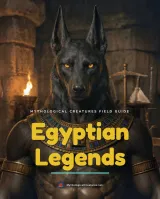
Egyptian Legends: A field guide to the gods and monsters of ancient Egypt
Guardians of the living and devourers of the dead, with the role each played in judgement.
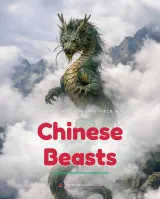
Chinese Beasts: A field guide to the dragons and demon kings of Chinese myth
From river dragons to demon kings, with the legends that shaped five thousand years of storytelling.
Japanese Yokai: A field guide to the spirits and demons of Japanese folklore
Fifteen spirits, with the signs to watch for and what the old tales say to do if you meet one.
the legend in five swipes.
Curated sponsor space
One subtle banner. Thousands of myth lovers.
We offer a small number of curated sponsor spots for relevant books, courses, games, and art. No clutter, just well-matched partners.
Partner with usQuick Creature Info
Features:
Associations:
Our Mythic Legendary Rating:

Also Sometimes Known As:
Habitat:
Supernatural Powers:
Physical Attributes:
Abilities:
Behavior:
Lore:
References
Discover Another Mythical Legend You May Not Have Heard Of?
Uncover the mysteries of ancient folklore and expand your knowledge of legendary beings from cultures around the world.
Dare to Meet the Sihirtia....
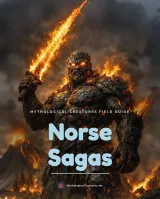
The Mythological Creatures Book Series
Yokai, Greek, Norse, Egyptian & Chinese. Five illustrated field guides to the creatures the old stories either warned or told you about.
Curated by the Mythological Creatures Team
Series editor: Mythological Creatures Directory
Primary desk: Northern & European Folklore Desk
(rev. November 2025)