
Orneus: Orneus is a centaur from Greek mythology known for his role in the notorious events at Pirithous' wedding.
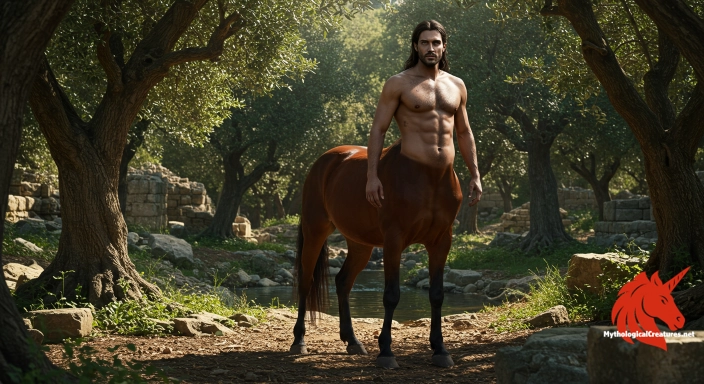
Orneus
Orneus - Orneus is noted as one of the centaurs at Pirithous' wedding, an event that encapsulates the chaotic and violent nature of centaur behavior in Greek myth.
Origins & First Encounters
Orneus emerges from the vibrant tapestry of Greek mythology as a centaur whose story, though sparsely detailed in surviving sources, captivates with its blend of human intellect and beastly instinct. He is traditionally remembered as one of the centaurs present at the famed wedding of Pirithous, an event steeped in both celebration and ensuing chaos. His early mythic origins remain shrouded in mystery, leaving ample room for interpretation regarding his lineage and the forces that shaped his character. In the context of ancient Greek narratives, his presence at a moment of cultural convergence highlights the perennial tension between order and wild abandon. The depiction of Orneus reflects the broader Greek fascination with liminal figures that defy strict categorisation. His myth resonates with the idea that the intersection of civilisation and nature can produce both heroic and destructive elements. As his story was passed down through generations, it served as a subtle reminder of the dual nature of existence in a world where reason and passion frequently collide. The allure of his enigmatic character endures, inviting both scholars and enthusiasts to reflect on the deeper meanings embedded within classical myth.
Source Texts & Tale Variants
Ancient records offer only brief glimpses of Orneus, with most classical texts mentioning him in the context of the tumultuous events at Pirithous’ wedding. His name surfaces in fragmented poetic accounts and scattered references within mythological compilations, underscoring the transitory nature of the centaur lore. Variants of his story reflect a dual portrayal, one emphasizing his involvement in the chaotic melee and another noting his sudden flight from overwhelming conflict. Some literary traditions hint that his retreat was a deliberate act of self-preservation rather than mere cowardice. Other narratives, preserved in archaic hymns and local recitations, suggest that his actions embodied the ambivalence typical of centaurs in battle. The inconsistencies in these sources have allowed later storytellers to embellish his character, adding layers of moral and cultural complexity. Oral traditions further enriched his legend by altering details to suit regional tastes and the evolving social values of the times. This mosaic of references highlights the challenges ancient authors faced in capturing the full essence of centaur lore. Over time, the retelling and reinterpretation of his exploits have ensured that even a minor figure like Orneus continues to spark the imagination of those fascinated by myth.
Form & Powers
In artistic representations, Orneus is portrayed with the classic dual anatomy characteristic of centaurs, merging the robust physique of a warrior with the agile form of a horse. His human torso, marked by defined muscles and an expression of intense resolve, seamlessly transitions into the powerful body of a stallion, complete with strong, sinewy legs. The face of Orneus is often depicted as fierce, with penetrating eyes that reflect both wisdom and untamed emotion. A thick mane cascades down his neck, blending into the textured flanks that reveal his equine heritage. Each brushstroke in ancient vase paintings and sculptures emphasises his hybrid nature, showcasing both the grace of a horse and the ruggedness of human combat. His armed presence, sometimes enhanced by the depiction of a spear or light armour, speaks to a life steeped in battle and tumult. Variations in his physical renderings—whether more human or more animal—illustrate the artistic licence taken by different regional craftsmen. The meticulous detail bestowed upon his form reinforces the deep symbolic resonance of centaurs in Greek lore. In every representation, Orneus stands as a testament to the dynamic interplay between the cultivated and the wild.
Regional Faces
Across ancient Greece, interpretations of Orneus varied, mirroring the diverse cultural landscapes of regions such as Thessaly, Attica, and the Peloponnese. In some locales, the centaur was envisioned with a more refined and even heroic aspect, reflecting local ideals of restraint and martial nobility. In other areas, he was embraced as a wholly untamed creature, his quick flight from combat underscoring a survival instinct beloved in rural myth. Local storytellers and artists often adapted his image to resonate with community values, transforming his act of retreat into an emblematic cautionary tale of balancing pride with prudence. Variations in artistic style led to depictions where Orneus appeared more beastly in some city-states and more human in others. These local adaptations highlight the flexible nature of myth, where a single figure can embody a range of attributes that speak to regional temperaments. Integration with local festivals and rituals further cemented his presence in the cultural memory of these communities. Folkloric retellings sometimes omitted his violent escapades, instead celebrating his enigmatic charm as part of a larger collective narrative about the natural world. The regional diversity in his portrayal encourages a broader understanding of centaur mythology, making Orneus a multifaceted character whose legacy transcends geographical boundaries. His story, as told through the variegated lens of Greek provincial tradition, remains a vibrant chapter in the intricate epic of myth.
Cultural Parallels
Orneus occupies a distinctive place among the centaurs, resonating with the broader mythological theme of the duality inherent in hybrid beings. His character is frequently examined in comparative studies alongside figures like Chiron, whose wisdom and healing qualities starkly contrast with the more tumultuous and instinct-driven nature of Orneus. In many respects, he represents the archetype of the wild, unbridled spirit—a motif that finds echoes in the satyrs of Greek lore and even extends to figures in other mythological traditions such as the Norse berserkers. The similarities between his narrative and that of these comparable mythic entities underline a shared cultural exploration of the boundary between civilisation and primal force. His fleeting act of retreat during battle has been interpreted as a metaphor for the internal conflict between rational decision-making and overwhelming instinct—a theme prevalent in myths across diverse cultures. Parallel narratives in Celtic and Near Eastern traditions evoke similar imagery, suggesting that the concept of the half-man, half-beast endures as a universal symbol. Such comparisons emphasise that mythic hybridity is not confined to one culture but is a recurring motif in the global narrative of human self-reflection. Artistic depictions across different societies often place centaur figures in relational context, thereby inviting a broader dialogue on the nature of heroism and savagery. Modern literary and cinematic explorations continue to draw upon these comparative elements, deepening our appreciation for the nuanced character of Orneus. His myth, when viewed through the lens of cross-cultural studies, offers insight into the universality of hybrid figures as emblems of internal and societal duality.
Legacy & Modern Evolution
Over the centuries, the figure of Orneus has transitioned from a brief mention in ancient texts to a symbol with enduring modern resonance. His early portrayal as part of the centaur collective at Pirithous’ wedding has inspired a plethora of artistic adaptations that underscore themes of untamed nature and explosive conflict. Renaissance artists, captivated by the dual nature of man and beast, reinterpreted centaur figures like Orneus in their paintings and sculptures, thereby cementing his image in the classical revival of art. Literary works throughout the Enlightenment and into modern times have revived his story, often casting him as a tragic emblem of the struggle between innate wildness and the restraints of civilisation. In modern fantasy literature and visual media, his archetype has evolved to embody the inner conflict that defines the human experience. Contemporary portrayals frequently explore the complexity behind his sudden flight from battle, suggesting a nuanced blend of survival instinct and moral conflict. Modern cultural discourse has also drawn upon his narrative to investigate themes of freedom versus restraint within the broader context of human nature. Exhibitions of classical art and mythology often feature Orneus as a representative example of the rich symbolism inherent in ancient hybrid figures. As creative reinterpretations continue to emerge, his ancient legacy remains a fertile ground for discussions about identity, duality, and the timeless clash between order and chaos. Today, Orneus serves as a bridge connecting the mythic past with the dynamic explorations of modern culture, reaffirming the enduring appeal of Greek mythology.
Interesting Fact
Orneus is one of the lesser-known centaurs in Greek mythology, and his brief appearance at Pirithous' wedding exemplifies the complex and often contradictory characteristics attributed to centaur figures.
For publishers and studios
Your next readers are already here
Many of our visitors are looking for books, campaigns, and resources that deepen their journey into myth. Position your title or setting here.
Discuss a placementQuick Creature Info
Origin:
Features:
Our Mythic Legendary Rating:

Habitat:
Supernatural Powers:
Physical Attributes:
Abilities:
Behavior:
Lore:
References
Discover Another Mythical Legend You May Not Have Heard Of?
Uncover the mysteries of ancient folklore and expand your knowledge of legendary beings from cultures around the world.
Dare to Meet the Lagahoo....
Curated by the Mythological Creatures Team
Series editor: Mythological Creatures Directory
Primary desk: Hellenic & Ancient Mediterranean Desk
(rev. November 2025)