
Panopea: Panopea, also known as Panope or Panopaea, is a multifaceted figure in Greek mythology appearing as both a sea nymph and a Thespian princess.
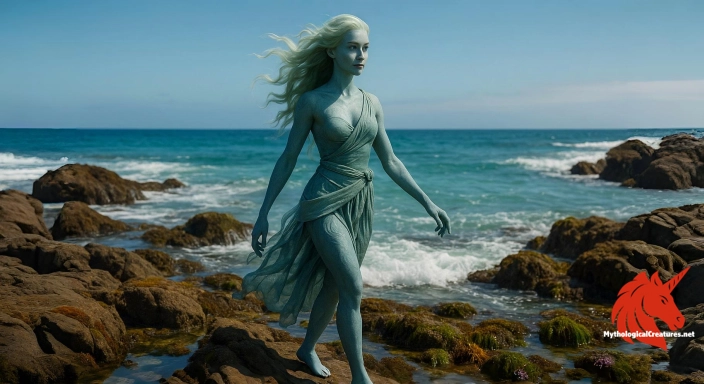
Panopea
Panopea - Panopea bridges the divine and mortal realms, exemplifying the protective and nurturing aspects of sea deities in Greek mythology.
Origins & First Encounters
Panopea emerges from the depths of ancient lore as a multifaceted figure whose very name evokes the vastness of the sea. Born of the union between Nereus, the timeless personification of the ocean, and the graceful Oceanid Doris, she is celebrated as one of the fifty Nereids who embody both beauty and the capricious nature of the waters. Her myth is interwoven with pivotal events, including her role in escorting her sister Thetis to a momentous wedding, underscoring her importance within the divine marine assembly. At times, ancient narratives blur the lines between her divine heritage and mortal existence, recasting her as a Thespian princess intertwined with heroic exploits. This duality enriches her character, reflecting the ancient fascination with blending the celestial with the human. As a divine attendant during moments of both celebration and sorrow—such as when she appeared to console Thetis in grief—she demonstrates a compassionate side that resonates across myth. Her multifaceted identity, traversing the realms of divinity and mortality, encapsulates the charm and mystery of the sea. Through these diverse roles, Panopea endures as a symbol of nature’s boundless dynamism and an ever-present participant in the epic tapestry of myth. Her enduring legacy continues to captivate the imagination of those who explore the complexities of ancient storytelling.
Source Texts & Tale Variants
Panopea’s story is preserved in an array of ancient texts that reveal a rich tapestry of divergent narratives and intriguing details. Early accounts feature her as a guiding sea nymph, present at significant mythic ceremonies such as the wedding of Thetis, where her graceful presence elevated the divine company. Other fragments recount her assistance to heroes like Aeneas during stormy ordeals, highlighting her reputation as a benevolent spirit of the sea. Some literary traditions, including later Roman adaptations, emphasise her purity as a virgin Nereid, entrusted with the care of those caught in maritime tempests. Variations in the manuscripts sometimes conflate her identity with that of another sister, demonstrating a fluid approach to mythic genealogy in classical storytelling. In parallel, accounts of her life as a Thespian princess linked to King Thespius provide a contrasting narrative that underscores her mortal connections. These distinct streams of mythic evidence illustrate the evolving nature of her character as it shifted between divine intervention and heroic involvement. The multiplicity of sources not only enriches her legend but also points to the dynamic interplay of myth and tradition in antiquity. Through these varied narrative strands, Panopea’s myth is continually reinterpreted, reflecting the deep-seated human desire to explain and celebrate the mysteries of the natural world.
Form & Powers
Classical depictions of Panopea consistently evoke an image of ethereal beauty and subtle strength, mirroring the ever-changing moods of the sea. Her flowing tresses often capture hues that echo sunlit waves and deep ocean blues, creating a visual metaphor for the vast marine panorama from which she takes her name. Artists have portrayed her with luminous eyes that seem to hold the secrets of the underwater world, drawing observers into a gaze both tender and mysterious. Her form is elegantly slender, yet imbued with the dynamic grace that suggests a constant, gentle motion in tune with the rhythmic pulse of the tides. Delicate features combine with a certain divine radiance, allowing her to straddle the realms of both the transcendent and the earthly. In many representations, her attire is intricately adorned with motifs inspired by the sea, such as flowing veils that mimic the movement of water and embellishments reminiscent of coral and seashells. Despite variations in artistic style, a recurring theme of iridescent skin—subtly reflecting the light like the surface of a calm sea—adds a touch of otherworldly charm. This blend of fluid, marine-inspired detail with classical idealisation ensures that her visage remains timeless and captivating. Even in later portrayals where her more human aspects are emphasised, the enduring echo of the ocean’s beauty remains unmistakably present.
Regional Faces
Across different Mediterranean locales, the legend of Panopea adapts to reflect the unique cultural and natural landscapes of each region. Along the sun-drenched coasts of Greece, her image is deeply intertwined with local maritime customs, where she is revered not only as a sea nymph but also as a guardian of coastal life. In Roman interpretations, her traits often merge with those of similar sea deities, creating a composite figure that embodies the communal essence of marine divinity. Island communities and port towns have, in turn, celebrated her as a benevolent protector who ensures the safe passage of sailors and tempers the fury of the sea. Such regional adoptions often highlight her nurturing attributes, emphasising a compassionate presence that counters the otherwise unpredictable nature of ocean storms. Variations in iconography—from statues to pottery—underscore her adaptability, with each local tradition colouring her attributes to mirror regional aesthetics and values. In some parts, she is portrayed with symbols associated with fertility and abundance, while in others, the emphasis is on her role as a mediator between the human and the supernatural. These diverse adaptations demonstrate how local mythology reshapes a broader narrative to fit its environmental and cultural milieu. Ultimately, Panopea’s story is a vivid example of how myth serves as a canvas for regional identities, blending shared themes with distinctive local flavours.
Cultural Parallels
Panopea’s character invites thoughtful comparison with a host of water deities and mythological figures across various cultures. Her portrayal as a sea nymph shares notable similarities with figures such as Amphitrite and Doris, who also symbolise the delicate balance between the nurturing and wild aspects of the ocean. Like many classic water spirits, her duality is reflected in narratives that oscillate between her roles as a beneficent force in times of crisis and an ethereal embodiment of natural beauty. Similar to the Naiads of local streams or even certain Celtic water fairies, she occupies an ambiguous space where the divine and the mortal coalesce. This cross-cultural resemblance extends to mythic characters who serve as intermediaries in human struggles, showcasing an enduring motif of divine assistance amid mortal endeavours. In some respects, her gentle intervention in heroic journeys mirrors the subtle influences attributed to other semi-divine figures in Mediterranean lore. Themes of transcendent beauty, the cyclical nature of life, and the enigmatic call of the sea are recurrent in both her myth and those of comparable entities. The fluid boundaries between her divine identity and moments of human interaction have also led to comparisons with later siren legends, even though her character remains marked by benevolence rather than peril. Such analogies underscore a universal human fascination with the mysteries of water and the timeless allure of mythic intermediaries who transcend the ordinary.
Legacy & Modern Evolution
Through the ages, the myth of Panopea has evolved into a symbol that bridges ancient tradition with modern cultural imaginings. Initially portrayed in classical literature and art as a luminous sea nymph and a Thespian princess, her character struck a timeless note that resonated with both divine and mortal audiences. As the currents of history shifted, reinterpretations of her story began to appear in Renaissance art and later literary works, each imbuing her with renewed symbolism and contemporary relevance. Modern adaptations tend to highlight her role as a muse and an emblem of nature’s sublime beauty, reflecting current interests in environmental awareness and the human connection to the natural world. In visual arts and popular culture, her image is often reinvigorated to represent the inherent mystery and power of the sea, serving as a metaphor for change and transformation. The enduring appeal of her myth lies in its capacity to be reshaped and reimagined, ensuring that she remains a vessel for exploring themes of identity, resilience, and the interplay between humanity and nature. Her story has become a touchstone for discussions on the convergence of myth and modernity, illustrating how ancient narratives continue to evolve. Contemporary interpretations, whether in literature, film, or digital media, often cast her as a symbol of both divine intervention and the serene, yet unpredictable spirit of the ocean. Thus, the legacy of Panopea continues, with each generation finding fresh meaning in her timeless portrayal and the endless allure of the deep sea.
Interesting Fact
It is intriguing that Panopea's myth encapsulates both divine and mortal qualities, uniquely bridging the ethereal realm of the sea with the human experiences of heroism and legacy.
Mythology-aligned partners
Showcase your myth-friendly brand here
Run a store, studio, or platform that lives in the world of myth and folklore? A curated sponsor panel on these pages may fit.
Explore partnership optionsQuick Creature Info
Origin:
Associations:
Our Mythic Legendary Rating:

Also Sometimes Known As:
Habitat:
Supernatural Powers:
Physical Attributes:
Abilities:
Behavior:
Lore:
Related Creatures, Tales or Lore
- AAmphitrite
- TThetis
- LLeucothea
References
Discover Another Mythical Legend You May Not Have Heard Of?
Uncover the mysteries of ancient folklore and expand your knowledge of legendary beings from cultures around the world.
Dare to Meet the Bukit Timah Monkey Man....

Curated by the Mythological Creatures Team
Series editor: Mythological Creatures Directory
Primary desk: Hellenic & Ancient Mediterranean Desk
(rev. November 2025)