
Pasiphaë: Pasiphaë is a queen of Crete from Greek mythology, renowned as a goddess of witchcraft and sorcery.
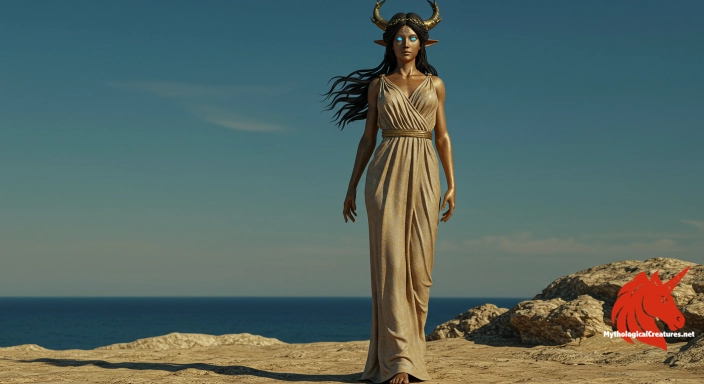
Pasiphaë
Pasiphaë - Notable for her cursed union with the Cretan Bull and as the mother of the Minotaur.
the legend in five swipes.
the legend in five swipes.
Pasiphaë: Origins and First Sightings
Pasiphaë emerges from Greek myth as a figure of both regal authority and mystical sorrow, whose narrative bridges the divine and the mortal. Born of the radiant Helios and the Oceanid nymph Perse, her very existence is steeped in celestial allure and ancient gravitas. She ruled as queen of Crete, a land renowned for its enigmatic traditions and storied legends. Her life is marked by a deep intertwining of human passion and the unpredictable will of the gods. Her identity is further complicated by her association with witchcraft and sorcery, evoking both fear and fascination in those recounting her tale. The drama of her existence is underscored by the curse that led her to pursue the forbidden love of a majestic bull. This act of tragic passion not only disrupted the natural order but also set the stage for one of the most enduring mythological symbols—the Minotaur. Embedded within the tapestry of her story is a profound commentary on power, fate, and the divine retribution that can arise from mortal failings. The legend of Pasiphaë invites us to reflect on the intersections of love, curse, and destiny as elements far beyond simple human control. Her lore continues to resonate as an enduring emblem of the mysteries underlying ancient myth and cultural identity.
Pasiphaë: Variants Across the Sources
The narrative of Pasiphaë is preserved in a variety of ancient texts that have each contributed unique facets to her legend. Early sources such as Hesiod’s fragments and later mythographical works by Apollodorus provide glimpses into her divine lineage and tragic marriage. There exist diverse textual traditions wherein her character is portrayed both as a noble queen and as a potent sorceress whose passions defy mortal convention. Other literary works subtly weave her into the broader tapestry of mystical and supernatural elements characteristic of ancient Greek storytelling. Some accounts amplify her association with occult forces, reflecting how her identity straddles the realms of divine retribution and magical allure. Beyond the classical texts, her story found a place in local cultic traditions and folklore, occasionally reimagined to highlight moral lessons or cosmic irony. Variants in her tale stress differing aspects of her persona, be it her maternal role in birthing a monster or her embodiment of cursed desire. Ancient tragedians and poets contributed additional layers to her myth, ensuring that her story would be open to multiple interpretations. The interplay of these sources has maintained a dynamic narrative that continues to invite debate and reinterpretation. Her fragmented yet persistent presence in diverse texts underscores the richness and complexity inherent in mythological storytelling.
Pasiphaë: Powers, Strengths and Vulnerabilities
Depictions of Pasiphaë in ancient art suggest a woman of arresting beauty intertwined with an air of enigmatic melancholy. Iconographic traditions often present her with delicate, sun-kissed features that subtly echo her divine parentage and legendary origins. Her eyes are portrayed as deep and reflective, conveying both inner wisdom and the burden of a tragic destiny. Classical sculptures and vase paintings sometimes show her in regal attire, adorned with intricate jewellery that signifies her royal status and mystical links. Although no single description dominates the surviving imagery, artistic representations frequently include graceful lines and soft contours that hint at an almost ethereal elegance. Some portrayals incorporate subtle bull motifs within her attire, a nod to the fated love that altered her life. Her flowing hair, rendered in tones that evoke both darkness and a hint of golden light, adds to the impression of a woman caught between heaven and earth. These visual cues blend beauty with the weight of her myth, suggesting that her physical form was as multifaceted as her story. The limited yet evocative descriptions invite viewers to imagine a figure who was as powerful in presence as she was complex in fate. Ultimately, the artistic renderings of Pasiphaë serve to enhance her myth, making her an enduring symbol of both loveliness and cursed destiny.
Pasiphaë: The Same Figure in Different Places
Regional variations of Pasiphaë’s myth underscore the adaptability and enduring allure of her story across different cultural landscapes. In Crete, where her tale originated, she is predominantly celebrated as the tragic queen and unfortunate mother of the Minotaur, embraced by local traditions and artistic representations. The island’s rich mythological heritage highlights her status as an emblem of divine punishment and unorthodox desire. In other Greek locales, however, her persona takes on additional layers of mysticism, often aligning her more closely with the realm of sorcery and supernatural wisdom. Some communities recount her story with an emphasis on the moral and ethical consequences of divine disobedience, thereby framing her as a cautionary symbol. In regions influenced by Hellenistic culture, artistic and literary renditions incorporate local elements that further accentuate her enigmatic nature. As her myth traveled through the ancient world, it absorbed nuances from neighbouring cultures, resulting in adaptations that blended indigenous folklore with classical themes. Subsequent Roman interpretations, for example, sometimes celebrated her bewitching qualities, aligning her with emerging ideas of occult power. Despite these regional differences, the fundamental essence of her tragic narrative remains remarkably consistent. The varying interpretations across regions serve to enrich the collective mythos surrounding Pasiphaë, ensuring that her tale continues to spark both scholarly debate and popular intrigue.
How does the Pasiphaë legend compare worldwide?
Across mythological traditions, Pasiphaë’s narrative resonates with familiar themes that traverse cultural boundaries. Her doomed passion and the resulting monstrous offspring find echoes in other legends of forbidden love and tragic transformation. In some respects, she mirrors the roles of other formidable female figures such as Medea and Circe, each embodying aspects of forbidden power and the bittersweet consequences of unintended defiance. These figures share the capacity to command both fear and admiration, reflecting a deep-seated ambivalence about female agency in times of divine disruption. The interplay of human vulnerability and supernatural influence in her story is akin to other comparative myths where mortal actions reverberate through the divine realm. Literary traditions, whether in classical Greek or later medieval narratives, consistently highlight the irony of a woman whose love results in both creation and destruction. Like many mythic mothers who bear extraordinary consequences, Pasiphaë’s tale invites us to explore the blurred boundaries between matrimonial duty and the pursuit of forbidden desire. The cross-cultural parallels extend to motifs of metamorphosis and cursed unions that are found in Indo-European mythologies. This comparative lens not only affirms the universality of her themes but also enriches our understanding of how recurring mythic patterns shape cultural identity. Ultimately, her story stands as a testament to the timeless nature of myth, where personal tragedy and cosmic destiny are often inextricably intertwined.
Pasiphaë: Then and Now
The legacy of Pasiphaë has evolved over the centuries, reflecting shifts in cultural values and interpretative perspectives. In the ancient world, her myth served as a potent reminder of the delicate balance between divine favour and mortal hubris. Over time, her story was reinterpreted by Renaissance artists and writers who imbued her with a tragic nobility and a symbolic association with forbidden knowledge. By the medieval period, she had come to represent the archetype of a cursed woman whose allure was shadowed by otherworldly misfortune. Modern retellings have further expanded her image, inviting reinterpretations that explore her inner conflicts and the broader implications of divine retribution. Contemporary scholars and artistic creators often view her as both a victim of capricious fate and a figure of empowered defiance whose narrative challenges traditional moral frameworks. In some modern literary and cinematic works, Pasiphaë emerges as a complex character whose experiences resonate with themes of transformation, loss, and the reclamation of agency. Her depiction in neo-pagan and occult circles underscores a revived interest in ancient mythologies reimagined for the modern era. The shifting portrayals of her myth underscore how enduring cultural narratives can be re-evaluated to reflect contemporary understandings of power, femininity, and destiny. As a result, Pasiphaë’s legacy endures not simply as a cautionary tale, but as an invitation to explore the multifaceted nature of myth in the pursuit of deeper human truths.
Interesting Fact
An interesting observation about Pasiphaë is that despite her name meaning 'wide-shining', her story is steeped in tragedy and dark magic, a contrast that enriches her mythological persona.
Mythological Treasures
Greek Myths: A field guide to the monsters of ancient Greece
Every monster here earned its place in legend, and each gets a full page of artwork and the story behind it.
Japanese Yokai: A field guide to the spirits and demons of Japanese folklore
Fifteen spirits, with the signs to watch for and what the old tales say to do if you meet one.
Norse Sagas: A field guide to the beasts of the Viking world
Drawn from the saga accounts themselves, with the powers, weaknesses and doom of each being set out.
the legend in five swipes.
Reach myth fans
Connect your myth-driven brand with this audience
Our readers are writers, educators, gamers, and collectors who care about mythology. Enquire about a limited sponsor placement on creature pages.
Enquire about sponsorshipQuick Creature Info
Origin:
Features:
Associations:
Our Mythic Legendary Rating:

Also Sometimes Known As:
Habitat:
Supernatural Powers:
Physical Attributes:
Abilities:
Behavior:
Weaknesses:
Lore:
References
Discover Another Mythical Legend You May Not Have Heard Of?
Uncover the mysteries of ancient folklore and expand your knowledge of legendary beings from cultures around the world.
Dare to Meet the Argus Panoptes....

The Mythological Creatures Book Series
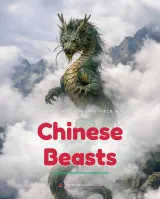
Yokai, Greek, Norse, Egyptian & Chinese. Five illustrated field guides to the creatures the old stories either warned or told you about.

Curated by the Mythological Creatures Team
Series editor: Mythological Creatures Directory
Primary desk: Hellenic & Ancient Mediterranean Desk
(rev. November 2025)