
Argus Panoptes: Argus Panoptes is a many‐eyed giant from Greek mythology, famed for his unyielding vigilance and service as a guardian.
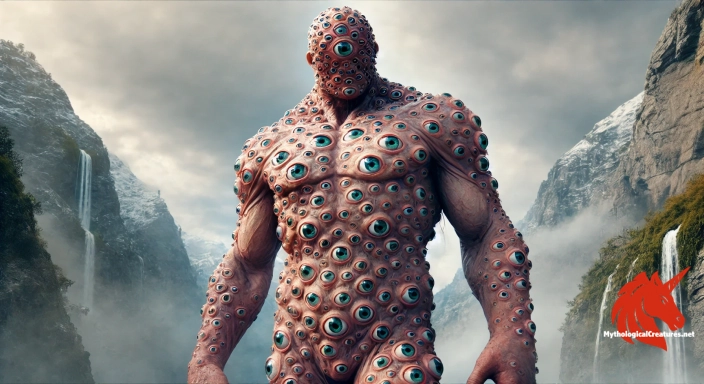
Argus Panoptes
Argus Panoptes - Argus Panoptes is celebrated as the ultimate sentinel whose many eyes epitomise watchfulness and duty in myth.
the legend in five swipes.
the legend in five swipes.
How did Argus Panoptes enter folklore?
Argus Panoptes is an iconic figure in Greek mythology known as the all-seeing giant whose legend has endured through the ages. His legacy is rooted in a mythological tradition that celebrates both the mystery of the divine and the gripping narratives of mortal endeavours. Born out of ancient lore, his earliest mentions underscore his unique role as a vigilant guardian entrusted with sacred tasks. He is traditionally associated with the goddess Hera and is remembered for his role in protecting Io from prying eyes. His myth intertwines themes of loyalty, divine retribution, and the inexorable nature of fate, making him a compelling emblem of eternal surveillance. The abundance of eyes that adorn his form symbolises not only physical vigilance but also the omnipresence attributed to the gods. Over time, Argus has come to represent the tension between beauty and morbidity inherent in mythic guardianship. His enduring presence in myth illustrates the ancient fascination with the concept of watchfulness and the supernatural. The timeless quality of his story continues to capture the imagination of audiences and serves as a potent reminder of both divine oversight and human longing.
How did the story of Argus Panoptes change over time?
Ancient manuscripts and classical narratives provide a rich tapestry of references that illuminate the life and deeds of Argus Panoptes. Classical authors and early mythographers recount his exploits in a series of interwoven tales that lend depth to his character. Multiple ancient texts detail his critical role as the steadfast guardian assigned to watch over Io, intertwining his fate with that of mortals and gods alike. Variations in the narrative reveal a diverse tradition in which Argus appears as both a literal and symbolic protector. Some sources recount his eventual demise at the hands of Hermes, whose cunning led to the liberation of Io. Other verses focus on the significance of his many eyes, highlighting the symbolic resonance of constant vigilance. Through these varying accounts, Argus emerges as a figure whose identity is both fluid and deeply emblematic of a broader mythic tradition. The differing story variants underscore the dynamic nature of oral and written traditions in the ancient world. These narratives, though varied, reflect a shared cultural emphasis on the importance of observation, care, and the inexorable connection between the divine and the mortal.
Argus Panoptes: What Manner of Being?
Argus is portrayed as a formidable giant whose most extraordinary feature is the multitude of eyes arrayed across his body. His towering, muscular frame is often depicted with a rugged, almost primal visage that speaks to his dual nature as both protector and predator. Every inch of his skin is said to be marked by the glimmer of eyes, arranged in patterns that vary with each artistic rendition, sometimes totaling a hundred in number. This profusion of sight imbues him with an air of omnipresence, as if no secret or movement could escape his gaze. Classical art frequently captures his form with eyes not only on his face but also along his limbs and torso, suggesting a near-magical ability to watch in every direction. The texture of his skin, rendered in a style that emphasises both strength and ancient wear, further augments the spectral quality of his presentation. His physical depiction exudes both an intimidating strength and an almost mystical quality, transforming his body into a canvas of eternal vigilance. Variations in his portrayal convey subtle differences from one tradition to another, ensuring that the essence of his power remains both enigmatic and awe-inspiring. In every representation, the scattered eyes serve as a potent symbol of enduring watchfulness and the inescapable reach of divine power.
How does the Argus Panoptes legend change from place to place?
The portrayal of Argus Panoptes exhibits subtle yet significant variations that reflect the diverse cultural landscapes of the ancient Mediterranean. In mainland Greece, he is most often depicted as the ever-watchful servant of Hera, embodying themes of duty and unyielding vigilance. Localised traditions sometimes infuse his myth with additional mystical elements, portraying him as a sacred intermediary between the divine and mortal realms. In regions where Hellenistic influence blended with local customs, artistic depictions were enriched with symbolic embellishments that emphasised his omniscience and otherworldly attributes. In southern locales such as Sicily and Southern Italy, his character was occasionally merged with indigenous motifs, resulting in portrayals that highlighted both his formidable nature and his role as a protector of sacred spaces. Roman reinterpretations of Greek myth retained his essential qualities while sometimes imbuing him with additional layers of philosophical and aesthetic meaning. These regional adaptations often celebrated the underlying symbolism of his many eyes as metaphors for wisdom and foreknowledge. Moreover, local artisans frequently altered details such as the number and distribution of his eyes to resonate with regional artistic tastes. Ultimately, the regional variations in the depiction of Argus reflect a broad cultural dialogue about the nature of divine surveillance and the interplay between myth and local identity.
What parallels exist to Argus Panoptes in other traditions?
The motif embodied by Argus Panoptes echoes a widespread emblem in global mythologies: the all-seeing guardian. His portrayal as a creature endowed with an abundance of eyes finds conceptual parallels in mythology far beyond the Greek world. Similar to the symbolic representations seen in certain Eastern traditions—where divine figures are sometimes depicted with multiple visages or eyes—Argus stands as an archetype of omniscience. Unlike typical warriors who rely solely on brute force, his vigilance is intrinsic, making him a unique mythological sentinel. This uncanny ability to observe every angle resonates with broader cultural themes regarding the nature of wisdom and the divine. Comparable figures in other mythologies, though not always giants, often serve as eternal watchers, underscoring the human fascination with the concept of an all-encompassing view. In this way, Argus not only bridges the natural and the supernatural but also connects diverse cultural narratives focused on the importance of insight and watchfulness. His story thus forms a nexus where various traditions meet, each contributing to the evolving symbolism of eyes as conduits for divine perception.
Argus Panoptes in Modern Culture
The legacy of Argus has evolved considerably over the centuries, from an ancient mythic sentinel to a modern emblem of ever-present observation. In classical antiquity, his image served as a tangible metaphor for the omnipresent surveillance of the gods, encapsulating themes of protection and inevitable fate. As the centuries passed, his story was reimagined through the lens of Renaissance art and literature, where his multitude of eyes became a powerful symbol of unassailable watchfulness. During this period, creative interpretations redefined him as a bridge between mortal experience and divine oversight, influencing both visual arts and philosophical discourse. In modern times, Argus has found relevance in discussions linking classical myth with contemporary ideas of surveillance and omnipresence. His myth has been invoked in various forms of media and literature, where the concept of an all-seeing guardian resonates with modern concerns regarding privacy and control. Beyond art, his name has even been appropriated in technological and corporate contexts to suggest comprehensive monitoring systems. The enduring appeal of Argus continues to spark discussions about the balance between security and freedom, illustrating how ancient myths can continue to inform modern societal debates. Ultimately, his legacy highlights the transformative power of myth, evolving to meet the cultural and intellectual needs of successive eras.
Interesting Fact
An interesting observation is that after Argus’s death, Hera is often credited with placing his eyes on the peacock’s tail, symbolising an eternal legacy of vigilance.
Mythological Treasures
Greek Myths: A field guide to the monsters of ancient Greece
Every monster here earned its place in legend, and each gets a full page of artwork and the story behind it.
Egyptian Legends: A field guide to the gods and monsters of ancient Egypt
Guardians of the living and devourers of the dead, with the role each played in judgement.
Chinese Beasts: A field guide to the dragons and demon kings of Chinese myth
From river dragons to demon kings, with the legends that shaped five thousand years of storytelling.
the legend in five swipes.
Reach myth fans
Connect your myth-driven brand with this audience
Our readers are writers, educators, gamers, and collectors who care about mythology. Enquire about a limited sponsor placement on creature pages.
Enquire about sponsorshipQuick Creature Info
Origin:
Features:
Associations:
Our Mythic Legendary Rating:

Also Sometimes Known As:
Habitat:
Supernatural Powers:
Physical Attributes:
Abilities:
Behavior:
Lore:
References
Discover Another Mythical Legend You May Not Have Heard Of?
Uncover the mysteries of ancient folklore and expand your knowledge of legendary beings from cultures around the world.
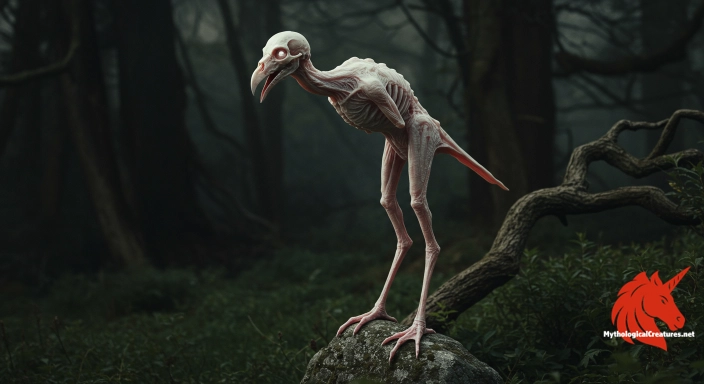
Dare to Meet the Aderyn y Corff....
The Mythological Creatures Book Series
Yokai, Greek, Norse, Egyptian & Chinese. Five illustrated field guides to the creatures the old stories either warned or told you about.



Curated by the Mythological Creatures Team
Series editor: Mythological Creatures Directory
Primary desk: Hellenic & Ancient Mediterranean Desk
(rev. November 2025)