
Pegaea: Pegaea is an Elean naiad from Greek mythology known for her healing spring waters.
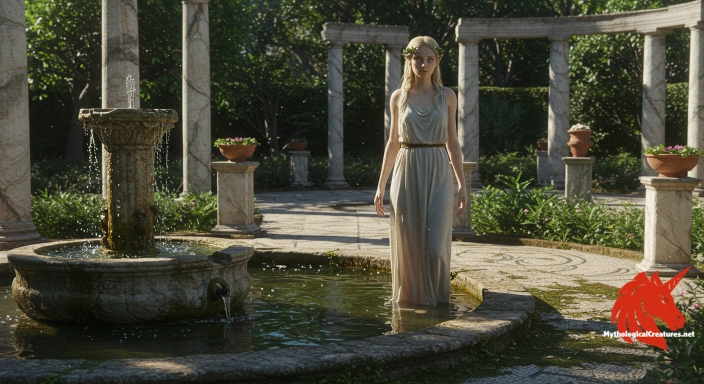
-44cd2bcd-1966-4fa1-9fa3-52101b835233_small.webp "Pegaea - Pegaea symbolizes the curative powers of spring water and holds a revered place in the healing lore of ancient Elis.")
Pegaea
Pegaea - Pegaea symbolizes the curative powers of spring water and holds a revered place in the healing lore of ancient Elis.
Origins & First Encounters
Pegaea emerges from the ancient tapestry of Greek mythology as a radiant embodiment of nature’s healing power. Belonging to the cadre of Ionides nymphs, her name, meaning 'from a spring', immediately invokes the life-giving essence of fresh water. Born to the river-god Cytherus in the region of Elis, she occupies a unique space where divinity and the natural world intertwine. Her myth reflects early Greek admiration for the curative properties of natural springs, revered both for their physical and spiritual renewal. Ancient communities regarded her as a benevolent guardian whose waters could alleviate maladies and restore vigour. The narrative of her origin is interlaced with symbolism, celebrating the bond between human resilience and the elemental force of water. In the early myths, rituals and ceremonies around her sacred spring reinforced the interdependence between the divine and the community. Her story, though enigmatic, captures the timeless allure of nature’s capacity to heal and rejuvenate. As one of the lesser-known yet profoundly significant figures, Pegaea continues to inspire admiration among those who study classical heritage. The enduring quality of her myth invites modern audiences to reflect on the ancient appreciation of nature's restorative gifts.
Source Texts & Tale Variants
The legends of Pegaea are preserved in a mosaic of ancient texts and regional oral traditions that once echoed through the landscape of Elis. Scattered references in classical writings hint at her prominence among the Ionides nymphs, with some accounts focusing on the sanctity of the spring waters linked to her. Fragments of ancient travelogues and local inscriptions suggest that devotees once visited her spring to seek healing and divine favour. Variations in the tales contribute to a rich tapestry of lore where her identity intermingles with that of neighbouring water deities. Certain regional accounts elevate her status to that of a semi-divine healer, while others accentuate her role as a custodian of nature’s purity. The intermittent mentions in mythographical records and later compilations offer glimpses into the rituals developed around her worship. Over the centuries, the traditions surrounding Pegaea were adapted to fit local cultural and medicinal practices. Even though detailed narratives are sparse, the diversity of sources underscores the profound impact of her myth on ancient healing traditions and regional folklore.
Form & Powers
Pegaea is typically envisioned with an ethereal beauty that mirrors the pristine quality of the waters from which she springs. Artists have depicted her with gently flowing hair that cascades like liquid streams, each strand catching the light in a manner that suggests the shimmer of a sunlit spring. Her eyes are often portrayed as deep pools reflecting both calm and the mysterious depths of natural healing. Classical depictions show her with a delicate, almost translucent complexion that seems imbued with the cool clarity of water. Draped in garments that appear to be spun from mist and adorned with subtle floral motifs, she embodies the grace of nature in its purest form. The contours of her form suggest both strength and fragility, symbolising the transient beauty of a natural spring in its fleeting moment of abundance. In sculpture and mosaic, her posture conveys a fluidity and dynamism reminiscent of flowing water and gentle ripples. Although artistic representations may vary slightly, the consistent imagery evokes her role as a divine emissary of healing and serenity. Her physical portrayal resonates deeply with those who see in her the embodiment of nature’s restorative balance, merging human grace with the eternal rhythm of the water cycle.
Regional Faces
Regional interpretations of Pegaea reveal an intriguing adaptation of her myth to reflect local landscapes and cultural priorities. In Elis, she was venerated not only as a water nymph but also as a symbol of the bountiful and healing natural springs that defined the area. Local rituals celebrated her presence at the source of life, with communities organising modest festivals to pay homage to the divine qualities of her waters. In some neighbouring regions, narrative variations allowed her identity to merge with indigenous beliefs about natural spirits and fertility deities. The embellishments found in regional lore often stress her benevolence and accessibility, casting her as a nurturing figure in an unpredictable natural world. Some artistic renditions in different localities enhance certain attributes, such as her luminous aura or the ritualistic use of water in healing ceremonies, to highlight local values. Oral traditions richly colour her myth, transforming her from a solitary divine figure into a collective emblem of nature’s resilience. These variations not only underscore the adaptability of her legend but also illustrate the central role of water as a universal symbol of renewal and life in local cultures. Across regions, Pegaea’s myth evolves to meet the spiritual and practical needs of communities, maintaining a common thread of reverence for natural healing.
Cultural Parallels
Pegaea’s narrative finds remarkable echoes in the broader world of water deities across diverse mythologies. Similar to the Celtic goddess Coventina, whose sacred springs symbolised purity and healing, her story underscores an enduring cultural motif that celebrates the rejuvenating power of water. In Greek mythology, her character aligns with that of other naiads, such as Arethusa, whose transformations and divine associations with water reinforce natural cycles of health and rebirth. Comparative studies reveal that many ancient societies attributed to water both a literal and symbolic capacity to cleanse and restore. The themes embodied by Pegaea can also be seen in Roman traditions, where natural springs were often ascribed to divinised figures connected with medicinal properties. This cross-cultural examination highlights a universal appreciation for the life-sustaining and healing attributes of water. The similarities extend to the iconography used in different cultures, where flowing water and luminous figures consistently represent nature’s benevolent forces. Such parallels point to an underlying human fascination with the restorative qualities of water, whether through the lens of a nymph, a goddess, or another divine spirit. Ultimately, Pegaea stands as a testament to how diverse cultures have embraced the symbolism of water as a conduit for both physical and spiritual rejuvenation.
Legacy & Modern Evolution
The myth of Pegaea has evolved remarkably from its ancient origins to acquire new dimensions in modern cultural narratives. Once considered solely a guardian of healing waters, she has come to represent the enduring interplay between nature and human wellness, resonating with contemporary eco-conscious ideologies. Modern artistic endeavours often reinterpret her image by blending classical elegance with themes of ecological stewardship and holistic health. Her emblematic association with life-giving water has inspired writers and filmmakers to explore narratives that emphasise environmental preservation alongside personal rejuvenation. Academic studies now consider her myth as a symbolic dialogue, linking ancient medicinal practices with current trends in natural therapies. The story of Pegaea is frequently invoked in discussions about the moral and spiritual responsibilities of caring for the natural world. As communities worldwide continue to seek sustainable paths to health, her legacy serves as a reminder of the timeless benefits of healing through nature. Although her ancient cult has long faded from public ritual, her myth endures in literature, visual arts, and modern spiritual practices, offering a bridge between the wisdom of ancient traditions and the challenges of today’s environmental crises. The evolution of her image from a mythic water nymph to a modern icon of natural purity underscores the transformative power of myth in continually reshaping cultural beliefs.
Interesting Fact
Pegaea's association with healing spring waters not only signifies her divine role but also reflects the ancient Greeks' early recognition of natural therapeutic practices.
For myth educators and toolmakers
Built a resource for mythology learners?
If you offer courses, teaching tools, or research platforms focused on myth and folklore, consider a discrete placement on our reference pages.
Introduce your resourceQuick Creature Info
Origin:
Associations:
Our Mythic Legendary Rating:

Habitat:
Supernatural Powers:
Physical Attributes:
Abilities:
Behavior:
Lore:
References
Discover Another Mythical Legend You May Not Have Heard Of?
Uncover the mysteries of ancient folklore and expand your knowledge of legendary beings from cultures around the world.
Dare to Meet the Lympha....
Curated by the Mythological Creatures Team
Series editor: Mythological Creatures Directory
Primary desk: Hellenic & Ancient Mediterranean Desk
(rev. November 2025)