
Penthesilea: Penthesilea was an Amazonian queen from Greek mythology renowned for her exceptional combat skills and leadership during the Trojan War.
Penthesilea
Penthesilea - Her legacy embodies the valor and tragic destiny of the Amazons, with her death symbolizing the cost of war.
Origins & First Encounters
Penthesilea is renowned as a legendary Amazonian queen whose indomitable spirit and martial prowess have captured the imaginations of many throughout history. Her mythic origins, deeply intertwined with the divine, portray her as the daughter of Ares and Otrera, placing her firmly within a tradition that celebrates both strength and defiance. Raised in an environment where combat and honour reigned supreme, she was born into a lineage that included other famed Amazonian warriors such as Hippolyta, Antiope, and Melanippe. Emerging amidst the chaos of the Trojan War, her decision to align with Troy marked a daring departure from traditional allegiances. Her early narrative reflects a blend of historical warfare and mythic symbolism, creating a multifaceted image that combines mortal endeavour with divine intervention. Beyond the battleground, her story resonates with themes of sacrifice and resilience, as she embraced her destiny with unwavering determination. Throughout her myth, Penthesilea has been depicted as embodying both raw physical power and a tragic depth of emotion. The enduring legend of her heroic battle and ultimate sacrifice continues to inspire new interpretations, ensuring her place in the tapestry of classical lore. Her tale, filled with both glory and heartache, invites modern audiences to reflect on the complexities of heroism and honour. Ultimately, her legacy challenges conventional narratives and celebrates the boundless potential of defiant femininity.
Source Texts & Tale Variants
Ancient texts have captured the dramatic essence of Penthesilea, with early accounts hinting at her pivotal role in the Trojan War. Post-Homeric narratives, particularly in epics attributed to later poets, expanded her character with vivid detail and martial spirit. Variants of her tale emerge in fragmented texts and mythographical compilations, each offering a unique portrayal of her rise and tragic fall. In these accounts, the interplay between divine lineage and mortal struggle is explored, highlighting her extraordinary abilities on the battlefield. Several versions recount her final moments with a mix of noble sacrifice and sorrow, leaving open the question of whether Achilles or Neoptolemus claimed her life. Additional dramatic treatises add layers of emotional introspection to her persona, enriching her myth with subtle psychological nuances. These diverse sources underscore how her story was continuously reshaped to reflect the shifting cultural and artistic sensibilities of the times. The mosaic of her narrative, drawn from multiple voices, makes her legend a dynamic and enduring subject of reinterpretation. Each telling contributes its own colour to the myth, ensuring that Penthesilea remains a captivating figure in the classical tradition. Such textual diversity highlights the fluidity of myth in conveying both heroism and human vulnerability.
Form & Powers
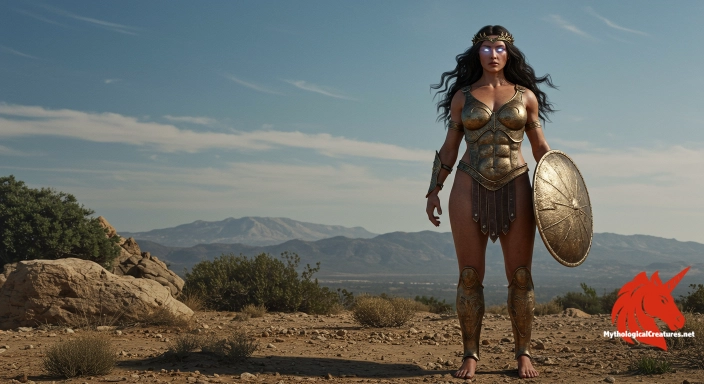
Visual portrayals of Penthesilea consistently evoke an image of commanding presence and elegant ferocity. Her depiction often emphasises a robust, athletic build that speaks to her prowess on the battlefield and her divine ancestry. Detailed artworks and literary illustrations portray her with striking features such as piercing eyes and a resolute expression that exude both determination and grace. Her flowing hair and carefully crafted armour are rendered with meticulous detail, symbolising her royal status and readiness for combat. Many depictions capture a harmonious blend of traditionally feminine beauty with the hardened resolve of a warrior queen. Some artistic interpretations even present her with an imposing stature, elevating her above mortal combatants to embody a near-mythical presence. The elaborate designs on her armour and accessories further reflect the cultural symbolism inherent in her character. This intricate portrayal serves not only as a celebration of martial strength but also as an idealised representation of the powerful female warrior archetype. Over centuries, shifts in artistic style have introduced both realistic and ethereal elements into her visual depiction, enhancing her allure. Consequently, Penthesilea’s physical image remains both a testament to ancient craftsmanship and a symbol of enduring feminist power.
Regional Faces
The myth of Penthesilea has traversed diverse cultural landscapes, with her story undergoing regional adaptations that reflect local traditions and values. In parts of ancient Greece, she was venerated as a symbol of resistance and defiance, embodying ideals that resonated with local struggles for autonomy. Some Eastern traditions elevated her to a semi-divine status, infusing her warrior ethos with elements of mystical healing and nature worship. Roman adaptations often emphasised her martial spirit and strategic acumen, aligning her narrative with the virtues of bravery admired in Roman society. During the medieval period, her tale was reinterpreted through a romantic lens, interweaving elements of tragic destiny and heroic sacrifice. Northern European renditions integrated her legend with regional folklore, celebrating her as an emblem of untamed wilderness and fierce independence. Festivals and local artistic expressions further cemented her role as a cultural icon, reflecting each community’s unique perspective on strength and defiance. These varied portrayals underscore how her myth has been reshaped to mirror the values and conflicts of different regions. The adaptability of her character highlights the universal appeal of the warrior queen archetype across time and geography. Ultimately, such regional variations have enriched Penthesilea’s narrative, fostering a diverse legacy that transcends cultural boundaries.
Cultural Parallels
Comparative analysis places Penthesilea alongside other legendary female warriors whose stories have sparked cross-cultural admiration. Her narrative intersects with that of her Amazonian kin yet stands apart for the tragic dimensions of her participation in the Trojan War. Similarities emerge between her and Celtic figures like warrior queens famed for their defiance, as both embody a fearless challenge to traditional gender roles. In Norse sagas, echoes of the shieldmaidens can be found in her portrayal, revealing a shared ethos of raw power and emotional intensity. Eastern mythologies also offer parallels, where formidable women blend martial prowess with spiritual depth. The cross-cultural motifs of sacrifice, honour, and rebellion resonate in her tale, tying her to a broader tapestry of female heroism. Comparative insights underline the way different societies have embraced the archetype of the warrior woman to comment on power dynamics and identity. By examining her alongside other celebrated heroines, one sees how Penthesilea’s legacy is part of a universal narrative that transcends specific cultural confines. Her story, steeped in both valor and vulnerability, bridges diverse mythological traditions and continues to intrigue modern audiences. This rich interplay of similarities and contrasts reinforces her standing as a timeless symbol of defiant beauty and strength.
Legacy & Modern Evolution
The legacy of Penthesilea has experienced a rich evolution from its ancient origins to its vibrant modern reinterpretations. Initially celebrated in classical narratives as a peerless warrior whose fate was intertwined with the Trojan War, her story has been continually revived and reshaped over the centuries. During the Renaissance, her myth was revisited with renewed artistic passion, transforming her image into one of tragic beauty and heroic defiance. In contemporary culture, emerging interpretations have recast her as a symbol of female empowerment and complex identity, resonating with modern sensibilities. Her portrayal in literature, film, and visual arts often highlights the tension between the strength required for battle and the poignancy of her fate. This evolving narrative reflects broader cultural debates around gender, power, and the reclamation of mythic heritage. Contemporary artists and writers draw on her story to challenge conventional narratives and inspire discussions about the roles of women in both history and myth. The dynamic reinterpretation of her legend underscores the enduring relevance of ancient stories as living, adaptable frameworks for modern expression. By bridging classical tradition with current artistic innovation, Penthesilea remains a compelling figure whose spirit continues to inspire. Her historical evolution is a powerful reminder of the transformative force of myth across time.
Interesting Fact
An intriguing facet of Penthesilea's myth is the ambiguity surrounding her death, with accounts attributing her demise to either Achilles or Neoptolemus, highlighting the often contradictory nature of mythological storytelling.
Limited sponsor opportunity
One slot, carefully chosen partners
We only feature a small number of relevant sponsors at any time. If you create serious myth content, we would like to hear from you.
Partner with usQuick Creature Info
Origin:
Features:
Associations:
Our Mythic Legendary Rating:

Habitat:
Supernatural Powers:
Physical Attributes:
Abilities:
Behavior:
Weaknesses:
Lore:
Related Creatures, Tales or Lore
- HHippolyta
- AAtalanta
- CCamilla
References
Discover Another Mythical Legend You May Not Have Heard Of?
Uncover the mysteries of ancient folklore and expand your knowledge of legendary beings from cultures around the world.
Dare to Meet the Enbarr....
Curated by the Mythological Creatures Team
Series editor: Mythological Creatures Directory
Primary desk: Hellenic & Ancient Mediterranean Desk
(rev. November 2025)