
Perchta: Perchta is an Alpine pagan goddess rooted in Germanic and pre-Germanic Celtic traditions, renowned for her dual nature as both a nurturing guardian and a strict enforcer.
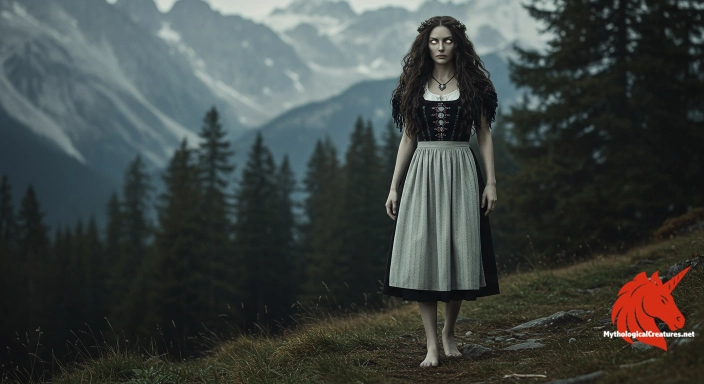
Perchta
Perchta - Perchta is a central figure in Alpine mythology, embodying the interplay of light and hidden forces, and serving as both protector and disciplinarian during winter rites.
Origins & First Encounters
Perchta, also known as Berchta or Percht, is a fascinating figure in Alpine paganism whose myth bridges ancient deities and modern cultural celebrations. She is venerated in the Upper German, Austrian, and Slovenian regions of the Alps, where traditional rituals have long kept her memory alive. Her name, bearing implications of brightness and visibility, hints at a luminous origin derived from Old High German, while alternative etymologies suggest a secret or hidden quality. Historical references to her emerge as early as the Middle Ages, yet her roots likely stretch back into pre-Germanic and even Celtic traditions. The duality of her character is evident: at times depicted as a benevolent guardian of the domestic sphere, and at other moments, as a formidable enforcer of social conduct. Her presence is intimately tied to the cold, reflective period of winter and the transitional phase of Epiphany. In rural communities, she symbolised not only the cyclical nature of the seasons but also the moral balance between reward and retribution. The lore surrounding Perchta offers a glimpse into ancient ways of understanding nature, time, and the responsibilities of daily life. Over the centuries, her enduring significance continues to shed light on the rich tapestry of Alpine myth and culture.
Source Texts & Tale Variants
Various primary sources and folkloric traditions serve as windows into the myth of Perchta. Early folklorists like Jacob Grimm and Lotte Motz recorded her stories as part of a broader network of Germanic deities, highlighting her affinity with figures such as Holda. Manuscripts and oral narratives from Alpine and neighbouring regions reveal that Perchta was not confined to a single role but exhibited a spectrum of qualities—from a nurturing caretaker to a strict judge of domestic order. Accounts collected over time describe her appearances during the Twelve Days of Christmas, when she is said to oversee household tasks like spinning and weaving. The stories vary substantially, with some variants emphasising her capacity to reward diligence and others focusing on her ability to punish laziness. These diverse narratives reflect the challenges inherent in separating historical fact from the vibrant exuberance of oral storytelling. Despite variations, the core elements of her myth, as preserved in early texts and local traditions, continue to underline her importance as both a deity and a moral force. The multiplicity of versions ensures that Perchta remains a subject of scholarly interest and a perennial feature in cultural festivals. Thus, the primary sources not only document her lore but also invite continual reinterpretation and creative retelling.
Form & Powers
Perchta’s physical depiction is as variable as the folklore that celebrates her, embodying elements of both ethereal beauty and disconcerting severity. In some traditions she appears as a radiant maiden with long, flowing hair that shimmers under the winter light, symbolising the brightness of Epiphany. In contrast, other accounts describe her as an aged crone with piercing eyes that seem to see into the hidden recesses of the human soul. She is often depicted in long, flowing garments adorned with intricate motifs that suggest an ancient, almost mystical heritage. Ethereal adornments such as silver or golden accents in her attire emphasise her celestial or divine origins. The blending of softness and severity in her physical form mirrors her dual role as both a guardian of the household and a strict enforcer of communal norms. Some descriptions even hint at subtle animalistic features or a spectral quality, reinforcing her connection with the wild and untamed aspects of nature. During festive celebrations, elaborate masks and costumes inspired by her image further highlight the mutable and richly symbolic nature of her appearance. Overall, her diverse physical iconography serves as a canvas upon which the multifaceted aspects of her character are projected.
Regional Faces
Regional variations in the legend of Perchta underscore the richness and diversity of Alpine cultural traditions. In the Upper German regions, she is revered as an emblem of rural vitality, closely linked to communities that depend on agrarian life. Austrian and Swiss traditions often portray her as a travelling figure whose nocturnal visits to households during winter ensure that all domestic duties are duly observed. In Bavarian and Swabian regions, she is celebrated with rituals and masquerades during the Twelve Days of Christmas, where her presence is both feared and honoured. Local festivities, such as the Perchtenläufe, see communities donning elaborate costumes that capture the dual nature of her character. In contrast, some areas of Alsace blend her image with Christian symbols during winter feasts, creating a syncretic mythos that bridges pagan and religious traditions. While some regional accounts cast her as a benevolent protector, other narratives emphasise her stern and punitive aspects. These local adaptations highlight how Perchta’s myth has been shaped by the specific social and environmental challenges of each community. Consequently, her regional portrayals reflect a dynamic interplay between ancient myth, local custom, and seasonal celebration.
Cultural Parallels
Perchta’s mythological narrative finds interesting parallels with several other prominent figures in European folklore. Her dual nature as a nurturer and enforcer is reminiscent of Frau Holle, a northern counterpart who similarly presides over domestic tasks and seasonal changes. Like many pantheons across Europe, the allegorical figure of Perchta encapsulates the broader themes of reward and retribution, a motif also echoed in the cautionary tales of figures like Baba Yaga in Slavic tradition. Comparative analysis shows that perceptions of female divinities who govern both fate and household order are widespread, highlighting the universal desire to balance benevolence with discipline. The transformation of her character over time mirrors that of other regional deities who have been reinterpreted to suit changing cultural circumstances. In this light, Perchta acts as a cultural bridge between the ancient pagan worldview and later Christianised interpretations of winter and morality. Her presence as a guardian of nature and domestic order resonates with similar deities in Celtic and Norse mythologies. These cross-cultural connections underscore a pan-European tradition of venerating complex female spirits who embody both beauty and sternness. In essence, the comparative studies of Perchta enrich our understanding of the shared motifs that have shaped European mythological traditions over the centuries.
Legacy & Modern Evolution
The evolution of Perchta’s legend over the centuries offers a compelling case study in the endurance of myth. Originally revered in pagan contexts as a potent emblem of natural and societal order, her image gradually shifted as Europe moved through the phases of Christianisation and modernisation. Over time, her role evolved from that of a mysterious goddess to a multifaceted symbol associated with winter festivities and the moral fabric of community life. Modern reinterpretations cast her as both a spectral guardian and a celebratory figure during events like the Perchtenlauf, where traditional masks and costumes pay homage to her rich heritage. Contemporary artists and writers frequently explore her dual nature, presenting her as a figure emblematic of female empowerment and the resilience of ancient customs. This evolution underscores the dynamic interplay between past myth and present-day cultural identity. Today, Perchta is celebrated not only as an echo of a long-forgotten pagan era but also as a vibrant component of local heritage in Alpine regions. Her legacy, woven through centuries of folklore, remains a testament to the power of myth in shaping communal values and seasonal rituals. As modern scholarship continues to unearth and reinterpret ancient texts, Perchta’s story inspires a renewed appreciation for the enduring mysteries of the past.
Interesting Fact
A particularly intriguing aspect of Perchta is the dual interpretation of her name, which can signify both brightness and concealment, mirroring her complex and multifarious role in Alpine mythology.
Advertising opportunity
Showcase your mythology project
We offer limited sponsor placements for books, courses, games, and creators aligned with our audience.
View partnership optionsQuick Creature Info
Origin:
Features:
Associations:
Our Mythic Legendary Rating:

Also Sometimes Known As:
Habitat:
Supernatural Powers:
Physical Attributes:
Abilities:
Behavior:
Lore:
Related Creatures, Tales or Lore
- HHolda
- FFrau Holle
- FFrigg
References
Discover Another Mythical Legend You May Not Have Heard Of?
Uncover the mysteries of ancient folklore and expand your knowledge of legendary beings from cultures around the world.
Dare to Meet the Squonk....
Curated by the Mythological Creatures Team
Series editor: Mythological Creatures Directory
Primary desk: Northern & European Folklore Desk
(rev. November 2025)