
Pig-faced women: Pig-faced women are legendary figures from Western Europe noted for their normal human bodies and pig-like faces.
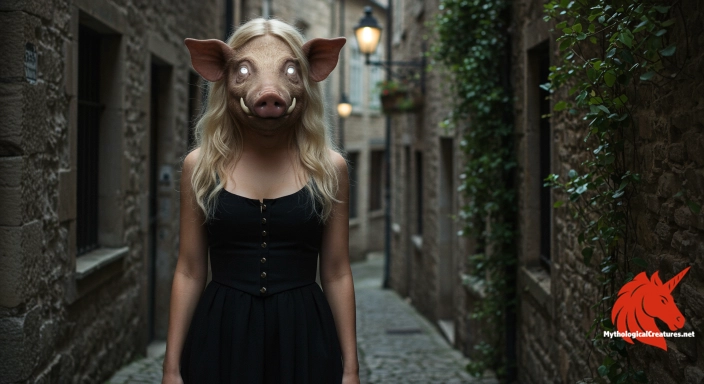
Pig-faced women
Pig-faced women - The legend of pig-faced women reflects societal anxieties about beauty, witchcraft, and the consequences of curses, serving as a cautionary tale.
Origins & First Encounters
Pig-faced women have long occupied a peculiar niche in European legend, captivating audiences with the striking contrast between human form and swine-like visage. Born from a blend of superstition and social commentary, these tales first surfaced in The Netherlands, England, and France during the 1630s. The narrative depicts a wealthy woman whose body upholds the ideals of human elegance while her face bears the unmistakable features of a pig. Dynamic themes of enchantment, choice, and the intricacies of marital relationships interweave to form a complex storyline that resonated with early modern sensibilities. The stories not only entertained but also challenged conventional notions of beauty and propriety. The myth quickly evolved from a simple morality tale into an emblem of cultural intrigue and debate. As these legends spread, they offered a subtle critique of societal expectations and the transformative power of both magic and perception. Deeply embedded in the fabric of early modern Europe, the tale of the pig-faced woman reflects prevailing anxieties about identity and the nature of true beauty. Even as modern audiences tend to dismiss them as quaint curiosities, these legends continue to invite reflection on the interplay between outward appearance and inner worth.
Source Texts & Tale Variants
The earliest accounts of pig-faced women are preserved in a range of seventeenth-century pamphlets, broadsides, and anecdotal reports that circulated rapidly among diverse audiences. Written records from The Netherlands, England, and France provide the initial templates for these mysterious stories, establishing an early foundation in print. Printed narratives transformed over time as different storytellers imbued them with varying degrees of magical and moral elements. Numerous versions emerged in both urban and rural settings, with some accounts accentuating a choice granted by a husband that could alter the curse’s visibility. In Dublin, public records and local folklore together helped cement the existence of the pig-faced woman as a subject of genuine intrigue in the eighteenth century. As the story travelled, both artistic renditions and circulated portraits reinforced the tale’s presence within popular imagination. Varied reports, sometimes blurring the boundary between fact and fiction, ensured that the legend was continually updated with local embellishments. The process of adaptation is evident in the way each source subtly shifts the focus between supernatural causation and human error. A rich body of texts and anecdotal evidence confirms that the narrative was both a product and a reflection of its time, straddling the line between myth and perceived reality.
Form & Powers
The physical depiction of the pig-faced woman is marked by a striking duality that both mesmerises and repels. Descriptions from various accounts consistently highlight a body of refined human proportions contrasted with a visage exhibiting prominent pig-like features. Her face is frequently characterised by a pronounced snout, bulbous nostrils, and coarse hair that frames her eyes, creating a discordant mask of humanity and animality. Artists and writers have rendered her appearance with a mix of realistic and exaggerated details, sometimes imbuing her with an almost surreal quality. The variability in the portrayals means that some depictions lean towards a more subdued, almost tragic aspect, while others embrace overt grotesqueness. The facial features, set against an otherwise elegantly portrayed body, serve as a metaphor for inner moral ambiguity and the complexities of human identity. A number of accounts even suggest that the extent of her deformity may have varied dynamically as part of a mysterious enchantment, enhancing the tale’s enigmatic appeal. In some versions, subtle nuances such as the curvature of her snout and the deep-set, soulful eyes have been emphasised to evoke both horror and pity. Overall, the detailed physical descriptions powerfully underscore the symbolic fusion of beauty and monstrosity in the legend.
Regional Faces
Cultural tradition has profoundly influenced the various regional iterations of the pig-faced woman legend across Europe. In The Netherlands, the saga is often presented with an air of moral caution, reflecting local concerns about the pitfalls of unchecked ambition and vanity. England contributed to the myth a flair for the dramatic, intertwining the supernatural with domestic themes in a manner that captured public attention. The French renditions tend to focus more intently on the elements of witchcraft and the mysterious origins of the curse, thereby enriching the tale’s magical dimension. In Ireland, the story was adapted into a locally resonant narrative that was as much about hidden identity as it was about social isolation. Each region reinterpreted the legend through its own cultural lens, leading to subtle variations in detail and emphasis. The urban centres of London and Dublin, in particular, saw a fusion of gossip, rumor, and public spectacle that made the tale almost palpable among everyday communities. Rural and urban accounts alike reveal an enduring fascination with the interplay between appearance and identity. Such picturesque regional adaptations not only highlight local traditions but also reinforce the universal themes that make the myth persist through the ages.
Cultural Parallels
The narrative of the pig-faced woman finds intriguing parallels with other myths where transformation embodies a deeper moral or social commentary. Comparable tales across Europe often feature characters cursed with disfiguring traits that simultaneously reflect an inner character flaw and prompt introspection about the nature of beauty. Similar to stories found in Germanic and Scandinavian folklore, this legend utilises supernatural alteration as both a literal and metaphorical device to warn against vanity or hubris. The motif of a transformative curse bears a resemblance to other legends in which an individual’s outward appearance conceals an internal virtue or vice, thereby challenging conventional definitions of beauty. In many ways, the pig-faced woman resonates with the narrative archetypes observed in fairy tales where a deceptive exterior masks a hidden truth. Other cultural traditions, including some Eastern narratives, use animalistic features to symbolise the duality of human nature, emphasising the coexistence of elegance and raw, untamed life. The structural similarity to stories of enchanted beings who are only truly seen as they are by a chosen few bolsters the universal appeal of the motif. This cross-cultural dialogue suggests that the interplay between enchantment and physical form is a common thread in the fabric of myth-making. The comparative analysis thus reveals that the symbolism embedded in the pig-faced woman legend is part of a broader mythological tradition that spans diverse cultures and epochs.
Legacy & Modern Evolution
The evolution of the pig-faced woman legend mirrors the shifts in societal attitudes and the progression of myth into modern narrative. Over time, what began as a cautionary tale imbued with supernatural intrigue gradually transformed into a piece of folklore that many accepted as more factual than fantastical. In the eighteenth and nineteenth centuries, vivid public accounts and alleged portraits bolstered the myth, turning it into a kind of local lore that even prompted travelling showmen to exhibit supposed incarnations. The transition of the legend from a story of magical transformation to a reputed fact illustrates the powerful influence of collective belief on cultural narratives. As scepticism grew with the onset of modern reporting standards and rationalist thought, the once-feared pig-faced figure slowly receded into the background of popular curiosity. Contemporary reinterpretations, though rare, often cast the myth in a new light, inviting audiences to explore themes of identity, beauty, and societal expectation. Modern artists and writers occasionally resurrect the tale, not as a literal account but as a metaphor for the concealed disparities between outer appearance and inner reality. The enduring impact of the legend is evident in its ability to provoke thoughtful discussion about the nature of transformation and the pervasive power of myth in shaping social consciousness. Ultimately, the pig-faced woman remains a testament to the rich tapestry of folklore that continues to influence contemporary cultural narratives.
Interesting Fact
An intriguing aspect of the pig-faced women legend is how a cursed condition became interwoven with social perceptions of beauty, turning a supernatural affliction into a mirror reflecting cultural anxieties about appearance and acceptance.
Support the directory
Promote your myth project and fund more research
Sponsor placements help keep this directory growing and free to use while giving your work a focused, relevant audience.
Learn how sponsorship worksQuick Creature Info
Features:
Associations:
Our Mythic Legendary Rating:

Also Sometimes Known As:
Habitat:
Supernatural Powers:
Physical Attributes:
Abilities:
Behavior:
Weaknesses:
Lore:
Related Creatures, Tales or Lore
- PPig-faced Lady of Manchester
- PPig-faced Lady of Marylebone
- HHog Woman
References
Discover Another Mythical Legend You May Not Have Heard Of?
Uncover the mysteries of ancient folklore and expand your knowledge of legendary beings from cultures around the world.
Dare to Meet the Chione....
-0c0df11f-3794-4876-ab63-6b989c908748_small.webp "Depiction of Chione")
Curated by the Mythological Creatures Team
Series editor: Mythological Creatures Directory
Primary desk: Northern & European Folklore Desk
(rev. November 2025)