
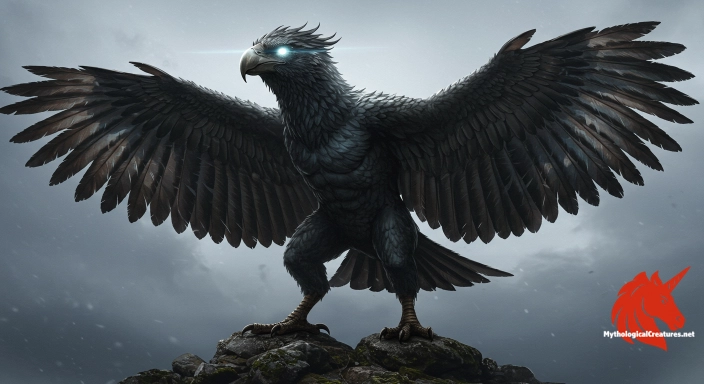
Pouākai: The Pouākai is a colossal, monstrous bird hailing from Māori mythology.
Pouākai
Pouākai - In Māori tradition, the Pouākai embodies the raw, unpredictable power of nature and serves as a cautionary symbol against the untamed wilderness.
the legend in five swipes.
the legend in five swipes.
Pouākai: First Encounters and Early Records
The pouākai emerges from the depths of Māori mythology as a formidable and enigmatic force, its story woven into the rich tapestry of ancestral lore. Its legend has been passed down through countless generations via oral traditions that blend reverence and caution. The creature’s origins are as mysterious as the raw landscapes that birthed its myth, hinting at ancient encounters between humanity and the untamed wilds. In many narratives, the monstrous bird is depicted as both a warning against human hubris and a reflection of nature’s unpredictable might. Early attestations, preserved in ceremonial chants and communal storytelling, underscore its role as a symbol of cosmic balance. The pouākai’s presence is intricately linked to the natural world, its very essence echoing the forces of creation and destruction. This storied being occupies a central place in the cultural memory of Māori communities, representing the interplay between spiritual presence and physical existence. Over time, its myth has evolved, absorbing layers of cultural meaning that continue to resonate with both traditional and contemporary audiences. Its enduring allure lies in its ability to encapsulate the awe-inspiring and sometimes perilous beauty of the natural environment.
What sources tell us about the Pouākai?
The primary accounts of the pouākai are rooted in the vibrant oral traditions that have long been the lifeblood of Māori storytelling. Narratives of this monstrous bird have been transmitted through generations, often embedded in the chants recited during communal gatherings and ceremonial rites. Various iwi have embraced its legend, each adding distinctive details to its portrayal, which sometimes vary between roles of cautionary monster and potent guardian. Early European observers recorded fragments of these tales, noting that the creature held a significant place in the symbolic landscape of Māori spirituality. In many of these recitations, the pouākai is not merely a creature of terror but also a complex emblem of nature’s indomitable force. Story variants have evolved over time, with some accounts emphasising its role in retribution and others highlighting its sacred connection to the land. The scattered references found in early mission journals and settlers’ writings offer just a glimpse into the intricate tapestry of its myth. Although written sources remain limited by the oral focus of Māori tradition, contemporary efforts have sought to compile and interpret these diverse story strands. This gathering of variants has enriched our understanding of the creature’s multifaceted role in the cultural and spiritual lives of its people.
Pouākai: What the Legends Describe
The pouākai is vividly imagined as an immense avian creature whose physical form defies ordinary measurements. Its wings are described as vast and powerful, capable of spanning several metres, and are often depicted with a sheen that shifts subtly between deep, shadowed hues and glints of iridescence. The creature’s eyes are piercing and intense, embodying a predatory acuity that mirrors the wild unpredictability of nature. A sharply curved, formidable beak dominates its visage, suggesting an innate capacity for both protection and ferocity. Talons, as robust and menacing as forged blades, complete its fearsome appearance, hinting at a predatory prowess that has captivated the imaginations of its chroniclers. The plumage is frequently illustrated as dark, yet laced with unexpected bursts of colour reminiscent of twilight’s transient glow. Some traditions note that the pouākai’s feathers themselves seem to reflect the shifting moods of its surroundings, occasionally catching light in ways that render its form ethereal. Depictions vary slightly across time and tales, with some accounts imbuing the creature with a subtle, almost spectral luminescence, while others stress its brutal, earthly aspect. This balance between elegance and savagery in its anatomy reinforces its status as a living embodiment of nature’s dual essence.
How do regional versions of the Pouākai differ?
Regional lore provides a fascinating insight into how the pouākai’s myth has been adapted to reflect local cultural and environmental contexts. In certain parts of the North Island, it is portrayed as a spectral sentinel that both guards and challenges the boundaries between the human realm and the spirit world. Other communities in the South Island associate the creature with the untamed energy of coastal storms and rugged highland terrains, thereby linking it to the raw forces of nature. Variations in its physical description, such as differences in feather colouration or size, often reflect the specific landscapes and climates of each region. In some local narratives, the pouākai is seen as an omen of change, its appearance foretelling shifts in weather or even in the fortunes of the community. Regional storytellers have infused their versions with symbols drawn from the indigenous environment, integrating elements of land, sea, and sky into the creature’s portrayal. These adaptations not only enrich the legend but also allow each community to assert its unique connection to the natural world. By tailoring the narrative to reflect local identity and experience, the pouākai remains a versatile and deeply ingrained cultural symbol. Overall, these regional variations serve to highlight the dynamic interplay between myth and the lived environment of the people who have nurtured its legacy over centuries.
How does the Pouākai legend compare worldwide?
When examined alongside other mythological avians, the pouākai reveals striking similarities to creatures found in diverse cultural traditions around the world. Its formidable nature and association with elemental forces invite comparisons with the Native American Thunderbird, a symbol of both divine power and natural retribution. In a similar vein, legends surrounding the pouākai echo themes found in Eurasian myths where monumental birds serve as omens of both creation and destruction. The creature’s dual role as both a guardian and a harbinger of chaos aligns it with mythic figures like the South Asian Garuda, who likewise embodies the tension between might and benevolence. Such comparative analysis underscores a common human fascination with monstrous birds, suggesting that they serve as potent symbols for nature’s unpredictable and overwhelming force. The cross-cultural parallels emphasize an enduring motif: the portrayal of celestial or supernatural birds as arbiters of cosmic order. These similarities hint at a shared symbolic language that transcends geographical boundaries, uniting disparate folk traditions under a common narrative of awe and respect for the natural world. Ultimately, the pouākai stands as a vivid testament to the universal human impulse to mythologise the forces that lie beyond understanding, weaving together threads of fear, respect, and wonder across cultures.
Where do you see the Pouākai today?
Across the passage of time, the myth of the pouākai has continuously evolved, acquiring fresh layers of meaning that speak to both historical rhythms and modern sensibilities. Early depictions of the creature emphasised its role in natural retribution and the raw power of the wilderness, a narrative that resonated deeply with indigenous concepts of balance and respect. With the resurgence of interest in Māori cultural heritage, the pouākai has found new life in artistic and literary expressions that recontextualise its traditional symbolism. Contemporary artists and writers often portray the monstrous bird as a metaphor for environmental resilience and the urgent need to preserve natural landscapes. The modern reinterpretation of its legend also reflects a dialogue between past and present, where ancient myth meets contemporary issues such as ecological degradation and cultural revitalisation. As new generations seek to reconnect with their heritage, the pouākai is celebrated not only as a figure of ancient lore but also as a dynamic symbol capable of inspiring change. Festivals, community art projects, and academic studies continue to uncover and reinterpret its multifaceted legacy, ensuring that the creature’s myth remains vibrant and relevant. This ongoing evolution encapsulates the power of myth to adapt and endure, serving as a bridge between traditional wisdom and the modern world. In this way, the pouākai is as much a guardian of cultural memory as it is a beacon for future generations striving to understand the complex interplay between nature and human identity.
Interesting Fact
An interesting observation is that legends of gigantic, predatory birds appear in diverse cultures worldwide, with the Pouākai uniquely reflecting the Māori interpretation of nature’s fierce beauty and danger.
Mythological Treasures
Japanese Yokai: A field guide to the spirits and demons of Japanese folklore
Fifteen spirits, with the signs to watch for and what the old tales say to do if you meet one.
Greek Myths: A field guide to the monsters of ancient Greece
Every monster here earned its place in legend, and each gets a full page of artwork and the story behind it.
Norse Sagas: A field guide to the beasts of the Viking world
Drawn from the saga accounts themselves, with the powers, weaknesses and doom of each being set out.
the legend in five swipes.
For publishers and studios
Your next readers are already here
Many of our visitors are looking for books, campaigns, and resources that deepen their journey into myth. Position your title or setting here.
Discuss a placementQuick Creature Info
Origin:
Associations:
Our Mythic Legendary Rating:

Also Sometimes Known As:
Habitat:
Supernatural Powers:
Physical Attributes:
Abilities:
Behavior:
Lore:
References
Discover Another Mythical Legend You May Not Have Heard Of?
Uncover the mysteries of ancient folklore and expand your knowledge of legendary beings from cultures around the world.
Dare to Meet the Korrigan....
The Mythological Creatures Book Series
Yokai, Greek, Norse, Egyptian & Chinese. Five illustrated field guides to the creatures the old stories either warned or told you about.
Curated by the Mythological Creatures Team
Series editor: Mythological Creatures Directory
Primary desk: Asian & Pacific Myth Cycles Desk
(rev. November 2025)