
Priapus: Priapus is a minor rustic fertility god from Greek mythology known for his exaggerated phallic attributes and role as a protector of gardens and livestock.
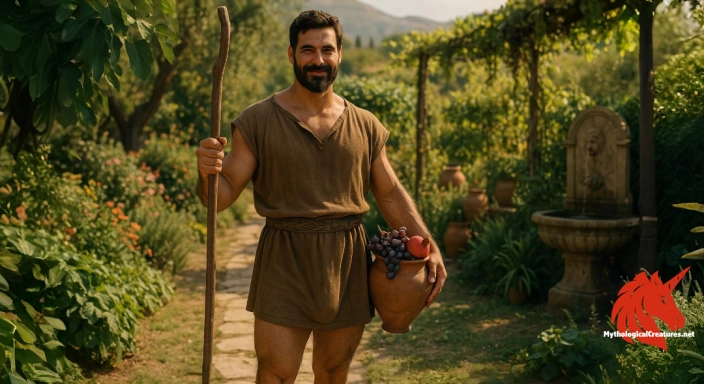
Priapus
Priapus - Represents fertility, abundance, and the protective aspects of rural life
Origins & First Encounters
Priapus is a striking figure emerging from the rustic traditions of ancient Greek mythology, celebrated for his powerful association with fertility and the natural bounty of the countryside. His origins lie in the convergence of agricultural rites and the exuberant expressions of sexuality, giving him a place as a guardian of gardens, orchards, and livestock. His myth rapidly journeyed from the humble settings of rural cults to become a prominent emblem in both Greek and Roman artistic traditions. In early narratives, his presence was interlaced with the rhythms of planting and harvest, symbolising nature’s continuous cycle. The intertwined aspects of virility and protection in his character granted him a multifaceted role, blending the sacred with the playful. Artistic depictions emphasised his earthy charm alongside a potent capacity to influence growth and renewal. His myth, replete with ironic humour and robust imagery, reflects the communities’ deep-seated wish for prosperity and abundance. Over time, the figure of Priapus became a cultural touchstone that encapsulated the raw, unfiltered energy of the natural world.
Source Texts & Tale Variants
Ancient literary and artistic sources provide a fascinating window into the layered narrative of Priapus. His story appears in a variety of texts, including the famously ribald verses compiled in the Priapeia, where explicit humour and sexual exuberance are paramount. Complementing these literary accounts, visual representations in mosaics, frescoes, and garden statues vividly capture his unique character. Diverse manuscripts and inscriptions from both Greek and Roman contexts reflect the evolution of his myth, revealing a tradition that was as mutable as it was ubiquitous. Some narratives portray him purely as a rustic protector, while others imbue him with a more mischievous and almost subversive charm. The varied artistic details across these sources speak to regional interpretations and evolving tastes in mythological symbolism. Beyond formal texts, local folklore and ritual practices often reinterpreted his attributes to suit communal needs, blending high art with everyday life. These multifaceted sources together create an intricate mosaic of stories that illustrate the enduring appeal and controversial nature of Priapus.
Form & Powers
Physically, Priapus is rendered in ancient art with an unmistakable emphasis on his exaggerated anatomical features, most notably his permanent and oversized erection. His robust form is typically depicted with a muscular build that exudes raw vitality and virility. This dominant physical attribute serves as both a symbol of generative power and as a source of irreverent humour in the visual tradition. Sculptures and reliefs often feature him with a somewhat rugged, unadorned appearance, in keeping with his rustic origins. His facial expressions can range from mischievous to impish, reinforcing the playful duality inherent in his character. Attire and accessories in his depictions are kept minimal, ensuring that his remarkable physique is the central focus of the representation. Natural elements such as ivy or fruit motifs are sometimes intertwined in his imagery, linking him with the abundance of the earth. The deliberate exaggeration of his features in art highlights both the sacred significance of fertility and the comic undertones that have come to define his myth.
Regional Faces
Regional interpretations of Priapus demonstrate a rich diversity that mirrors the varied cultural landscapes of the ancient Mediterranean. In his Greek origins, he was revered as a rustic deity closely associated with the cycles of nature and agricultural renewal. With the rise of Roman influence, his representation evolved into one that balanced both explicit sexual iconography and an affectionate, protective spirit. In several parts of Italy, for example, his effigies adorned gardens and public spaces where he was thought to ward off misfortune and bring forth abundance. The way in which communities integrated local symbols, such as indigenous flora and rustic motifs, underscored the adaptability of his character. In provincial settings, his image was often recast in forms that resonated with local customs and superstitions, thereby strengthening his role as a guardian spirit. This regional variability in his depiction reflects broader cultural dynamics, where the interplay between mythology and everyday life is particularly pronounced. The evolution of his iconography across regions illustrates a seamless blend of high mythological ideals with the practicalities of rural belief systems.
Cultural Parallels
The iconography and myth of Priapus find intriguing parallels in several other cultural and religious traditions that celebrate the power of fertility and the life force. His overwhelming physical prominence mirrors the robust imagery of other deities such as the Greek god Dionysus, whose representations elucidate the dual nature of divine ecstasy and earthy exuberance. Similar parallels can be drawn with the Egyptian god Min, whose exalted phallic symbolism too represents the generative forces of nature. The humorous yet potent representation of Priapus also recalls elements seen in portrayals of Pan, emphasising both the vitality of nature and the inherent mischief found within the natural order. These cross-cultural echoes highlight a recurring motif in ancient religions, where the phallus serves as a universal emblem of creation and abundance. Such comparative analysis underscores how different societies have utilised comparable symbols to manifest their reverence for fertility and renewal. Even as local narratives differ, the underlying theme of life’s regenerative power remains a common thread. This intertextual dialogue across traditions enriches our understanding of how ancient cultures balanced the sacred and the profane, weaving a rich tapestry of myth through shared motifs.
Legacy & Modern Evolution
The historical trajectory of Priapus offers a compelling example of how myth evolves alongside social and artistic change. Initially revered in the rustic settings of the ancient world, his image transitioned from that of a rural protector into a figure celebrated in Roman erotic art known for its overtly bawdy humour. Reimagined during the Renaissance, his classical origins were both revived and reinterpreted, allowing artists to explore themes of fertility with a blend of reverence and satire. His enduring influence is evident in modern popular culture, where his image appears in various artistic media, from contemporary sculptures to playful literary references. The medical term priapism, derived directly from his name, remains a prominent reminder of his mythic legacy and the lasting impact of his symbolic representation. Over the ages, interpretations of Priapus have shifted to mirror changing societal attitudes toward sexuality and the body, yet his association with life’s generative power remains constant. Today, his image fosters discussions about the boundaries between the sacred and the profane, blending historical context with modern humour. His myth continues to inspire and provoke as a timeless emblem of fertility, strength, and the transformative energies of nature. The evolution of his character demonstrates the fluidity of myth, adapting to cultural shifts while maintaining a resonant core of enduring human fascination.
Interesting Fact
Priapus is one of the few deities whose exaggerated physical attribute not only defined his myth but also contributed a term to modern medical vocabulary, known as priapism.
For indie creators
Give your myth project a permanent home
Indie authors, artists, small studios, and makers can secure an annual, non-intrusive sponsor slot that meets readers where they explore.
Obtain more informationQuick Creature Info
Features:
Associations:
Our Mythic Legendary Rating:

Also Sometimes Known As:
Habitat:
Supernatural Powers:
Physical Attributes:
Abilities:
Behavior:
Lore:
Related Creatures, Tales or Lore
- FFascinus
- FFreyr
- DDionysus
References
Discover Another Mythical Legend You May Not Have Heard Of?
Uncover the mysteries of ancient folklore and expand your knowledge of legendary beings from cultures around the world.
Dare to Meet the Hue-tsiau....
Curated by the Mythological Creatures Team
Series editor: Mythological Creatures Directory
Primary desk: Hellenic & Ancient Mediterranean Desk
(rev. November 2025)