
Puriel: Puriel is a fiery and pitiless angel featured in the Testament of Abraham, tasked with examining the souls of the departed as they enter heaven.
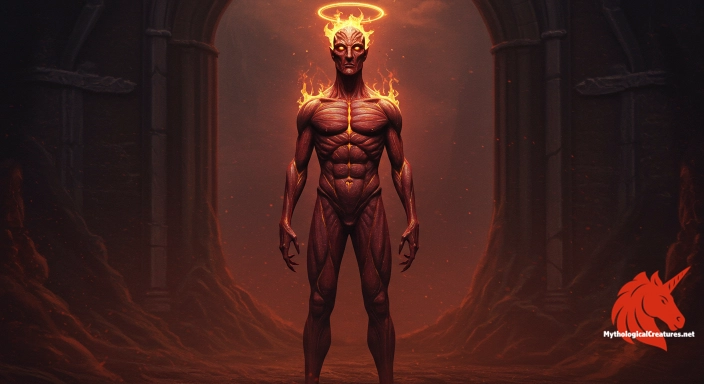
Puriel
Puriel - Puriel is significant in apocalyptic literature as an angel tasked with the examination of souls.
Origins & First Encounters
Puriel emerges from the mists of ancient apocryphal literature as a formidable angelic figure, renowned for his role in scrutinising the souls of the departed. Born from the rich narrative of the 2nd century Testament of Abraham, his origins are interwoven with themes of divine justice and celestial order. Known by various names including Pyriel, Puruel, Pusiel, Pyruel, and Purel, his multifaceted identity underlines the enigmatic nature of early angelology. His role as an examiner of souls grants him a critical position within the divine hierarchy, setting him apart as both arbiter and cleanser. The descriptions of Puriel, marked by an essence that is both fiery and pitiless, contribute to a sense of awe and trepidation among believers. His first attestation within the apocalyptic journey of Abraham not only frames him as a purveyor of divine retribution, but also echoes broader themes in early spiritual narratives. The narrative context speaks to a period when the mysteries of life, death, and judgement demanded a personification through compelling mythic symbols. The symbolic interplay of fire and judgement in his character highlights how mortal destiny was perceived in contexts of spiritual trial and purification. Rooted in an era that embraced the interplay of human frailty and divine might, his legend continues to intrigue modern audiences. As a result, Puriel has endured as a testament to the enduring human fascination with the cosmic forces that govern fate and morality.
Source Texts & Tale Variants
The primary source that introduces Puriel is the Testament of Abraham, a 2nd century apocalyptic text that vividly recounts Abraham's celestial journey. Embedded within this narrative, Puriel’s presence is marked by the distinctive attribution of fiery and pitiless traits. The text, along with its varied manuscript traditions, provides multiple renditions of his name and role, emphasising the fluidity of early angelic lore. Alongside Dokiel, he is portrayed as a crucial figure in the divine process of soul examination, a role that underscores the themes of accountability and cosmic order. Several apocryphal texts, while not universally recognised in canonical scripture, have contributed layers of complexity to his character. Divergent accounts within these texts offer subtle nuances, ranging from the intensity of his gaze to the severity of his actions. The multiplicity of his appellations across different manuscripts illuminates the evolving nature of myth and the way early storytellers sought to capture the ineffable aspects of divine judgement. Other apocryphal and pseudepigraphical sources have occasionally referenced similar roles, thereby situating Puriel within a broader celestial bureaucracy. The interplay between these various texts enriches our understanding of his mythic function and cements his place in early eschatological narratives. Overall, the textual tradition surrounding Puriel invites contemporary readers to reflect on the varied interpretations and enduring mysteries of angelic judgement.
Form & Powers
Puriel is depicted with a striking physicality that immediately captures the imagination, most notably through his association with fire. His form is often rendered as being enveloped in an aura of blazing flame, which symbolises both purification and the transcendent power of divine light. Artistic portrayals frequently illustrate him with wings that shimmer like molten embers, accentuating his otherworldly presence. His eyes are typically described as burning with a relentless intensity, offering a window into the deep, uncompromising nature of his judgement. The imagery surrounding him conveys a sense of overwhelming might, often accentuated by a towering stature that eclipses mortal scale. In certain depictions, his figure merges amorphously with the fire, blurring the lines between the physical and the metaphysical. Subtle details such as shifting, incandescent contours add layers of intrigue to his representation, suggesting that he is as mutable as the flames that embody him. This dynamic presentation underscores his position as both a guardian and an avenger within the celestial realms. Every expressive element of his form, from the sharpness of his gaze to the relentless flicker of his surroundings, reiterates the severity and finality of divine judgement. Ultimately, Puriel’s physical depictions serve not only as visual metaphors for moral reckoning but also as enduring symbols of the overwhelming power of the divine.
Regional Faces
The myth of Puriel, though originating within the Judeo-Christian apocrypha, has undergone fascinating transformations as it traversed different cultural landscapes. In Eastern Christian traditions, he is occasionally portrayed as a stern sentinel at the threshold between the mortal realm and the divine, his burning presence symbolising the inescapable nature of spiritual evaluation. Western medieval art, on the other hand, often appropriates his fiery attributes to emphasise themes of retributive justice and the merciless execution of divine will. In various Middle Eastern traditions, local iconography has blended Puriel’s core attributes with regional aesthetic motifs, resulting in depictions that accentuate both his terrifying and redemptive characteristics. Some regional narratives have even intertwined his tale with indigenous legends of fire and purification, creating a multifaceted character that adapts to local moral sensibilities. These adaptations have occasionally seen his role being expanded or subtly altered to suit contemporary theological debates and artistic trends. The blend of his traditional apocryphal origins with local interpretations highlights the universal human quest to understand the mechanisms of divine judgement. As communities across different geographical areas absorb and reinterpret his myth, Puriel’s narrative evolves, perpetually resonating with themes of justice and metamorphosis. Such regional variations underscore the fluidity of myth, where a singular, powerful symbol like Puriel can assume multiple faces while retaining an essence of inexorable truth. This diversity in portrayal not only enriches his character but also aligns with the varied cultural philosophies regarding the afterlife and divine order.
Cultural Parallels
Puriel’s uncompromising nature and his role as an examiner of souls invite intriguing comparisons with similar figures across various mythologies. His function finds echoes in the figure of Azrael within Islamic tradition, who is similarly tasked with ushering souls from the earthly plane into the realm of the divine. The steadfast demeanour of the Archangel Michael in Christian narratives also resonates with Puriel’s portrayal, highlighting a shared motif of celestial adjudication. Beyond the confines of monotheistic systems, mythic figures such as Yama in Hindu mythology or even Grim Reapers in diverse cultural contexts manifest analogous themes of mortal evaluation and cosmic balance. The elemental aspect of fire, so central to Puriel’s iconography, finds parallels in deities like Agni, who symbolise both the creative and destructive capacities of flame. Additionally, Greco-Roman myth enshrines characters associated with purgative fire and transformational justice, providing further comparative frameworks. The widespread cross-cultural resonance of these archetypes underlines a universal human concern with the concepts of purity, sin, and moral rectitude. Such comparative analysis emphasises that while the names and specific attributes may differ, the fundamental belief in a higher order that scrutinises human actions is a recurring motif. This shared mythological heritage fosters a rich dialogue across traditions, melding concepts of celestial justice with the inexorable workings of nature. In this sense, Puriel stands as a compelling representative of a broader archetype dedicated to the unwavering and often fearsome process of spiritual evaluation.
Legacy & Modern Evolution
Across the span of centuries, the image of Puriel has evolved from a peripheral figure in a singular apocryphal narrative to a prominent symbol of divine authority and retributive fire. Early Christian and Jewish mysticism established him as an indispensable agent of cosmic balance, whose role in examining souls resonated with believers across tumultuous epochs. As the medieval period unfolded, his iconography was adopted into dramatic visual and literary representations that underscored themes of moral accountability and divine retribution. This evolution continued into the modern era, where Puriel has been reimagined in contemporary literature, graphic novels, and film, often serving as a metaphor for the relentless pursuit of justice. New artistic interpretations have imbued him with both timeless severity and an enigmatic beauty, capturing the tension between punishment and purification. His portrayal in modern occult and esoteric circles further cements his status as a dynamic symbol, reflecting ongoing cultural debates about the nature of sin and redemption. Over time, the fiery aspects of his character have continued to inspire discussions about the transformative power of fire in both a literal and metaphorical sense. As reinterpretations accumulate, Puriel remains a potent emblem, bridging historical lore with modern creative explorations. In this way, his legacy endures not only as a stern messenger of divine will but also as an invitation to reflect on the complexities of cosmic justice. The continued fascination with his myth underscores an enduring human quest to understand the interplay between the mortal and the divine.
Interesting Fact
Puriel’s portrayal as both fiery and pitiless contrasts with more benevolent depictions of angels, highlighting the diverse roles angels play in ancient apocryphal traditions.
Mythology commerce, done carefully
Align your store with our global myth audience
If you sell myth-inspired jewellery, prints, decks, or collectibles, we can feature your brand without overwhelming the reading experience.
Partner with usQuick Creature Info
Origin:
Associations:
Our Mythic Legendary Rating:

Also Sometimes Known As:
Habitat:
Supernatural Powers:
Physical Attributes:
Abilities:
Behavior:
Lore:
Related Creatures, Tales or Lore
- DDokiel
- GGabriel
- MMichael
References
Discover Another Mythical Legend You May Not Have Heard Of?
Uncover the mysteries of ancient folklore and expand your knowledge of legendary beings from cultures around the world.
Dare to Meet the Phoenissa....
-92bb28d9-066c-4146-ba7c-90f92826c2a5_small.webp "Depiction of Phoenissa")
Curated by the Mythological Creatures Team
Series editor: Mythological Creatures Directory
Primary desk: Hellenic & Ancient Mediterranean Desk
(rev. November 2025)