
Qianlima: The Qianlima is a legendary winged horse from Chinese classics, celebrated for its incredible speed.
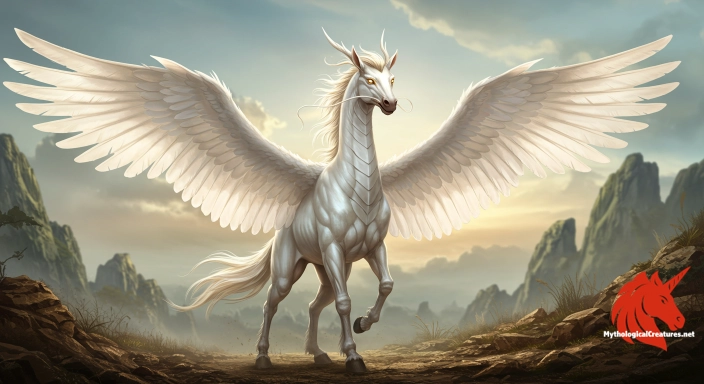
Qianlima
Qianlima - Used as a metaphor from the 3rd century BCE and remains influential in modern symbolism, notably in North Korea.
Origins & First Encounters
The qianlima, often known as the 'thousand-li horse,' originates from ancient Chinese classics and embodies a powerful symbol of unbridled speed and talent. Its legendary journey is said to span a thousand li in a single day, igniting the imaginations of poets and historians alike. This exceptional steed has been revered since the 3rd century BCE as a metaphor for remarkable prowess and extraordinary achievement. Classic texts depict it as being too swift and graceful for mortal riders, elevating it above ordinary existence. The creature’s myth is interwoven with a rich tapestry of literary tradition and cultural aspiration.
Deeply embedded in East Asian lore, the qianlima reflects ideals of perfection and creative excellence. Its narrative bridges the gap between the tangible natural world and the realm of myth, inspiring admiration and artistic expression. The horse’s representation has evolved over the centuries, melding historical reverence with imaginative storytelling. Artistic renderings consistently capture its ethereal dynamism and symbolic significance. Overall, the qianlima continues to serve as an enduring emblem of exceptional talent and the quest for transcendence in cultural memory.
Source Texts & Tale Variants
Ancient Chinese texts and classical literature provide the earliest attestations of the qianlima, cementing its role within the vast landscape of East Asian mythology. These writings vividly portray a creature endowed with supernatural speed and an elegance that transcends the ordinary. In numerous accounts, the qianlima appears as a metaphor for outstanding ability, often linked with celebrated steeds like the Red Hare. The narrative is enriched by poetic embellishments and allegorical details that enhance its mystical allure. Written records and folklore converge to offer a complex picture of a horse that defies mortal limitations.
Over time, oral traditions and regional literature have introduced variant stories that infuse the qianlima with additional layers of meaning. Different storytellers have recast its role, highlighting aspects of fortune, destiny, and even moral virtue. The multiplicity of narratives has allowed the creature to evolve dynamically, reflecting the changing values of diverse communities. Each variant contributes unique nuances that further deepen its mythic stature. Together, these sources create a living tradition where the qianlima remains a potent symbol of rapid, transformative power.
Form & Powers
The physical portrayal of the qianlima is as captivating as its storied reputation, combining natural elegance with hints of the supernatural. Most depictions render its coat as luminous and sleek, with colours that seem to shimmer like the first light of dawn over distant hills. Artists often illustrate a flowing mane that cascades with ethereal grace, evoking both strength and fluidity. Many traditional images include majestic wings, underscoring its power to transcend mortal boundaries, even though not every account features them. This infusion of delicate beauty with dynamic motion creates an image that is both formidable and enchanting.
The creature’s eyes are typically described as profoundly expressive, suggesting a depth of wisdom that bridges the natural and the divine. Its muscular build, graceful yet powerful, hints at an almost superhuman athleticism, while its firm, radiant hooves appear almost as if they carry sparks of cosmic energy. Although interpretations of its size may vary, the qianlima is usually envisioned as larger than an ordinary horse, exuding an aura of majestic grandeur. Detailed artistic renderings capture subtle contours and refined features that bring the creature vividly to life. This synthesis of physical attributes ensures that the qianlima remains an unforgettable symbol of both beauty and might.
Regional Faces
The myth of the qianlima has traversed regional boundaries, adapting its form and symbolism to fit diverse cultural landscapes. In its native China, the creature is celebrated for its integration into classical literature, where its extraordinary speed and elegance reflect ideals of excellence and prophetic talent. As the legend migrated to Korea, it underwent a fascinating transformation into the chollima, acquiring additional layers of political and cultural significance. Korean interpretations tend to highlight its role as a dynamic emblem that not only represents swift movement but also embodies the spirit of rapid progress. In Japan, the version known as the senrima blends traditional aesthetics with local mythic interpretations, ensuring its resonance within a distinct cultural context.
Each regional adaptation enriches the core myth by infusing it with local symbols, artistic flourishes, and unique narrative themes. These diverse variants reflect the particular aspirations and values of their respective cultures, be it literary grandeur in China or modern dynamism in Korea. The evolving portrayals underscore the creature’s flexibility in symbolising ideals such as perseverance, transcendence, and ambition. Local artists and storytellers have added innovative visual and narrative elements, further diversifying its legend. This cultural mosaic illustrates how the qianlima continues to exhilarate and inspire communities across the region.
Cultural Parallels
A comparative analysis reveals that the qianlima shares striking parallels with other legendary horses, most notably the winged Pegasus of Greek mythology. Both creatures are celebrated for their ethereal beauty and unparalleled speed, yet each occupies a unique niche defined by its cultural origins. While Pegasus is frequently entwined with heroic exploits and the divine intervention of ancient Western tales, the qianlima resonates as a symbol of inexhaustible talent and spiritual aspiration. The dual imagery of flight and swiftness acts as a common thread, uniting these myths across vast cultural divides. Their narratives speak to a universal human admiration for the extraordinary, transcending geographical and historical bounds.
The qianlima also finds a parallel in other celebrated equine figures such as the Red Hare, which occupies an equally prominent space in Chinese lore. Unlike its Western counterparts, the qianlima is often imbued with layers of allegorical meaning that connect both myth and modern symbolism. The intermingling of physical prowess with metaphoric significance sets it apart and highlights a broader dialogue between myth and cultural identity. These cross-cultural comparisons reveal that legendary horses, regardless of their origin, embody virtues that continue to resonate powerfully in the human psyche. Through this lens, the qianlima stands as a distinctly Eastern interpretation of a timeless mythic archetype.
Legacy & Modern Evolution
The evolution of the qianlima from ancient myth to contemporary iconography epitomises the adaptability of legend over time. Initially recorded in classical Chinese texts as a celestial steed of unmatched speed, its image gradually expanded to embrace a spectrum of cultural and political meanings. In historic narratives, the horse symbolised not only physical swiftness but also an aspirational standard for intellectual and artistic excellence. Over the centuries, its depictions have been continually refined, reflecting shifts in societal ideals and the dynamic interplay between tradition and modern innovation. The adaptability of its form allowed the qianlima to seamlessly transition from literary allegory to a herald of modern progress.
Today, the creature enjoys renewed prominence in contexts such as the North Korean chollima movement, where it serves as a metaphor for rapid development and unyielding spirit. Contemporary visual arts, literature, and even commercial branding have embraced the qianlima, reinvigorating its image with fresh, modern interpretations. This transformation underlines how timeless myths can be repurposed to articulate the ambitions and dreams of new generations. The qianlima’s ongoing legacy attests to its enduring power as a symbol, bridging epochs and inspiring creative renewal across East Asia and beyond. Its story continues to evolve, capturing the eternal human desire to transcend the ordinary and achieve the extraordinary.
Interesting Fact
The Qianlima's legacy endures in modern culture, notably influencing North Korea's Chollima Movement, which aimed to rapidly develop the nation through collective effort and swift progress.
Mythology-aligned partners
Showcase your myth-friendly brand here
Run a store, studio, or platform that lives in the world of myth and folklore? A curated sponsor panel on these pages may fit.
Explore partnership optionsQuick Creature Info
Associations:
Our Mythic Legendary Rating:

Also Sometimes Known As:
Habitat:
Supernatural Powers:
Physical Attributes:
Abilities:
Behavior:
Lore:
References
Discover Another Mythical Legend You May Not Have Heard Of?
Uncover the mysteries of ancient folklore and expand your knowledge of legendary beings from cultures around the world.
Dare to Meet the Leviathan....
Curated by the Mythological Creatures Team
Series editor: Mythological Creatures Directory
Primary desk: Asian & Pacific Myth Cycles Desk
(rev. November 2025)