
Schrat: The Schrat is a multifaceted creature from German and Slavic folklore, embodying aspects of a wood sprite, a domestic helper, and a nightmare demon.
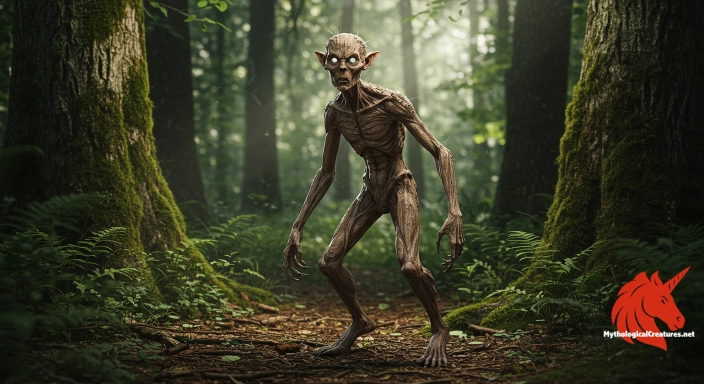
Schrat
Schrat - Embodies the duality of nature—both nurturing and potentially malevolent, reflecting the unpredictable forces of the wild.
Origins & First Encounters
The Schrat is a chimeric creature rooted in the rich tapestry of German and Slavic folklore, embodying varied roles as a wood sprite, domestic spirit, and even a harrowing nightmare demon. It emerged from the murky depths of medieval oral traditions and early folklore, captivating audiences with its ambiguous nature. Its first attestations appear in local legends that date back several centuries, where villagers would recount encounters deep in ancient forests and by moonlit hearths. The very name, with variations like Schratt, Schraz, and Waldschrat, suggests a multifaceted identity that adapts to different cultural settings and environments. Its origins remain as elusive as the shifting mists of the woodlands it inhabits, evoking both wonder and trepidation. The creature’s duality—being both a benign guardian in some tales and a source of mischief or terror in others—illustrates the complex relationship humans have with the natural and supernatural realms. This enigmatic figure reflects the interplay of light and shadow common in myth, serving simultaneously as a protector of nature and a harbinger of unpredictable forces. As centuries passed, the Schrat evolved in the telling, ensuring its place as a timeless symbol in European myth and legend.
Source Texts & Tale Variants
The accounts of the Schrat are preserved in a diverse range of primary sources, including medieval manuscripts, folklore anthologies, and orally transmitted traditions from various German and Slavic communities. Narratives collected by early folklorists have broadened the creature’s profile, imbibing it with subtle variations that mirror the local cultural milieu. Some texts offer a playful depiction of the Schrat as a benevolent, if mischievous, forest guardian, while others emphasise its dark, haunting presence in domestic settings. Manuscripts from different eras recount episodes of the creature’s intervention in both natural and human-made environments, highlighting its versatile role. These varied sources have created a layered character who can equally well invoke feelings of comfort and dread. Over time, the story variants have blossomed to include nocturnal visits that mix elements of the surreal with the mundane, reinforcing the creature’s liminal nature. Recorded traditions often stress the shifting moral character of the Schrat, underscoring its ability to oscillate between friend and foe. The cumulative effect of these primary sources is a richly textured myth that continues to inspire modern retellings and reinterpretations.
Form & Powers
Descriptions of the Schrat are as varied as the legends themselves, with its physical form adapting to the needs of the story being told. In some accounts, it appears as a slight, agile figure with elongated limbs and a furtive expression, suggesting an ethereal presence that blends into the woodland shadows. Other depictions render it with a more robust, almost human-like physique, adorned in tattered garments that evoke the textures of aged bark and decaying foliage. Its eyes are often described as luminous or piercing, casting an otherworldly glow that unsettles the onlooker. Certain narratives hint at animalistic features, such as pointed ears or even subtle horn-like protrusions, forging a link between the realms of man and beast. The creature’s skin is sometimes likened to the rough surfaces of tree bark or the soft lichen of forest floors, reinforcing its intrinsic connection to nature. Variations in size are common, with some traditions portraying the Schrat as diminutive enough to hide under a leaf, while others present it as an imposing figure roaming the depths of the wilderness. This mutable physicality not only enhances its mystique but also symbolises the fluid boundary between the tangible and the supernatural.
Regional Faces
The portrayal of the Schrat shifts remarkably across different regional traditions, reflecting the distinct cultural perspectives of German and Slavic communities. In many German accounts, the creature is revered as a forest denizen, earning epithets such as Waldschrat, and is often associated with the untamed, mysterious aspects of the natural world. Conversely, Slavic traditions can imbue the Schrat with a darker hue, sometimes presenting it as a domestic spirit whose nocturnal activities border on the demonic. Regional stories may depict the entity as a helpful household presence that maintains the balance within the home, or as a disruptive force that brings ominous nightmares. This duality is particularly pronounced in rural areas where nature’s forces are both venerated and feared. Locally, the Schrat’s characteristics are often modified to align with seasonal cycles and agricultural practices, symbolising the ever-changing outcomes of human interaction with nature. Folk narratives in various regions adjust the creature’s temperament, ranging from playful mischief to malevolent warnings of overstepping nature’s bounds. Such regional variations underscore the adaptive nature of folklore, illustrating how a single mythic concept can be reshaped to meet community needs and local worldviews.
Cultural Parallels
The myth of the Schrat invites comparison with numerous other European legendary beings, serving as a bridge across diverse cultural landscapes. Its capricious nature mirrors that of the German kobold and the Slavic domovoi, each embodying aspects of both benign household spirits and agents of chaos. Much like the Irish pixie or the British brownie, the Schrat exists in an ambiguous moral space that can oscillate between helpfulness and mischief. The creature’s role as a guardian of the forest bears similarity to sylvan sprites found in Celtic lore, highlighting universal themes of nature’s protection and its unpredictable temperament. In many respects, the Schrat encapsulates the dual traditions of reverence for the natural world and a deep-rooted scepticism towards its untamed elements. It also finds echoes in the more sinister figures of nightmare demons that populate European myth, where the line between the playful and the perilous becomes blurred. These cultural parallels underscore a shared human impulse to personify the wild and liminal aspects of existence. In examining these cross-cultural connections, one can appreciate how legends like that of the Schrat resonate far beyond their original geographical confines.
Legacy & Modern Evolution
Over the centuries, the Schrat has undergone a fascinating evolution, its portrayals reflecting the changing sensibilities of society and the enduring human fascination with the supernatural. Early depictions, steeped in the mystique of the forest and the domestic shadows, gradually gave way to more complex narratives incorporating both benevolence and malevolence. In modern reinterpretations, the Schrat has found a new lease of life in literature, film, and visual arts, often depicted with a whimsical yet enigmatic aura. Contemporary fantasy genres have embraced the creature as a symbol of nature’s unpredictable beauty and inherent wildness, sometimes aligning it with themes of environmental stewardship. Its image now often straddles the line between a cautionary tale and a celebration of the unseen mysteries of the natural world. Scholars and storytellers alike have revived and reimagined the Schrat, imbuing it with traits that reflect modern concerns about the balance between civilisation and wilderness. This dynamic evolution has allowed the myth to remain relevant, resonating with audiences keen to explore the intersections of tradition, nature, and the supernatural. As a result, the legacy of the Schrat endures as a powerful reminder of folklore’s capacity to adapt and inspire across generations.
Interesting Fact
Despite its small and elusive nature, the Schrat's enduring presence in folklore highlights the profound impact of nature spirits on European cultural imagination.
Reach myth fans
Connect your myth-driven brand with this audience
Our readers are writers, educators, gamers, and collectors who care about mythology. Enquire about a limited sponsor placement on creature pages.
Enquire about sponsorshipQuick Creature Info
Associations:
Our Mythic Legendary Rating:

Also Sometimes Known As:
Habitat:
Supernatural Powers:
Physical Attributes:
Abilities:
Behavior:
Weaknesses:
Lore:
References
Discover Another Mythical Legend You May Not Have Heard Of?
Uncover the mysteries of ancient folklore and expand your knowledge of legendary beings from cultures around the world.
Dare to Meet the Bhoota....
-aab41985-1fec-460b-8f05-20f7e287d6af_small.webp "Depiction of Bhoota")
Curated by the Mythological Creatures Team
Series editor: Mythological Creatures Directory
Primary desk: Northern & European Folklore Desk
(rev. November 2025)