
Sebile: Sebile is a mythical medieval queen or princess renowned for her enchanting presence in Arthurian legend and Italian folklore.
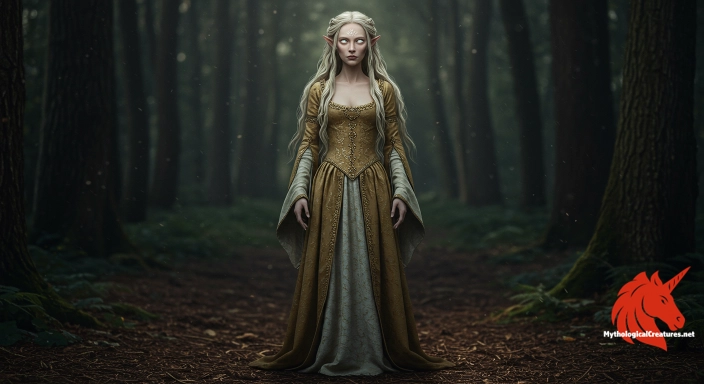
Sebile
Sebile - Sebile is a symbol of the complex interplay between nobility and mysticism in medieval mythology.
Origins & First Encounters
Sebile is a richly complex mythical figure whose legend has been interwoven across centuries of medieval narratives. Traditionally depicted as a regal princess or queen, she emerges from the intertwined realms of Arthurian legend and Italian folklore with an aura of both nobility and enigma. Her many appellations—including Sedile, Sebille, Sibilla, and Sybilla—reflect the evolving linguistic traditions and cultural exchanges of medieval Europe. Early attestations of her character reveal a blend of fairy-like charm and formidable allure that challenged the boundaries between the mortal and the magical. As she navigates roles ranging from loyal consort to a bewitching seductress, Sebile encapsulates the complexities of feminine mystique inherent in chivalric tales. Her narrative also subtly indicates links with venerable figures such as King Charlemagne and Prince Lancelot, enhancing her mythic resonance in romanticised histories. The duality of her depiction—capable of both tender nobility and dangerous intrigue—mirrors the societal ambivalence towards powerful women during the medieval period. Embodied within her story is the interplay of light and shadow, reflecting themes of redemption and betrayal that have captivated audiences through the ages. The enduring nature of her legend illustrates the potent mix of historical grandeur and imaginative storytelling that defines medieval myth. Ultimately, Sebile remains an emblematic figure whose multifaceted identity continues to intrigue scholars and enthusiasts of myth and folklore.
Source Texts & Tale Variants
The foundational texts that introduce Sebile are enshrined in the rich manuscript traditions of medieval Europe, where her tale unfolds amidst the splendour of courtly romance and arcane wonder. Her story is preserved primarily within Arthurian romances, where she evolves from a figure of steadfast loyalty to a captivating enchantress, occasionally stepping into the narrative space of Morgan le Fay. Italian folk traditions have also nurtured her legend, offering unique variants that amplify her connection to the supernatural. In several accounts, Sebile is portrayed as intricately linked with legendary figures such as King Charlemagne or Prince Lancelot, thereby integrating historical ambition with mythic allure. The multiplicity of her narrative across various texts illustrates the mutable nature of her character, shaped by generations of storytellers and scribes. Oral traditions and local ballads further embellish her persona, adding regional nuances that enrich the overall tapestry of her myth. The diversity of these primary sources not only underscores the widespread appeal of her character but also reflects the broader medieval fascination with the interplay of power and mysticism. As each variant unfolds, it reveals differing interpretations that highlight both her noble heritage and her potential for seduction. This compendium of accounts invites modern audiences to appreciate the complexity of her legend and the cultural forces that have sustained it. In essence, the assorted narratives about Sebile serve as a window into a medieval world where myth and history dance in tandem.
Form & Powers
Artistic and literary traditions have bestowed upon Sebile an ethereal beauty that transcends simple human description, evoking a presence both regal and otherworldly. In many depictions, her complexion is portrayed as luminous, reflecting the gentle radiance of dawn and the silvered glow of twilight. Her eyes are often rendered as deep, enigmatic pools, hinting at a reservoir of ancient secrets and mystic insight. Flowing tresses, sometimes depicted in golden or silvery hues, cascade with a natural grace that seems to move in harmony with the winds of enchanted lands. Sebile is frequently adorned in sumptuous medieval attire, where rich fabrics and intricate embroideries evoke a sense of regal majesty and mystical symbolism. Certain portrayals add subtle details such as a delicate radiance or an almost imperceptible aura that emphasises her dual nature as both human and fae. The interplay of light and shadow in these representations underscores a visual narrative marked by the convergence of courtly elegance and supernatural allure. Accents of nature, including floral motifs and delicate, nature-inspired jewellery, further hint at her profound connection with the enchanted realms. Variations in her artistic representation across regions and eras attest to an evolving aesthetic that bridges historical tradition with folklore. Ultimately, the visual legacy of Sebile continues to inspire imaginations, inviting viewers into a world where beauty, mystery, and divinity coexist.
Regional Faces
Sebile’s mythic persona is celebrated across diverse cultural landscapes, each adapting her characteristics to match regional tastes and social contexts. In the expansive body of Arthurian literature, she is often portrayed as a paragon of regal dignity whose ambiguous morality invites both admiration and caution. Italian retellings, on the other hand, tend to encapsulate her as an ethereal enchantress whose magical qualities are interwoven with lyrical, nature-infused imagery. French adaptations frequently lend her a refined courtly elegance, underscoring a balance between noble virtue and veiled seduction. In certain Iberian and Central European narratives, local supernatural elements infuse her story with the mystique of regional legends, sometimes portraying her as a guardian of ancient secrets or hidden groves. Such divergent portrayals reveal a flexible narrative architecture that allows Sebile to operate as both a historical emblem and a fantastical figure replete with local colour. Her relationships with celebrated figures like King Charlemagne or Prince Lancelot are often recalibrated to resonate with the specific ethos and aspirations of each community. Even within the same cultural traditions, her persona may shift subtly between depictions of benevolent protector and capricious temptress. These varied adaptations have ensured that Sebile remains a vibrant and dynamic figure, capable of reflecting the distinct sensibilities of each region. Through these regional reinterpretations, her legend not only survives but thrives as a multifaceted symbol of medieval myth-making.
Cultural Parallels
Exploring Sebile’s place in myth reveals compelling parallels with other legendary enchantresses whose stories have traversed cultural and historical boundaries. Her oscillation between roles of noble consort and bewitching seductress mirrors the multifarious nature of figures like Morgan le Fay, whose character similarly defies straightforward moral categorisation. The enigmatic quality of her persona is akin to the legendary Sibyls, whose prophecies and mystic wisdom have likewise woven magic into the fabric of ancient lore. In many respects, her narrative resonates with that of renowned faerie queens, whose ethereal beauty and supernatural command have been celebrated in numerous traditions. Such comparisons highlight a recurring medieval theme: the conflation of royal authority with otherworldly magic. By embodying both the allure of forbidden power and the gravitas of noble heritage, Sebile joins a pantheon of mythic figures that challenge the demarcation between human and divine. This blending of archetypes is reminiscent of elements found in Celtic and British legends, where figures often traverse the liminal spaces between light and darkness. Her character invites a broader exploration of how different cultures have celebrated the mystique of powerful women. In making these deliberate comparisons, one can see that Sebile is not an isolated anomaly but part of a larger tapestry of enchantresses in the global mythos. Thus, her story continues to offer a rich comparative framework through which we may understand the enduring appeal of complex and enigmatic feminine figures.
Legacy & Modern Evolution
The evolution of Sebile’s legend mirrors broader shifts in cultural perspectives, transitioning from early medieval portrayals to modern reinterpretations that question traditional dichotomies. Initially rooted in the oral and manuscript traditions of the Middle Ages, her character was crafted to embody both enchanting allure and the inherent ambiguities of feminine power. Over time, as societal views on gender and authority evolved, so too did the portrayal of Sebile, expanding to encompass themes of empowerment and resilience. Contemporary literary works and artistic endeavours now often paint her as a multifaceted figure, replete with both strengths and vulnerabilities that invite empathetic understanding. Modern adaptations have reimagined her in diverse media—from graphic novels to theatrical productions—each reconfiguration highlighting her timeless relevance. This shift in interpretation reflects a broader cultural movement that celebrates complexity over simplistic characterisations and embraces the notion of transformation. Her enduring legacy is enriched by scholarly discourse that re-examines her symbolic roles within the frameworks of both myth and history. As new generations continue to reinterpret her narrative, Sebile stands as a dynamic emblem of the interplay between tradition and modernity. In this manner, her myth not only survives but flourishes, offering continual inspiration to artists, writers, and historians alike. Ultimately, Sebile remains a testament to the power of myth to transcend eras, continually inviting fresh insights into the perennial allure of the enigmatic and the eternal.
Interesting Fact
Sebile's shifting portrayal as both a virtuous noble and a cunning seductress highlights the enduring ambiguity and depth of female archetypes within medieval folklore.
Partner with Mythological Creatures
Bring your myth-based world into ours
From game settings to narrative worlds, we work with partners who treat myths with care. Share your project for a potential sponsor slot.
Partner with usQuick Creature Info
Features:
Our Mythic Legendary Rating:

Also Sometimes Known As:
Habitat:
Supernatural Powers:
Physical Attributes:
Abilities:
Behavior:
Lore:
Related Creatures, Tales or Lore
- MMorgan le Fay
- NNimue
- CCirce
References
Discover Another Mythical Legend You May Not Have Heard Of?
Uncover the mysteries of ancient folklore and expand your knowledge of legendary beings from cultures around the world.
Dare to Meet the Aker....
-68282def-23e4-47de-960d-1a13327b0071_small.webp "Depiction of Aker")
Curated by the Mythological Creatures Team
Series editor: Mythological Creatures Directory
Primary desk: Hellenic & Ancient Mediterranean Desk
(rev. November 2025)