
Aker: Aker is an ancient Egyptian deity personifying the horizon.
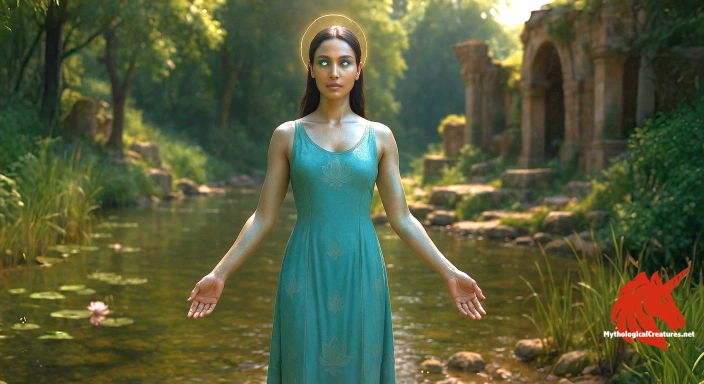
-68282def-23e4-47de-960d-1a13327b0071_small.webp "Aker - Aker is significant in Egyptian mythology for symbolising the boundaries between life and death and playing a crucial role in the journey of the sun and the soul.")
Aker
Aker - Aker is significant in Egyptian mythology for symbolising the boundaries between life and death and playing a crucial role in the journey of the sun and the soul.
Origins & First Encounters
Aker is a striking emblem of ancient Egyptian cosmology, embodying the personification of the horizon and the interstice between life and the afterlife. His dual identity as both an earth deity and an underworld guardian reflects the ancient belief in the cyclical nature of existence. He is celebrated for guarding the eastern (Bakhu) and western (Manu) horizons, thereby symbolising the perpetual passage of the day into night and back again. Emerging in some of the earliest religious texts, Aker illustrates the ancient Egyptians’ effort to understand natural transitions and the mysteries of death. His presence in ritual and funerary practices underscores the significance they attached to liminal spaces and cosmic order. The complexity of his character is further amplified by his role in facilitating the safe journey of both the sun and the souls of the deceased. While not as prominently featured as gods like Ra or Osiris, his subtle yet constant guardianship marks him as a crucial figure in the ancient pantheon. The enigmatic aura surrounding Aker has intrigued generations, revealing an intimate connection between the visible world and the hidden realm beyond. His enduring iconography continues to inspire interpretations of life’s transient thresholds.
Source Texts & Tale Variants
Ancient inscriptions and funerary texts provide key insights into Aker’s mythological role and significance. Mentions of his protective attributes appear in several of the Pyramid Texts, Coffin Texts, and the Book of the Dead, where his guardianship of the horizon is subtly interwoven into the narrative of the sun’s journey. Temple murals and hieroglyphic carvings from various dynastic periods evoke his presence, especially in artwork that underscores the boundary between the living world and the realm of the dead. Artistic depictions in temples, such as those at Heliopolis and Thebes, provide visual testimony to his enduring symbolic function. Although his narrative is not as extensively detailed as some other deities, the recurrent imagery across texts reaffirms his integral role in safeguarding transitions. In some accounts, he appears as a double-faced entity, merging both protective and guiding elements. Variations in his story across different texts suggest that regional and temporal influences modified how his role was narrated and depicted. Even when references to him are brief, the consistency of his iconography across various artifacts emphasizes the deep cultural resonance he held. Ultimately, these diverse sources converge to establish Aker as a pivotal guardian within the Egyptian cosmic framework.
Form & Powers
Aker is portrayed with a striking duality in his physical form, symbolising the interconnection between the two horizons he protects. In many ancient depictions, he appears as a double-headed figure or as two conjoined entities facing opposite directions, each vigilantly watching over the eastern and western boundaries. His form is often rendered with steadfast, lion-like features that evoke both majesty and ferocity, aligned with his role as a guardian. The expressive eyes and robust contours attributed to him serve as metaphors for the penetrating vision with which he surveys the realms of both the living and the dead. Artists have occasionally infused his representation with serpentine or canine elements, adding to the air of mystery that surrounds his persona. Textures and details in his depiction—whether through stylised fur or subtle ornamental features—echo the shifting nature of the horizon at dawn and dusk. These fluid artistic interpretations contribute to a composite character that is as enigmatic as it is protective. Variations in his imagery across different periods reflect a balance between the literal and symbolic, merging corporeal strength with the intangible power of the cosmos. Such detailed portrayals not only highlight Aker’s role as a boundary keeper but also reinforce his lasting impact in Egyptian visual culture.
Regional Faces
Although Aker is firmly rooted in ancient Egyptian myth, his portrayal exhibits nuances that vary with regional artistic and religious customs. In Lower Egypt, for instance, his depiction tends to emphasise the rejuvenating power of the sunrise, capturing the optimism associated with a new beginning. By contrast, in Upper Egypt his character is often more directly associated with the mysteries of the underworld and the inevitable cycle of decay and rebirth. Local temple carvings and regional reliefs portray him in different stylistic manners, sometimes merging his image with elements of other local deities. These regional variations reflect the adaptable nature of Egyptian religious thought, where a single entity could embody multiple symbolic roles. The subtle differences in the portrayal of his features—such as shifts in posture, hairstyle, or accompanying symbols—illustrate the interplay between local tradition and broader mythological themes. In some locales, Aker’s dual features are more pronounced, reinforcing his role as the guardian of distinct horizons. This regional diversity allowed communities to connect deeply with his protective attributes in ways that resonated with their environment and spiritual outlook. As a result, Aker’s myth encapsulates a culturally rich narrative that spans the geographical and theological spectrum of ancient Egypt.
Cultural Parallels
Aker’s role as the guardian of transitional spaces invites compelling comparisons with deities from various cultures who similarly preside over thresholds. His dualistic representation, with features split to watch over two opposing horizons, presents a parallel to the Roman god Janus, who embodies beginnings and endings with his two faces. While Janus is predominantly associated with doorways and temporal transitions, Aker’s dominion over the horizon underscores a broader cosmic balance. In other mythological traditions, protective figures such as the multi-headed Cerberus in Greek lore share the theme of guarding the passage between realms, though Aker operates on a more universal scale encompassing both the natural and supernatural. This recurring motif—deities tasked with overseeing the passage from one state of being to another—demonstrates a shared human preoccupation with the mysterious intersection of life and death. Comparative myths from the Near East and even some indigenous cultures also highlight similar visions of gatekeeping figures that embody this boundary. Such cultural parallels not only enrich our understanding of Aker, but also underscore a universal archetype of protection and transformation. The similarities between Aker and his counterparts across the ancient world affirm the recurring symbolic importance of duality and transition in myth. In essence, his legacy speaks to a global narrative where the sacred act of guarding the threshold is both a protective and transformative force.
Legacy & Modern Evolution
The evolution of Aker’s image over the centuries mirrors the dynamic shifts in religious and cultural expression within and beyond Egypt. Early representations in pyramid and funerary texts gradually gave way to more abstract or symbolic portrayals as theological conceptions evolved over time. His depiction, once a literal guardian of the horizon, transformed within the context of emerging mythologies and later interpretations by Egyptologists during the 19th and 20th centuries. This modern scholarly interest has rekindled an appreciation for his enigmatic presence and reassessed his role in the cosmic order. Contemporary artists and writers continue to draw inspiration from Aker’s dual nature, often reimagining him as a metaphor for the eternal boundary between critical life stages. His iconography finds new expression in literature, film, video games, and even neo-pagan spiritual practices that echo ancient themes of rebirth and transformation. The reinterpretation of his image has allowed Aker to transcend his original mythological context, symbolising the mystery of life’s transitions in a modern setting. As academic debates and popular culture both embrace his layered symbolism, Aker’s legacy persists as a potent reminder of the intricate dance between light and darkness. Ultimately, his timeless appeal underscores the enduring human fascination with symbols that embody the intersection of the known and the unknowable.
Interesting Fact
An interesting aspect of Aker is his dual-headed representation, which mirrors the concept of duality found in many ancient mythologies and underscores the importance of balance in Egyptian cosmology.
For authors, artists, and makers
Created something from the realm of myth?
If your book, deck, game, or artwork draws from legendary creatures and lore, you can showcase it here in a tasteful, year-round placement.
Share your projectQuick Creature Info
Origin:
Features:
Associations:
Our Mythic Legendary Rating:

Habitat:
Supernatural Powers:
Physical Attributes:
Abilities:
Behavior:
Lore:
References
Discover Another Mythical Legend You May Not Have Heard Of?
Uncover the mysteries of ancient folklore and expand your knowledge of legendary beings from cultures around the world.
Dare to Meet the Anahita....
Curated by the Mythological Creatures Team
Series editor: Mythological Creatures Directory
Primary desk: Hellenic & Ancient Mediterranean Desk
(rev. November 2025)