
Geb: Geb is the ancient Egyptian god of the Earth, renowned for his role in the Ennead of Heliopolis.
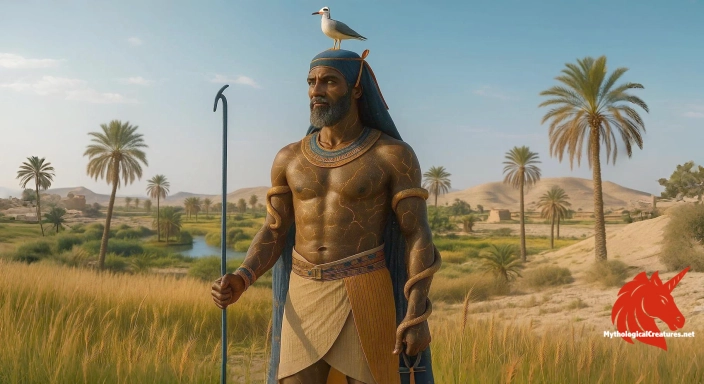
Geb
Geb - Geb is central to Egyptian cosmology, symbolising the fertile earth and its natural forces, bridging the divine and organic worlds.
Origins & First Encounters
Geb stands as a seminal figure in ancient Egyptian religion, embodying the very essence of the earth in a mythology that has fascinated generations. Born from the creative forces of the primordial void, his mythos is deeply intertwined with the origin stories of the Heliopolitan Ennead. His very name resonates with the power of the land, symbolically rooting the cosmos in the fertile soil below. Over centuries, cultural reverence elevated him as a pivotal divine entity whose role bridged the gap between nature and human life. The vivid tapestry of Egyptian creation myths paints him as not only the nurturing force behind crop growth but also the catalyst for the trembling of the earth. His laughter, as the legends unfold, possessed the magical ability to stir the natural world into motion. Both revered and feared, Geb emerged as a deity whose dual nature underscored life's delicate balance. The enduring image of Geb has been one of both benevolence and formidable might, echoing through the annals of ancient ritual and lore. His presence in myth served as a constant reminder of nature’s omnipotence and cyclical renewal. Over time, his character evolved yet remained a cornerstone in the spiritual understanding of the natural world.
Source Texts & Tale Variants
Ancient scriptures, temple inscriptions, and funerary texts form the backbone of our understanding of Geb’s mythological narrative. Hieroglyphic records from Heliopolis often highlight his integral role within the Ennead, while pyramid and coffin texts offer rich poetic renditions of his earthly dominion. Diverse versions of his story have emerged over time, with some texts emphasising his connection to fertility and others focusing on his elemental power to induce earthquakes. Multiple narrative strands detail his association not only with the vibrancy of nature but also with the dangerous, unpredictable aspects of the earth. Some of these accounts refer to him by the alternative name Ceb, underscoring his multifaceted identity. The tales of his lineage, including references to his connections with serpents, have been recorded in several localised accounts. Variations in his narrative can also be observed in different dynastic periods, each adding layers of symbolic meaning. Although the surviving texts provide fragmented glimpses into his myth, each version contributes to a vibrant mosaic that showcases the theological breadth of ancient Egyptian tradition. Over time, the transmitted myths have echoed the communal values and fears of a people in tune with the rhythms of nature. The diversity and depth in these sources testify to a dynamic tradition of storytelling, where every recounting served to renew Geb’s resonance among his devotees.
Form & Powers
Artistic renditions of Geb bring forth an image both dignified and intrinsically connected to the earth. Depicted often as a peaceful, reclining figure, he seems to rest directly upon the soil he personifies, suggesting a union between deity and landscape. His features are typically rendered with earthy tones, evoking the lush greens or deep browns of fertile ground. In various reliefs and statues, a long, serene face is accentuated by subtle lines that convey both wisdom and the passage of time. Frequently, serpentine motifs appear in his imagery, with snakes artistically entwined around or near his form, symbolising his role as the progenitor of such creatures. Intricate carvings on his body and garments reflect the symbolic integration of natural elements, such as vegetation and rock patterns, which emphasise his dominion over the physical realm. Variations in posture, from a stately upright stance to a more languid repose, reveal the nuances in how different periods captured his essence. Features like a carefully trimmed beard and composed expression contribute to an overall impression of serene power and timeless endurance. These detailed visual portrayals not only serve a religious function but also celebrate the natural beauty and complexity of the land. Through every medium, his depiction remains a testament to the ancient Egyptians' deep-seated reverence for the world beneath their feet.
Regional Faces
The portrayal of Geb exhibits subtle yet significant differences across various Egyptian regions and periods, reflecting regional sensibilities and environmental influences. In the heartland of Heliopolis, where the pulsating life of the Nile was central, he was often depicted with an emphasis on the fertile, life-sustaining qualities of the land. In contrast, communities in more arid or rugged regions adapted his imagery to highlight resilience and the unyielding stability of the earth. Localised traditions sometimes reinterpreted his laughter, associating it with the tremors experienced in areas known for their seismic activities. Artistic expressions in temples and local shrines incorporated motifs unique to their geographical context, such as desert flora or riverine landscapes, to symbolise his omnipresence. These regional adaptations often enriched his mythic character, enabling diverse communities to relate their everyday experiences to the divine narrative. In some local cults, Geb was also interwoven with chthonic figures, thus expanding his natural association to include the mysteries of the underworld. The vibrant, locally influenced depictions ensured that while his core identity remained, his expressed attributes could flexibly mirror the local environment. Such a regional diversity within his worship underscores the adaptability of myth in addressing varied human concerns. Through this plurality, Geb’s myth transcended rigid definitions, embracing a dynamic and inclusive spirit across the ancient Egyptian landscape.
Cultural Parallels
The mythic character of Geb invites striking comparisons with global earth deities who similarly encapsulate nature’s fecundity and formidable strength. Just as Gaia serves as the primal earth in Greek mythology, Geb’s presence underscores an ancient reverence for the natural world, though he is depicted with a masculine aura that contrasts with Gaia’s maternal attributes. Both deities, however, share the quintessential role of nurturing life and embodying the land’s physical substance. In Norse mythology, parallels can be drawn with Jörð, a personification of the earth that equally evokes themes of stability and elemental power. The Indian conceptualisation of the Earth, through figures like Prithvi, further reinforces a universal motif where the land is prized as both a source of sustenance and a dynamic, living entity. These cross-cultural reflections reveal a shared human impulse to personify the ground beneath one’s feet as a provider and as a force imbued with life. While the symbolism may vary—with Geb’s laughter triggering quakes and Gaia’s unconditional life-giving embrace—the underlying sentiments bind these figures in a common tapestry of meaning. Comparative analysis illustrates that despite differing mythic frameworks, many cultures relied on such deities to explain the cycles of nature and the unpredictable power of the earth. In doing so, they created a rich dialogue among diverse traditions, each reinterpreting natural phenomena in terms steeped in divine mystery. This interwoven narrative celebrates not only the universal importance of the natural world, but also humanity’s perennial quest to understand its capricious beauty.
Legacy & Modern Evolution
The legacy of Geb has traversed millennia, evolving through shifting cultural landscapes yet retaining his core representation as the embodiment of the earth. During the height of ancient Egyptian civilization, his image was central to religious and agricultural rites, symbolising fertility, stability, and the perpetuation of life. As artistic styles and theological interpretations evolved, so too did the visual and symbolic representations of Geb, absorbing influences from Hellenistic and even later traditions. His portrayal transformed from a predominantly regional deity to an emblem of the eternal connection between humanity and the earth. In modern times, artistic and literary explorations have resurrected his persona, often highlighting the interplay of calm nurturing and unpredictable natural forces. Contemporary interpretations have retooled his image to address modern environmental concerns, imbuing him with a role as a guardian of nature and a reminder of the impact of natural disasters. This enduring myth has inspired diverse creative works—from visual art and sculpture to novels and films—each drawing on his ancient symbolism. Geb's evolving narrative mirrors a broader human dialogue about our reliance on and interaction with the environment. His myth continues to function as a powerful allegory for growth, stability, and the inherent dynamism of the earth. In celebrating his timeless presence, modern culture acknowledges an indelible link between ancient wisdom and contemporary ecological awareness. Over time, Geb has become a bridge between eras, encapsulating a legacy that is both historically rich and vibrantly relevant today.
Interesting Fact
An intriguing aspect of Geb is that his laughter, a joyful yet disruptive force, is mythologically credited with creating earthquakes, reflecting the dynamic and unpredictable nature of the earth.
Curated sponsor space
One subtle banner. Thousands of myth lovers.
We offer a small number of curated sponsor spots for relevant books, courses, games, and art. No clutter, just well-matched partners.
Partner with usQuick Creature Info
Origin:
Features:
Associations:
Our Mythic Legendary Rating:

Also Sometimes Known As:
Habitat:
Supernatural Powers:
Physical Attributes:
Abilities:
Behavior:
Lore:
Related Creatures, Tales or Lore
- GGaia
- PPrithvi
- PPachamama
References
Discover Another Mythical Legend You May Not Have Heard Of?
Uncover the mysteries of ancient folklore and expand your knowledge of legendary beings from cultures around the world.
Dare to Meet the Egeria....
-fba9ec6a-394e-491e-96a5-c3121044679d_small.webp "Depiction of Egeria")
Curated by the Mythological Creatures Team
Series editor: Mythological Creatures Directory
Primary desk: Hellenic & Ancient Mediterranean Desk
(rev. November 2025)