
Shuihu: Shuihu, also known as the water tiger, is a legendary creature from Chinese folklore that inhabits the river systems of Hubei Province.

Shuihu
Shuihu - Represents the dangers of disturbing natural aquatic boundaries and reflects a syncretism between Chinese and Japanese mythological traditions.
Origins & First Encounters
The Shuihu, known as the water tiger, is a beguiling figure woven into the fabric of ancient Chinese river lore from Hubei Province. Emerging from a rich tapestry of local narratives and natural allegories, this entity captivates with its mysterious duality of gentle appearance and latent ferocity. Its early renditions, steeped in oral tradition, subtly hinted at a being that straddled the boundary between the mundane and the supernatural. Over time, the creature’s persona evolved, embodying not only the unpredictable temperament of water but also a symbolic caution against disturbing nature’s hidden depths. Indigenous accounts often link the Shuihu to specific seasonal river phenomena, imbuing it with both protective and ominous qualities. Local communities regarded this mysterious presence as an omen—an ever-watchful guardian whose appearances warned of impending natural or social change. The legend encapsulates the ancient Chinese respect for the elements, celebrating the raw power and beauty inherent in water. As its mythos traveled across generations, the narrative of the Shuihu deepened to reflect broader cultural ideas about balance, danger, and the mystical allure of nature. Its storied past continues to invite intrigue and reverence, illustrating how folklore can transform natural phenomena into enduring symbols of life’s inherent mystery. Ultimately, the Shuihu stands as a testament to humanity’s age-old fascination with the unknown forces that dwell beneath the surface of the familiar.
Source Texts & Tale Variants
The Shuihu first appears in early records and folklore in Hubei, where local scribes captured its enigmatic presence along riverbanks. Early texts present a shadowy account, often limited in detail yet rich in atmosphere, hinting at an entity that exists on the margins of the known world. As the myth evolved, later compilations transformed the sparse descriptions into a more elaborate character, emphasising its partially hidden features. Notably, during the Tokugawa Period in Japan, influential encyclopaedias such as the Wakan Sansai Zue offered a divergent reading that focused on its exposed kneecap and outlined tiger-claw motifs. This reinterpretation in Japanese sources led to vivid woodcut illustrations, which further solidified the creature’s visual legacy in East Asian art. Varied story versions emerged that painted the Shuihu as both a benign water spirit and a dangerous guardian, depending on the storyteller’s intent and audience perception. Various folktales reinforced the idea that the creature’s hidden aspects were as essential to its identity as the parts that emerged. Traditional narratives often bore subtle warnings about intruding upon its watery domain, embedding moral lessons within its myth. The amalgamation of oral tradition, early print culture, and artistic depictions enriches our understanding of this elusive being. Altogether, these primary sources and variant accounts establish a cultural dialogue in which the Shuihu continues to symbolise the dynamic interplay between nature and myth.
Form & Powers
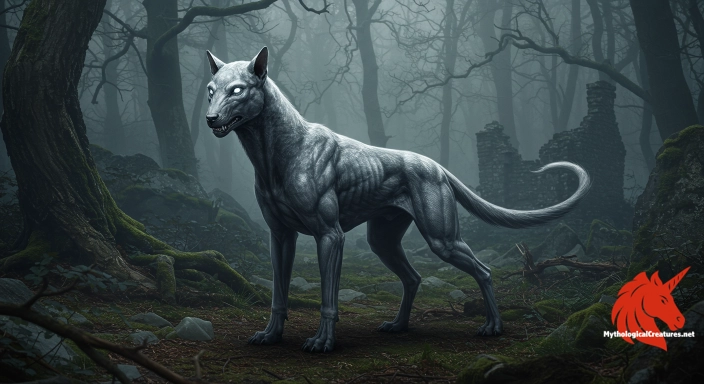
The physical depiction of the Shuihu is as enigmatic as the creature itself, merging the delicate proportions of a small human with distinctly feline features. Descriptions commonly assert that it is roughly the size of a three or four-year-old child, yet its limbs evoke the power and dexterity of a tiger. The lower extremities, often highlighted in traditional texts, mirror the muscle and grace of a wild feline, suggesting a latent strength beneath its modest stature. While some accounts imply that its head carries subtle tiger-like nuances, others leave its upper features cloaked in aquatic mystery. A standout element in its portrayal is the partially exposed kneecap, which appears shocking in its contrast to the creature’s otherwise hidden predatory contours. This unique feature, paired with the suggestion of submerged claws and facial details, contributes to an overall impression of concealed menace. Artistic interpretations, especially from Japanese woodcut prints, have accentuated this anomaly by rendering the kneecap in striking detail. Such depictions invite speculation about the creature’s ability to blend into watery environments while maintaining an ever-present danger. Fluctuations in its physical portrayal across various texts have only deepened the myth’s complexity, making the Shuihu a symbol of nature’s unpredictable duality. Ultimately, the fluid and ambiguous portrayal of its anatomy underscores the inherent mystery and latent power of this legendary water inhabitant.
Regional Faces
The regional depictions of the Shuihu reveal a fascinating interplay between cultural contexts, with significant variance evident between its Chinese origins and later Japanese adaptations. In Hubei, the creature is firmly embedded in local lore as an elusive guardian of river systems, where its presence is woven into the environmental and social fabric of the region. In stark contrast, Japanese interpretations during the Tokugawa Period reshaped the narrative, introducing unique elements such as the emphasised, exposed kneecap that symbolised a subtle blend of danger and artistry. These adaptations in Japan led to the emergence of the suiko, a reimagined version that occasionally merged traits with indigenous water spirits like the kappa. Local Japanese texts often delineate the suiko as distinct from native water demons, despite overlapping thematic elements. Artistic renditions in various regions incorporated local symbolism to represent both the creature’s hidden menace and its protective aspect, reflective of differing community values. The geographical shift from China to Japan brought with it an elaboration of the myth, where physical attributes and behavioural traits were recalibrated to suit regional tastes. Despite these differences, both traditions share a common intrigue with the idea of a creature that inhabits liminal spaces between land and water. This regional variability demonstrates the adaptability of myth, where a single creature can be endlessly reinvented to reflect the cultural, environmental, and aesthetic sensibilities of the local people. Such regional adaptations serve to highlight the universal allure of mysterious water spirits and the endless reinterpretations that folklore can inspire.
Cultural Parallels
The Shuihu shares intriguing thematic parallels with an array of water-associated spirits woven through the fabric of East Asian mythologies. In particular, its resemblance to the Japanese kappa is striking, though the Shuihu’s tiger-like features distinctly set it apart as a unique embodiment of aquatic ferocity. Comparable to other water deities and spirits around the world, it encapsulates the notion of a dual nature that is both protective and perilous. The creature’s ability to remain largely unseen, save for its distinctive kneecap, mirrors a wider mythic motif where vital aspects are concealed beneath the water’s surface. In broader comparative mythology, similar hybrid creatures often symbolise the intersection of human vulnerability with the raw power of the natural world. The water tiger’s design, merging child-like dimensions with predatory traits, reflects an array of archetypes that balance innocence with latent danger. Such emblematic figures are not confined to one culture; rather, they resonate across multiple traditions that revere water as both a nurturing and destructive force. Comparative analysis of these mythic beings highlights a recurring trend: water functions as a liminal element with the capacity to both bestow life and incite dread. These shared cultural threads suggest that the Shuihu is part of a broader narrative where mysterious water dwellers embody timeless human concerns about nature’s inscrutable energy. Thus, the cross-cultural exploration of water spirits reveals profound connections between seemingly disparate mythologies and the universal awe of nature’s mysteries.
Legacy & Modern Evolution
The historical evolution of the Shuihu myth reflects a dynamic dialogue between tradition and transformation that spans centuries. Initially documented within the confines of local folklore in Hubei, the creature’s legend was later enriched by interpretations that emerged during Japan’s Tokugawa Period. Over time, artistic mediums such as woodcut illustrations and yōkai anthologies have played significant roles in redefining its visual and narrative identity. With each retelling, the Shuihu has been reimagined to resonate with the cultural and environmental concerns of the era, thereby evolving from a mere local curiosity into an enduring symbol of nature’s caprice. In modern times, the creature’s enigmatic allure continues to inspire a wide variety of artistic and literary endeavours, ranging from animated adaptations to contemporary folklore festivals. This evolution underscores its persistent ability to embody the dual aspects of beauty and danger inherent in the natural world. The digital age has seen renewed interest in the Shuihu, with reinterpretations that blend traditional imagery with modern sensibilities and environmental cautionary tales. Its ambiguous representation—as both a hidden menace and a mysterious guardian—remains a potent metaphor in discussions about the conservation of natural habitats. Modern reinterpretations often use the Shuihu as a lens to explore themes of ecological balance and respect for unseen forces. In this way, the legacy of the Shuihu endures as a bridge between past mythologies and contemporary cultural dialogues, continuously regenerated through creative reinterpretation.
Interesting Fact
One of the most intriguing aspects of the shuihu is its exposed kneecap, which—unlike the rest of its concealed tiger-like form—provides a tangible hint to its deadly presence.
Limited sponsor opportunity
One slot, carefully chosen partners
We only feature a small number of relevant sponsors at any time. If you create serious myth content, we would like to hear from you.
Partner with usQuick Creature Info
Features:
Associations:
Our Mythic Legendary Rating:

Also Sometimes Known As:
Habitat:
Supernatural Powers:
Physical Attributes:
Abilities:
Behavior:
Weaknesses:
Lore:
Related Creatures, Tales or Lore
- KKappa
- WWhite Tiger
References
Discover Another Mythical Legend You May Not Have Heard Of?
Uncover the mysteries of ancient folklore and expand your knowledge of legendary beings from cultures around the world.
Dare to Meet the Dormarch....
Curated by the Mythological Creatures Team
Series editor: Mythological Creatures Directory
Primary desk: Asian & Pacific Myth Cycles Desk
(rev. November 2025)