
Sin-you: The Sin-you is a fearsome, mythical quadruped from East Asian folklore, bearing a single, unbranching horn and an intense gaze.
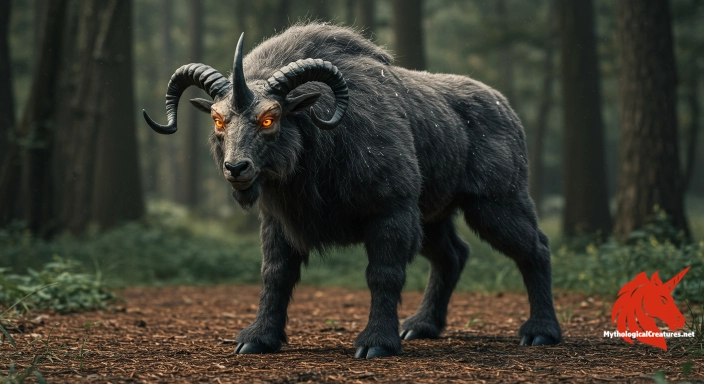
Sin-you
Sin-you - Embodies the concept of divine justice, discerning truth and administering punishment to the guilty.
Origins & First Encounters
The Sin-you emerges as a striking figure within the tapestry of East Asian myth, notable for its intermingling of beauty and uncompromising justice. Born from an era where folklore and moral instruction were deeply intertwined, this creature has been celebrated through a variety of cultural narratives that span Japan, China, and beyond. Its first attestations appear in ancient texts and oral traditions that highlight its role as both a guardian and an avenger of truth. The creature is depicted with an aura of wild majesty and holding an essential place in debates over right and wrong. Throughout early narratives, it is painted not merely as a beast, but as a divine enforcer tasked with revealing deceit and punishing falsehood. The Sin-you's presence in legendary courts underscores the communal desire for an incorruptible arbiter. Its lore reflects the balance of physical power and moral rectitude, suggesting that the natural world itself supports the cause of justice. In this light, the creature has transcended a simple myth to become a symbol of enduring ethical commitment and societal order.
Source Texts & Tale Variants
The legend of the Sin-you is drawn from a diverse array of sources, ranging from ancient Japanese chronicles to Chinese folklore manuscripts. Traditional texts recount elaborate scenes in which the creature intervenes during judicial proceedings, serving as a silent witness to acts of deception and corruption. Oral traditions have further enriched its narrative, adding layers of dramatic detail that vary with regional storytellers. Some accounts describe its sudden, fearsome appearance during court sessions where wrongdoers meet a swift and fateful end. Alternative versions present the Sin-you as a protector of the innocent, assigning it roles that emphasise moral certainty over retribution. Its numerous names—Hiai Chai, Chiai Tung, and Kai Tsi—reflect the creature’s journey through different linguistic and cultural landscapes. Manuscript and folklore alike reveal that the creature’s presence was once considered an integral part of legal and ceremonial practices. These varied texts continue to stimulate both academic and popular interest, ensuring that the Sin-you remains a subject of perennial fascination.
Form & Powers
The physical depiction of the Sin-you is as multifaceted as its legacy, combining features that evoke both feline agility and ovine grace. It is portrayed as a large, quadrupedal entity whose robust frame suggests a blend of power and elegance. Central to its formidable appearance is a singular, unbranching horn that crowns its head, echoing the mystique of Western unicorn imagery. The creature’s body is often rendered with a shaggy mane that adds to its wild and unbridled demeanour, while its limbs are variously depicted with hooves or with feline paws to highlight its predatory nature. Its intense, almost piercing eyes are said to burn with the determination to unmask deceit. Artists have detailed subtle variations in texture and size, enhancing the sense of an otherworldly presence. In some depictions, the musculature and sweeping posture accentuate a latent power poised to strike at dishonesty. Such intricate descriptions affirm that the Sin-you's physical form is as much a symbol of divine retribution as it is a marvel of mythical aesthetics.
Regional Faces
Regional interpretations of the Sin-you reveal a fascinating array of cultural adaptations and stylistic nuances. In Japanese legends, the creature is frequently portrayed with a pronounced wildness, its eyes and sharp features emphasised to convey an aura of vigilant retribution. Chinese depictions, by contrast, often integrate celestial motifs and subtle ornamental details to reflect its revered judicial function. In other parts of East Asia, local mythologies have adopted the Sin-you into stories that blend natural phenomena with moral allegories, adapting its appearance to resonate with regional cultural imaginations. Variations may include differences in the texture of its mane, the depiction of its limbs, or even the intensity of its gaze, each detail rendered to suit local themes of justice and morality. Some traditions accentuate its role during judicial ceremonies, while others highlight its presence in natural landscapes as an omen of veracity. Despite these differences, a common thread runs through all local adaptations—a fascination with a creature that embodies the inexorable pursuit of truth. In this way, the Sin-you not only bridges numerous cultures but also evolves to reflect the unique values of each community.
Cultural Parallels
The Sin-you stands alongside other mythic creatures as a unique emblem of retributive justice, inviting rich comparative analysis with figures from diverse cultural traditions. While it shares a majestic lineage with the Qilin, its portrayal as feral and predatory sets it distinctly apart. Elements of its design recall the Western unicorn through the singular, central horn, yet the Sin-you’s role in meting out punishment contrasts sharply with the unicorn’s associations with purity and grace. Similar to guardian lions or mythic sphinxes, its presence has been historically linked to the enforcement of moral order and the protection of societal integrity. Unlike many benevolent mythical beings, the Sin-you embodies a fierce aspect of divine justice, often intervening directly to punish dishonesty. This duality—part gentle arbiter, part ferocious enforcer—places it in an interesting kinship with mythic creatures that balance beauty and brutality in their narratives. The dialectic between its benign appearance and violent function highlights the complexities of myth-making in a culturally diverse milieu. Ultimately, comparisons across traditions underscore the Sin-you’s distinct niche as a creature that not only captivates the imagination but also serves as a potent reminder of accountability.
Legacy & Modern Evolution
The evolution of the Sin-you’s myth reflects a journey from ancient judicial symbolism to a vibrant presence in modern cultural discourse. Once an integral part of legendary courtrooms, its image as the arbiter of truth has inspired artistic and literary explorations over the centuries. Early depictions emphasised its role as a divine instrument of accountability, a notion that has been revisited in contemporary stories highlighting the clash between integrity and corruption. In modern reinterpretations, the creature often emerges as a metaphor for the societal quest for transparency and ethical governance. Artistic renditions in visual media, literature, and even popular theatre imagine the Sin-you with elements that blend traditional iconography with innovative, modern motifs. Its story continues to inform debates about morality and justice in a world increasingly aware of the need for accountability. As cultural boundaries have shifted, so too have the subtleties of its representation, accommodating both historical reverence and contemporary creativity. The enduring appeal of the Sin-you lies in its ability to embody timeless values, inviting successive generations to reimagine a creature born from the very ideals of truth and justice.
Interesting Fact
The Sin-you is often compared to the Xiezhi, another mythical creature renowned for its truth-detecting powers in Chinese folklore.
Limited sponsor opportunity
One slot, carefully chosen partners
We only feature a small number of relevant sponsors at any time. If you create serious myth content, we would like to hear from you.
Partner with usQuick Creature Info
Our Mythic Legendary Rating:

Also Sometimes Known As:
Habitat:
Supernatural Powers:
Physical Attributes:
Abilities:
Behavior:
Lore:
References
Discover Another Mythical Legend You May Not Have Heard Of?
Uncover the mysteries of ancient folklore and expand your knowledge of legendary beings from cultures around the world.
Dare to Meet the Gunnr....

Curated by the Mythological Creatures Team
Series editor: Mythological Creatures Directory
Primary desk: Asian & Pacific Myth Cycles Desk
(rev. November 2025)