
Xiezhi: The xiezhi is a legendary Chinese beast resembling an ox or goat, known for its thick dark fur and single long horn.
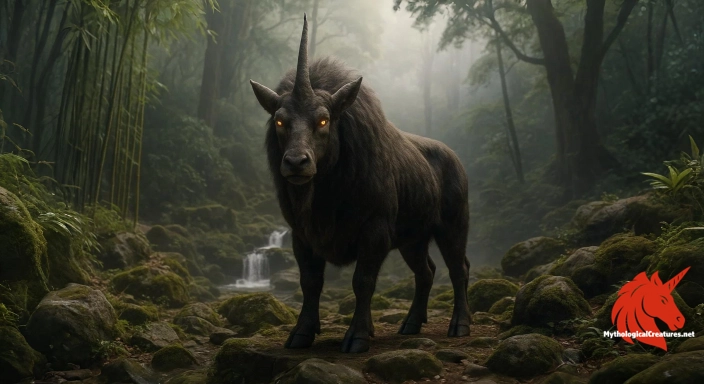
Xiezhi
Xiezhi - The xiezhi represents an incorruptible force that punishes corruption and upholds justice in government.
Origins & First Encounters
Emerging from the depths of ancient Chinese lore, the xiezhi has long been revered as a celestial emblem of moral rectitude. Its myth is interwoven with narratives from the Eastern Han period, where early records hint at its role as a supernatural dispenser of justice. The creature's origin is shrouded in mystery, yet its enduring reputation suggests that it was conceived as a guardian spirit in times of political instability. Ancient storytellers and court officials alike found inspiration in the xiezhi’s incorruptible character and discerning nature. It is depicted as a being that could differentiate the virtuous from the corrupt, a quality that resonated with the societal need for fairness. The legends surrounding it were not only a reflection of the judicial aspirations of its time but also a call for integrity among leaders. Artistic representations throughout history capture its dual nature of beauty and severity, reinforcing the bond between myth and morality. Cultural narratives often imbued the xiezhi with a sense of destiny, portraying it as a bridge between the natural world and human ethics. Its timeless presence continues to evoke discussions about justice and the responsibilities of power.
Source Texts & Tale Variants
Ancient texts and oral traditions form the backbone of the xiezhi’s storied past, with early accounts emerging from Eastern Han records that celebrated its divine judgement. Historical documents, though fragmentary, depict the creature as a sentinel against corruption in both the imperial court and local communities. Folklore and later literary compilations expanded upon these foundational narratives, embellishing its ability to discern truth from falsehood. There are variations in the accounts, with some texts emphasising its role as a direct avenger of unjust officials, while others highlight its presence as an inspirational moral exemplar. Over time, a wealth of regional stories contributed to a multifaceted portrayal, each adding nuances to its character. Diverse manuscripts from subsequent dynasties have preserved the myth, often illustrating dramatic encounters between the xiezhi and figures of political decay. Storytellers across generations have adapted and reinterpreted its features to resonate with contemporary ethical ideals. Manuscript illustrations and poetic descriptions have both played pivotal roles in keeping its legend alive, even as the original texts remain sparse. The layered and sometimes contradictory sources underscore an evolving narrative that spans centuries and cultural boundaries.
Form & Powers
The xiezhi presents a striking visual tableau, blending features reminiscent of an ox with the delicate elegance of a goat. Its robust frame is cloaked in thick, dark fur that seems to absorb the ambient light, lending it an aura of mystery and gravitas. A single, elongated horn emerges from its forehead, curving gracefully in a manner that hints at both beauty and formidable power. This horn, a unique hallmark of its identity, is often depicted as possessing a subtle luminescence that draws the eye. The creature's eyes are bright and penetrating, conveying an almost human-like intelligence through their vigilant gaze. Its head combines gentle contours with a rugged, determined expression, symbolising the balance between mercy and retribution. Varied artistic interpretations sometimes show the xiezhi with slightly different body proportions, yet the combination of strength and finesse remains a constant. Every detail of its anatomy, from the muscular build to the flowing texture of its fur, underscores a natural design imbued with moral symbolism. The meticulous portrayal of its physical attributes serves as a constant reminder of its celestial duty to uphold the balance between right and wrong.
Regional Faces
Although the xiezhi originates from ancient Chinese legends, regional interpretations have enriched its narrative and altered its visual depiction over time. In many parts of China, particularly in areas steeped in local traditions, its image has been adapted into talismans and decorative motifs that adorn temples and government institutions. Variations in its depiction are evident in southern versus northern folk art, where subtle differences in the horn’s curvature and fur texture reflect local artistic sensibilities. In neighbouring regions such as Korea and Japan, elements of the xiezhi have been merged with indigenous mythical beings, creating hybrid figures that mirror local values while retaining its core theme of justice. Artisans in these regions have reimagined the creature as not only a fierce arbiter but also as a benevolent guide in times of societal upheaval. Festivals and cultural celebrations occasionally feature dramatized retellings of its exploits, underscoring its widespread appeal. Common threads in these adaptations include an unwavering commitment to ethical balance, a trait that resonates with diverse cultural audiences. These evolving local interpretations highlight how universal the quest for justice remains, even as each community leaves its distinctive imprint on the legend. This fluid adaptation across regions reinforces the xiezhi’s position as a dynamic symbol whose essence transcends geographical confines.
This fluidity in its interpretation highlights the universal appeal of a creature that embodies both the tangible forces of nature and the abstract principles of justice.
Cultural Parallels
The xiezhi finds intriguing parallels in various mythological traditions that celebrate the virtues of justice and moral insight. Its singular horn draws a subtle comparison to the unicorn of Western lore, although while the unicorn is often depicted as emblematic of purity, the xiezhi is celebrated for its active role in upholding social accountability. In many ways, the creature shares its function with the qilin, another legendary beast that personifies wisdom and benevolence through its awe-inspiring appearance. Distinct from more pacifist symbols in mythology, the xiezhi is characterised by its readiness to confront corruption, a theme common to mythic guardians in several cultures. Similar mythological figures in Tibetan and European traditions also serve to diffuse the idea that justice is a cosmic mandate, transcending ordinary human capability. The narrative of an animal endowed with the ability to discern moral failings establishes a rich cross-cultural dialogue about the nature of integrity. Comparative mythology reveals that many societies have sought to personify abstract ideals—like fairness—through beasts that embody both strength and ethical vigilance. These cross-cultural connections amplify the universal desire to witness the triumph of virtue over vice, a theme that resonates globally. Such analysis underscores how the xiezhi mirrors a broader motif found in worldwide storytelling, where mythical guardians stand as beacons against injustice.
Legacy & Modern Evolution
The legacy of the xiezhi has evolved from its early roles in ancient judicial lore to a modern emblem of moral resistance and reform. Its initial depiction as a divine arbiter in a corrupt political system has inspired countless reinterpretations in art and literature through the centuries. With the passage of time, its image has been adapted to align with the ever-changing ethical and cultural landscapes of successive generations. Modern creative expressions, including films, novels, and digital art, capture its multifaceted character, blending ancient symbolism with contemporary narratives of justice. Urban art forms and civic emblems occasionally incorporate the xiezhi to evoke a sense of accountability and integrity in public affairs. The creature has also found a place within academic discourse, where its myth is analysed as a representation of the eternal struggle against tyranny. Contemporary reinterpretations often introduce elements that highlight its role as a mediator between the natural and moral worlds. It continues to inspire discussions on the nature of leadership and the responsibilities citizens bear in maintaining a just society. As such, the xiezhi endures as a dynamic symbol, perpetually renewed by modern imagination while remaining rooted in its ancient heritage.
Interesting Fact
Despite its fearsome method of punishment, the xiezhi is celebrated as a guardian of integrity, embodying the ideal that justice, when rightly administered, is both swift and infallible.
Support the directory
Promote your myth project and fund more research
Sponsor placements help keep this directory growing and free to use while giving your work a focused, relevant audience.
Learn how sponsorship worksQuick Creature Info
Features:
Associations:
Our Mythic Legendary Rating:

Also Sometimes Known As:
Habitat:
Supernatural Powers:
Physical Attributes:
Abilities:
Behavior:
Lore:
Related Creatures, Tales or Lore
References
Discover Another Mythical Legend You May Not Have Heard Of?
Uncover the mysteries of ancient folklore and expand your knowledge of legendary beings from cultures around the world.
Dare to Meet the Hidebehind....

Curated by the Mythological Creatures Team
Series editor: Mythological Creatures Directory
Primary desk: Asian & Pacific Myth Cycles Desk
(rev. November 2025)