
Snow Lion: The Snow Lion is a legendary celestial creature from Tibetan mythology, depicted as a majestic white lion with a striking turquoise mane.
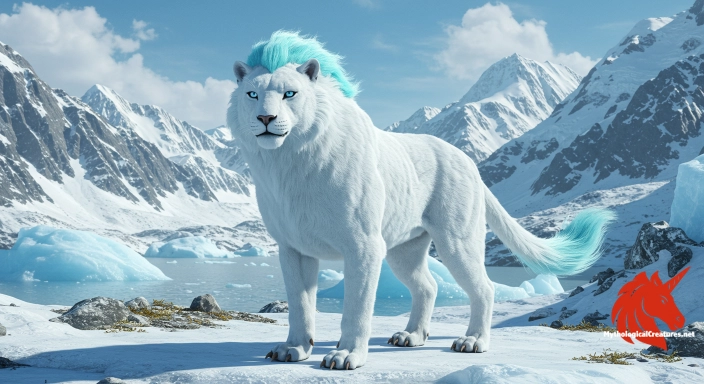
Snow Lion
Snow Lion - Represents power, strength, fearlessness, and joy; a symbol deeply woven into Tibetan cultural and spiritual identity.
Origins & First Encounters
In Tibetan mythology, the Snow Lion holds a revered position as a celestial entity that bridges the earthly and the divine. Its origins are deeply intertwined with the rugged, icy landscapes of Tibet, where vast snowy mountains and glaciers serve as a living backdrop to its legend. The creature’s earliest attestations can be found in ancient iconography and temple murals that underscore its role as a symbol of raw natural power and spiritual fortitude. Over the centuries, the Snow Lion has been depicted as both noble and formidable, embodying qualities such as fearlessness, joy, and an indomitable strength that defies the harshness of its environment. As one of the Four Dignities in Tibetan lore, it has often been associated with the earth element and with attributes that celebrate both the physical and metaphysical beauty of nature. Its image has been meticulously preserved in artistic traditions, serving as a metaphor not only for the pristine snow-covered landscapes but also for the cultural spirit of the Tibetan people. Through evolving narratives, the creature has maintained its significance, inspiring successive generations to view it as a guardian and emblem of cosmic order. This enduring symbolism continues to captivate modern audiences, resonating with those who seek connections between their cultural heritage and the timeless power of nature.
Source Texts & Tale Variants
Ancient Tibetan scriptures and ceremonial texts frequently depict the Snow Lion as a prominent figure within the realm of sacred beasts. Early religious manuscripts reveal imagery that associates the creature with divine protection and the mystique of the Himalayan wilderness. Traditional thangka paintings and temple carvings also capture its elevated status, underscoring the creature’s integration into spiritual iconography. Beyond Tibetan sources, the Snow Lion has found mention in regional narratives and literary works that have spread its myth beyond local boundaries. For example, the famed Chinese novel Journey to the West incorporates a version of the creature as one among a pantheon of monster-spirits, hinting at its influence on neighbouring cultures. Various story variants celebrate the Snow Lion as both a benevolent guardian and a fearsome wild force, with each account adding layers of symbolism and nuance. Oral traditions, passed through generations across the Himalayan region, further embellish these tales with rich details of bravery and supernatural prowess. The confluence of these diverse sources has helped to establish a multifaceted narrative that continues to evolve in contemporary retellings.
Form & Powers
The Snow Lion is most often portrayed with a coat as radiant as freshly fallen snow, a visual metaphor for its purity and unyielding spirit. A defining feature is its striking turquoise mane, which cascades around its shoulders and head with an almost ethereal elegance. This luminous appearance is complemented by an athletic build that implies both agility and immense strength, suggesting a creature that is as formidable as it is graceful. The eyes of the Snow Lion are frequently depicted as deep and compelling, resonating with an ancient wisdom and an inner light that hints at its celestial origin. In numerous depictions, robust musculature and sleek contours alike convey a perfect balance between raw power and refined beauty. Scholarly and artistic renditions sometimes vary the size and proportions of this mythical beast, reinforcing the idea that its physical form is as adaptable as its narrative. Intricate details, from the texture of its fur to the shimmering quality of its mane, are often highlighted in both traditional thangka paintings and modern digital art. Such meticulous portrayals underscore the Snow Lion’s unique position as a symbol of both natural splendor and transcendent might.
Regional Faces
The portrayal of the Snow Lion varies considerably across different cultural and geographic landscapes, revealing the rich diversity of its symbolism. In Tibet, where the creature is most deeply rooted, it is celebrated as a noble guardian of the snow-covered peaks and a symbol of the region’s enduring spiritual heritage. In contrast, Chinese adaptations, notably in classics like Journey to the West, tend to repurpose the Snow Lion’s image into a more spectral, occasionally monstrous character. This divergence illustrates how neighbouring cultures adapt a single myth to express their own values and aesthetic priorities. In some Himalayan communities, the Snow Lion is conceived as a benevolent benefactor, whose sudden appearance is seen as an omen of prosperity and renewed hope. Visual representations in local festivals tend to emphasise its protective role, while Western interpretations often highlight its majestic and almost otherworldly presence. Furthermore, regional art forms have incorporated distinctive stylistic elements—ranging from subtle embellishments to dramatic reimaginings—that give each community a unique connection to this mythical creature. Through these varied depictions, the Snow Lion transcends cultural boundaries, simultaneously embodying the universal allure of myth and the specific nuances of regional identity.
Cultural Parallels
The symbolic attributes of the Snow Lion resonate with similar mythological creatures found in diverse cultural traditions across the world. Its majestic presence and noble demeanour invite comparison with the Chinese guardian lions, which similarly serve as protectors and emblems of prosperity. In Indian mythology, the concept of Simha echoes the Snow Lion’s role as a powerful, regal entity, bridging the gap between earthly might and divine authority. European legends likewise echo these themes, with griffins that combine the ferocity of predators and the grace of majestic beings. This cross-cultural dialogue underlines a shared human instinct to invest wild, natural creatures with qualities of sacred guardianship and untamed strength. Despite regional variations, the universal imagery of a majestic, lion-like figure that oversees and protects continues to capture the collective imagination. By examining these parallels, one can see how disparate cultural narratives converge on a central archetype that celebrates power, resilience, and beauty. Such comparative analysis not only enriches our understanding of the Snow Lion itself but also illustrates the enduring appeal of mythological figures that embody similar virtues across traditions.
Legacy & Modern Evolution
Over the centuries, the Snow Lion has journeyed from its ancient roots in sacred Tibetan art to being a dynamic symbol in modern cultural expressions. Early depictions in murals and religious manuscripts gradually evolved to embrace contemporary aesthetics, allowing the creature to remain relevant in a rapidly changing world. Modern interpretations have expanded its significance, linking the mythic past with present-day ideals of identity, resilience, and spiritual fortitude. In today’s artistic landscape, the Snow Lion frequently appears in festivals, national emblems, and popular media, serving as a beacon of cultural pride and indigenous wisdom. Creative reinterpretations in various media—from traditional thangkas to modern digital art—demonstrate an enduring fascination and a continual reimagining of its iconic image. As debates over heritage and modernity persist, the creature has become a symbol of both historical continuity and the need for renewal in cultural narratives. Its mythic legacy is alive in the hearts of many who view it as a reminder of nature’s sublime beauty and the power of ancient symbolism. Thus, the Snow Lion stands as a timeless icon, its myth interwoven with the stories of adaptation, endurance, and creative reawakening across generations.
Interesting Fact
An interesting observation is that the Snow Lion, while fearsome in some narratives, is widely embraced as a symbol of peace and protection, embodying a duality that reflects both the wildness and the benevolent guardianship of nature.
Limited sponsor opportunity
One slot, carefully chosen partners
We only feature a small number of relevant sponsors at any time. If you create serious myth content, we would like to hear from you.
Partner with usQuick Creature Info
Origin:
Associations:
Our Mythic Legendary Rating:

Also Sometimes Known As:
Habitat:
Supernatural Powers:
Physical Attributes:
Abilities:
Behavior:
Lore:
Related Creatures, Tales or Lore
- CChinese Guardian Lion
- WWhite Tiger
- SSnow Dragon
References
Discover Another Mythical Legend You May Not Have Heard Of?
Uncover the mysteries of ancient folklore and expand your knowledge of legendary beings from cultures around the world.
Dare to Meet the Numakulla....
Curated by the Mythological Creatures Team
Series editor: Mythological Creatures Directory
Primary desk: Asian & Pacific Myth Cycles Desk
(rev. November 2025)