
Sōjōbō: Sōjōbō is the legendary king and god of the tengu in Japanese folklore.
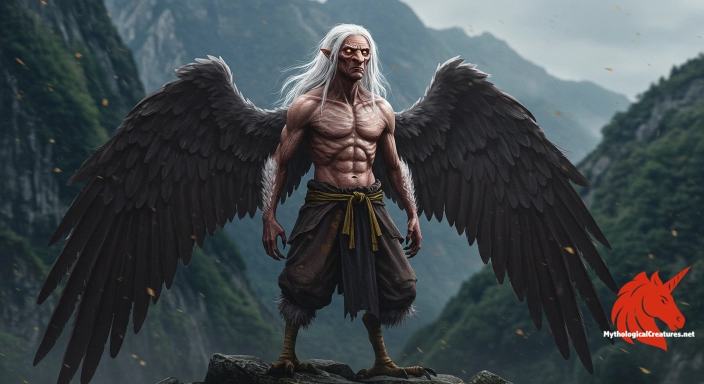
Sōjōbō
Sōjōbō - Embodies the fusion of martial prowess, mystical wisdom, and the spirit of Japan's natural landscapes
Origins & First Encounters
Sōjōbō stands as the exalted king and divine patriarch of the tengu, mysterious spirits that are believed to inhabit Japan’s secluded mountains and ancient forests. His mythic origins are entwined with the syncretism of Shinto animism and Buddhist thought, reflecting the rich tapestry of Japanese spirituality. From the misty heights of Mount Kurama, it is said he watches over not only his own kin, but all the tengu across the country. His earliest mentions emerge from oral traditions and early written records that celebrate both his mystical powers and his martial prowess. The figure is imbued with an aura of both wisdom and enigma, embodying the untamed forces of nature alongside disciplined ascetic practices. Tales of his exploits have been passed down through generations, each iteration adding layers to his character as both a teacher and a formidable leader. The narratives capture a being who is as much a part of the natural world as the rugged landscapes he passes over, blurring the boundaries between mortal endeavour and supernatural might. His interactions with famed warriors further consolidate his legendary status, making him a central figure in several martial narratives. Sōjōbō serves as a bridge between the realms of the human and the divine, symbolising an eternal quest for balance within the wild and mysterious world of Japan.
Source Texts & Tale Variants
The legends of Sōjōbō are woven into the fabric of Japan’s mythic literature, with early references appearing in a variety of medieval texts and local temple records. Original accounts depict him as both a mighty deity and a wise mentor whose teachings extend beyond mere combat to include spiritual insights and arcane wisdom. Diverse folklore traditions have preserved multiple variants of his story, each highlighting different aspects of his character, from his fearsome strength to his revered role as an educator of legendary warriors. In dramatic narratives and ritual performances, his image emerges not only as a solitary ruler but as a symbol of the mysterious powers that govern the wild. Variants of his tale have been recounted in oral traditions that traverse from the secluded mountain hamlets to the courts of ancient Japan. Some manuscripts blend historical fact with supernatural embellishment, creating a multifaceted character who is as enigmatic as he is influential. Traditional scrolls and ritual chants also pay homage to his exploits, ensuring that his narrative remains a living part of Japan’s cultural memory. The stories associated with Sōjōbō have been adapted over time to reflect shifting societal values and the evolving relationship between man and nature. This continual reinvention keeps his myth vibrant and relevant, even as the details of his early attestations remain partially obscured by the mists of time.
Form & Powers
Sōjōbō is classically portrayed with a striking blend of human and avian features that immediately set him apart as otherworldly. His long, flowing white hair crowns his appearance, symbolising both wisdom and a timeless connection to nature. One of his most notable characteristics is an unnaturally elongated nose, which adds an element of the fantastical to his visage. Despite his largely human form, subtle bird-like details such as sharp, penetrating eyes and clawed digits hint at his supernatural heritage. His countenance has been depicted as both stern and enigmatic, reflecting the dual roles of an ascetic hermit and a dynamic warrior. The traditional attire associated with him, reminiscent of yamabushi garments, further underscores his connection to the mountains and spiritual practice. Artistic representations frequently imbue his form with an aura of power and mystery, emphasising the fine line between beauty and the bizarre. His overall presence is one that balances the benevolence of a wise elder with the formidable mien of a protector of the wild. The visual legacy of Sōjōbō continues to inspire artists and storytellers who capture the finesse of his supernatural essence in various forms.
Regional Faces
The depiction of Sōjōbō has evolved distinctively across Japan’s many regions, each imbuing his legend with local flavour and nuance. In the areas surrounding Kyoto and Nara, he is often revered as a sagacious mentor whose guidance is integral to the heroic narratives passed down through generations. In contrast, communities in the northern reaches of Japan tend to accentuate his more formidable and mischievous aspects, portraying him as a trickster whose unpredictable nature commands caution. Local festivals and rituals in these areas frequently celebrate his dual role as both a benevolent guardian and an intimidating force of nature. His portrayal adapts to the cultural aesthetics of each region, sometimes featuring additional symbolic accoutrements that reflect local spiritual practices. In rural mountain villages, Sōjōbō is celebrated for his protective watch over the wilderness, his image evoking both fear and respect among the inhabitants. Variations in his narrative serve to mirror the diverse interpretations of natural phenomena and supernatural power throughout Japan. These regional adaptations highlight not only the mutable essence of his character but also the dynamic interplay between local tradition and pan-Japanese myth. Each local rendition, while unique in detail, contributes to a broader understanding of Sōjōbō as a figure of transcendent cultural importance.
Cultural Parallels
The myth of Sōjōbō invites intriguing comparisons with other legendary figures who straddle the worlds of the human and the divine. Similar to the faerie kings of Celtic folklore, he occupies a dual role as both a sovereign of supernatural beings and a mentor to mortal heroes. His synthesis of human and avian traits finds echoes in other East Asian traditions, where hybrid beings are often seen as mediators between the material and the mystical. In several Chinese legends, for instance, creatures that exhibit both spiritual wisdom and formidable physical prowess carry a resonant similarity to the encompassing power of Sōjōbō. This cross-cultural resonance highlights a universal narrative of leaders who embody the forces of nature and knowledge. His role as an instructor of martial and magical arts further aligns him with archetypal figures in global mythologies—think of wise elders in various traditions whose tutelage marks a rite of passage for great warriors. The interplay between his benevolence and ferocity also mirrors themes present in stories of trickster deities and nature spirits worldwide. Such comparative observations enrich our understanding of Sōjōbō by positioning him within a tapestry of mythic symbols that transcend geographical boundaries. His enduring image as both a formidable sovereign and a sagacious mentor is a striking testament to the shared human fascination with the mystical and the unexplained.
Legacy & Modern Evolution
Over the centuries, the legend of Sōjōbō has experienced significant transformation, mirroring shifts in cultural values and artistic expression. In early eras, he was predominantly revered as a divine warrior and an indispensable teacher to legendary figures, embodying both mystical power and martial discipline. As Japan moved into the Edo period, his image was further romanticised in popular theatre and visual arts, merging traditional religious iconography with emerging literary trends. Modern interpretations have seen him appear in diverse media, including manga, film, and contemporary art, each reimagining his legendary persona for a new generation. His representation now often blends historical gravitas with a playful reworking of his more fantastical attributes, inviting audiences to explore the intersections of tradition and modernity. The enduring appeal of his myth finds expression not only in cultural festivals and spiritual retreats on Mount Kurama but also in academic discussions and creative literature. Today, Sōjōbō is celebrated as much for his historical legacy as for his symbolic representation of the untamed connection between nature and human aspiration. His enduring narrative offers insight into the evolving perceptions of power, wisdom, and the supernatural, ensuring that his myth remains both a cultural touchstone and a living art form.
Interesting Fact
According to legend, Sōjōbō’s strength is said to equal that of 1,000 tengu, a testament to his extraordinary might and revered status among his supernatural peers.
For authors, artists, and makers
Created something from the realm of myth?
If your book, deck, game, or artwork draws from legendary creatures and lore, you can showcase it here in a tasteful, year-round placement.
Share your projectQuick Creature Info
Associations:
Our Mythic Legendary Rating:

Habitat:
Supernatural Powers:
Physical Attributes:
Abilities:
Behavior:
Lore:
References
Discover Another Mythical Legend You May Not Have Heard Of?
Uncover the mysteries of ancient folklore and expand your knowledge of legendary beings from cultures around the world.
Dare to Meet the Shadhavar....
Curated by the Mythological Creatures Team
Series editor: Mythological Creatures Directory
Primary desk: Asian & Pacific Myth Cycles Desk
(rev. November 2025)