
Stuffo: Stuffo is a supposed Germanic god from late medieval legends in Germany related to Saint Boniface.

Stuffo
Stuffo - Stuffo is a figure emerging from late medieval German legends, representing the ephemeral nature of pagan deities in contrast to the Christian narrative.
the legend in five swipes.
the legend in five swipes.
Stuffo: Origins and First Sightings
Stuffo emerges from the mists of late medieval legend as an enigmatic figure whose origins lie at the crossroads of indigenous Germanic belief and the sweeping influence of Christian reform. Born out of an era marked by dramatic religious and cultural shifts, his myth illustrates a complex tapestry of local tradition and emerging orthodoxy. His name appears in various accounts woven into the fabric of a time when the old gods were being reinterpreted under the pressures of a changing society. As the stories of Saint Boniface and his missionary zeal took hold, the image of Stuffo was transformed into a symbol of the fading pagan past, imbued with both mystery and caution. Many narratives hint that he was once revered as a guardian of the natural world, a role that underscored the deep connection between early Germanic people and their environment. His legend carries the imprints of oral traditions passed down through generations, blending awe and ambivalence towards the ancient divine. Early attestations point to a figure who was not easily confined to the binary of good and evil but rather straddled the liminal space between nature and the divine. In many respects, his enduring legacy offers insight into how communities adapted and reinterpreted the sacred in response to the forces of change.
Which texts first mention Stuffo?
The earliest mentions of Stuffo are found in late medieval manuscripts and hagiographic texts that recount the exploits of Saint Boniface as he sought to convert local tribes. These texts, though fragmentary, have provided a framework through which the legend of Stuffo has been transmitted over time. In some accounts, he appears as an almost spectral antagonist to the Christian mission, while in others his role is more ambiguous, embodying the old magic interlaced with the dawn of a new era. Variations in the narrative hint at regional adaptations that allowed storytellers to infuse their own cultural insights into his character. A number of folktales, preserved in local lore and later recorded by scholars, also reflect his association with the wild and the mysterious realms of nature. The diversity of sources suggests that his story was not fixed but evolved continually as it passed from one generation to the next. Though documentation remains limited, there is clear evidence that Stuffo’s myth was a focal point in discussions over the legitimacy and authority of the old gods when compared with the rising Christian dogma. The surviving text fragments and later retellings collectively offer a window into a period of intense religious reconfiguration, where myth and history intermingle to create complex figures of enduring intrigue.
Stuffo: Physical Form and Supernatural Powers
Visual portrayals of Stuffo, though rare, evoke an image that is as elusive as it is symbolic. Many of the artistic representations are highly interpretative, suggesting a form that straddles the boundaries between human and spirit. He is often depicted with a stature that exceeds that of mortal men, hinting at his elevated status in the ancient pantheon. Features in his iconography are deliberately ambiguous, with some depictions suggesting animalistic traits such as a wild mane or hints of horn-like adornments that mirror the untamed aspects of nature. His eyes are frequently rendered as deep and luminous, evoking the inner light of mystery and reflecting a dual nature that is both wise and unpredictable. The scant details cited by medieval artists leave much to the imagination, thus encouraging a more symbolic interpretation of his physical essence. Draped in garments that seem to be crafted from the textures of the natural world, his attire reinforces the connection between the divine figure and the rugged landscapes he is said to protect. Overall, while exact physical descriptions remain elusive, the art and literature consistently portray him as a formidable and awe-inspiring presence, a visual metaphor for the interplay between nature and the supernatural.
What regional forms of Stuffo exist?
Regional renditions of Stuffo’s legend highlight a remarkable adaptability that allowed his myth to resonate across diverse communities in Germany. In northern regions, for instance, local storytellers have often cast him as a benevolent protector of deep, ancient forests, intertwining his identity with the elemental forces of nature. In contrast, southern traditions tend to portray him with a more austere and enigmatic character, closely associated with the rugged, mountainous landscapes emblematic of those areas. These varied depictions suggest that his myth was tailored to meet the spiritual and environmental contexts of different locales. Community narratives often conveyed local interpretations that balanced elements of both danger and reverence, reflecting the ambivalence many felt towards the old gods in a time of religious transformation. Local festivals, rituals, and seasonal rites sometimes incorporated his figure, thereby allowing the legend to persist within the public consciousness. The divergence in his portrayal also speaks to the broader cultural negotiations taking place in medieval Germany as pagan and Christian worldviews intersected. As each region endeavoured to reconcile its ancestral beliefs with the new normative structures, the character of Stuffo was reshaped to mirror local values and natural surroundings. These regional adaptations underscore the fluidity of myth, demonstrating how a single legendary figure could be adapted to a mosaic of cultural landscapes and symbolic needs.
Which myths echo the story of Stuffo?
When placed side by side with other ancient deities, Stuffo’s myth reveals striking similarities with figures from various European mythologies. His ambiguous role as both a guardian and a shapeshifter finds echoes in the trickster gods of Norse tales, who too oscillate between benevolent protection and mischievous interference. Much like certain Celtic deities, his character embodies the spirit of nature, serving as a conduit between the tangible world and the mystical realm. In Slavic traditions, there are echoes of similar entities that both caution and guide, reflecting a shared cultural interest in the dualities of existence. Comparative analysis illustrates that such shiftings of role and character were common as religions transitioned from polytheism to more structured monotheistic frameworks. The peripheral qualities that make Stuffo so elusive are not unique; they resonate with broader archetypal patterns where ancient gods transform to accommodate new moral and social orders. Even Mediterranean mythic figures, who underwent their own syncretic reinterpretations, reveal a pattern of adaptation similar to that of Stuffo. By comparing these figures, it becomes clear that his legacy is part of a larger tradition of myth-making that transcends regional boundaries. This comparison enhances our appreciation of the complex interplay between the ancient and the evolving, highlighting how mythological characters serve as mirrors to the societal currents across time and culture.
Stuffo in Modern Culture
The historical journey of Stuffo’s myth is a fascinating narrative of transformation and reinterpretation that spans from late medieval times to the modern age. Over time, his legend has shifted from an obscure local deity to an emblem of the complex interplay between pagan traditions and Christian ideals. As Christian narratives began to dominate, his myth was often recontextualised as a relic of the old ways, a symbol of resistance against the encroaching order of the new faith. Yet in the modern era, artists and cultural historians have rediscovered him as a potent emblem of cultural continuity amidst change. Contemporary reinterpretations frequently position him as a guardian of natural heritage, resonating with modern concerns about the environment and regional identity. His saga illustrates the enduring power of myth to adapt and survive, even when its original context has long faded from popular memory. Modern festivals, literature, and artistic endeavours have reinvigorated his legend, reviving interest in the obscure narratives of early Germanic spirituality. This evolving legacy speaks to a broader trend where traditional myths are reimagined to address contemporary issues, reflecting a timeless dialogue between past and present. In many ways, Stuffo endures as a symbol of the ever-changing, yet unbreakable, links between cultural identity and myth. Thus, his story remains a captivating reminder of how the layers of historical reinterpretation contribute to the rich tapestry of a living cultural tradition.
Interesting Fact
The obscurity of Stuffo in definitive mythological records highlights the transformative impact of Christianisation on pagan deities, rendering many such figures enigmatic and open to reinterpretation.
Mythological Treasures
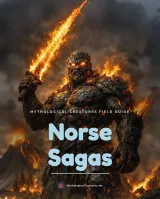
Norse Sagas: A field guide to the beasts of the Viking world
Drawn from the saga accounts themselves, with the powers, weaknesses and doom of each being set out.
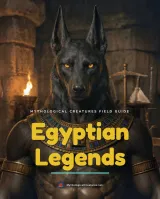
Egyptian Legends: A field guide to the gods and monsters of ancient Egypt
Guardians of the living and devourers of the dead, with the role each played in judgement.
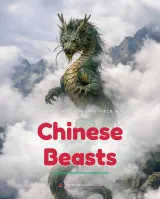
Chinese Beasts: A field guide to the dragons and demon kings of Chinese myth
From river dragons to demon kings, with the legends that shaped five thousand years of storytelling.
the legend in five swipes.
For serious myth projects
Feature your work alongside the legends
From academic works to story-rich games, we highlight projects that respect world mythologies. Talk to us about a measured, long-term placement.
Start a conversationQuick Creature Info
Origin:
Our Mythic Legendary Rating:

Habitat:
Supernatural Powers:
Abilities:
Lore:
Related Creatures, Tales or Lore
- WWodan
- TThor
- TTyr
References
Discover Another Mythical Legend You May Not Have Heard Of?
Uncover the mysteries of ancient folklore and expand your knowledge of legendary beings from cultures around the world.
Dare to Meet the Iphianassa....

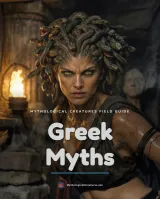
The Mythological Creatures Book Series
Yokai, Greek, Norse, Egyptian & Chinese. Five illustrated field guides to the creatures the old stories either warned or told you about.

Curated by the Mythological Creatures Team
Series editor: Mythological Creatures Directory
Primary desk: Northern & European Folklore Desk
(rev. November 2025)