
Succubus: The succubus is a female demon famed for seducing men in their dreams and draining their life force.
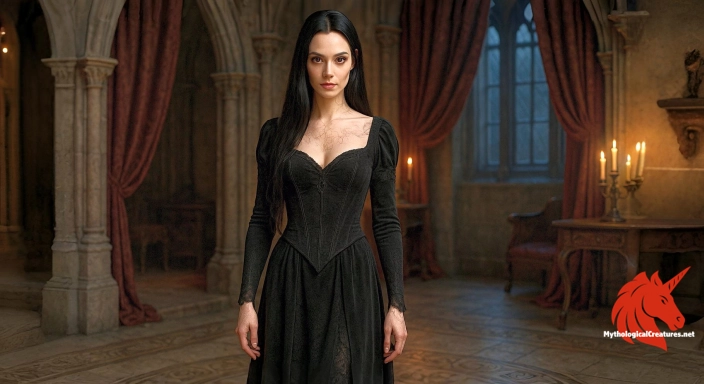
Succubus
Succubus - Represents the dangers of uncontrolled lust and serves as a cautionary figure against sexual excess.
Origins & First Encounters
Deep within the tapestry of myth and folklore, the succubus occupies an enigmatic role marked by both allure and danger. Emerging from early medieval traditions, this entity was first noted in manuscripts and oral legends that warned of its nocturnal visitations. Her initial appearances were intertwined with moral cautionary tales intended to dissuade sinful indulgences and the unchecked expression of lust. Over time, the succubus became a symbol of forbidden desire as much as it became a warning of spiritual corruption. The narratives surrounding her reflect a complex interplay between seduction and damnation, situating her squarely within the moral and religious anxieties of her era. Cultural depictions over the centuries have stressed her dual nature—as both an irresistible object of desire and a harbinger of despair. Influenced by the shifting paradigms of gender and sexuality, her myth evolved to mirror the changing societal landscapes. Thus, the succubus remains an enduring figure whose multifaceted legacy continues to capture the imagination of generations.
Source Texts & Tale Variants
The stories of the succubus are drawn from a diverse array of sources that encompass ancient folklore, grimoires, and medieval narratives. Numerous handwritten manuscripts from the Middle Ages contain accounts of eerie encounters with a mysterious female demon who appears in dreams. These texts, though often steeped in religious overtones, reveal a widespread belief in a force that both seduces and endangers its victims. Variants of the story exist in folk traditions, where oral transmission has led to a variety of interpretations and subtle narrative shifts. Some accounts highlight an almost parasitic dependency on male vitality, while others trace more symbolic connections to the broader themes of temptation and the supernatural. As these sources converged over time, they often incorporated local customs and taboos, leading to distinct versions of the myth tailored to particular cultural contexts. The resulting patchwork of narratives illustrates how the succubus became a flexible symbol in the collective cultural memory, inspiring both fear and fascination. Through these primary texts and evolving story variants, the succubus myth endures as a rich and layered legacy in the realm of supernatural folklore.
Form & Powers
In artistic and literary depictions, the succubus is frequently portrayed as an extraordinarily beautiful woman with a magnetic allure that is both enchanting and intimidating. Her eyes are often illustrated as sparkling with an otherworldly light, capable of effortlessly drawing the gaze of those who encounter her. Attired in opulent and provocative garments, she embodies an idealised form of femininity that transcends ordinary human beauty. Despite her seemingly delicate exterior, subtle demonic features occasionally emerge in descriptions—such as a hint of horns gracing her brow or the suggestion of bat-like wings concealed beneath a refined silhouette. Variations in her portrayal have introduced elements like elongated, graceful limbs and an almost ethereal luminescence that sets her apart from mortal women. The integration of these physical traits speaks to a deliberate layering of charm with latent peril, accentuating her role as both seductress and predator. Over centuries, artists have rendered her in myriad forms, each version capturing the delicate balance between beguiling attraction and an undercurrent of menace. Consequently, her physical depiction has evolved into a visual archetype that skilfully encapsulates the duality of beauty and danger.
Regional Faces
Across different parts of the world, the succubus adapts to local mythologies and cultural expectations, resulting in a rich diversity of portrayals. In European traditions, she is primarily depicted as a nocturnal seductress whose encounters signal moral jeopardy and spiritual decline. In Mediterranean and Near Eastern legends, the essence of the succubus sometimes merges with pre-Islamic and pagan motifs, evolving to incorporate themes of fertility and the capricious forces of nature. Some regional tales suggest that the succubus may appear as a transient, shadow-like presence, while others detail her elaborate interactions with mortals through dreams and nocturnal liaisons. Local customs and societal taboos have shaped these narratives, imbuing her with attributes that mirror the specific fears and desires of diverse communities. In areas where folklore is interwoven with ancient rites and rituals, she is sometimes honoured as a cautionary figure whose allure conceals a treacherous nature. Despite these regional adaptations, the core elements of seduction and danger remain consistent. These varied portrayals underline the succubus’s ability to transcend geographical boundaries while remaining a potent symbol of the tensions between desire and sin.
Cultural Parallels
The succubus resonates with numerous mythological figures that traverse cultural divides, often sharing striking similarities with other seductresses in folklore. Frequently paired with the incubus—a male counterpart who, in a mirror image of the succubus, preys upon women—this demoness typifies the ancient human preoccupation with the allure of the forbidden. Comparable figures such as the Sumerian Lilitu and the Mesopotamian Lilu exhibit overlapping characteristics, blending seductive beauty with a dangerous, supernatural edge. In Classical mythology, entities like Lamia similarly combine irresistible charm with a latent, often lethal, energy. These parallel figures highlight a universal archetype, one that personifies the irresistible draw of temptation along with its inherent risks. The recurring motif across mythologies serves as a reminder of the delicate balance between desire and destruction in human culture. By comparing these figures, it becomes evident that the seductress archetype is a common narrative device used to explore the complexities of sexuality and moral transgression. This widespread thematic convergence underscores the succubus’s place within a broader tradition of mythic symbols that explore the interplay between allure and peril.
Legacy & Modern Evolution
Throughout history, the depiction of the succubus has experienced a dynamic evolution, mirroring shifts in societal attitudes towards sexuality and female agency. Once depicted primarily as a dire and ominous figure whose presence threatened the soul, she has gradually been reinterpreted through the lens of modernity. Contemporary portrayals often embrace the succubus not merely as a demonic seductress, but as a symbol of empowerment and the complexities inherent in desire. Modern literature, film, and digital media have recast her image, softening some of the harsher, fear-inducing traits associated with her early legends. This evolution reflects a broader reevaluation of traditional narratives, where the once unequivocal symbols of sin and seduction now offer nuanced insights into gender and power dynamics. Today, the succubus stands as a cultural icon whose ambiguous legacy invites both admiration and critique. Her legend has transcended its original confines, adapting to the changing moral and aesthetic sensibilities of modern audiences. In this modern context, she continues to serve as a potent metaphor for the interplay between lust, vulnerability, and the ongoing negotiation of societal norms.
Interesting Fact
The succubus has inspired numerous works of literature and art, symbolising the timeless allure and peril of seduction.
Reach myth fans
Connect your myth-driven brand with this audience
Our readers are writers, educators, gamers, and collectors who care about mythology. Enquire about a limited sponsor placement on creature pages.
Enquire about sponsorshipQuick Creature Info
Our Mythic Legendary Rating:

Habitat:
Supernatural Powers:
Physical Attributes:
Abilities:
Behavior:
Weaknesses:
Lore:
References
Discover Another Mythical Legend You May Not Have Heard Of?
Uncover the mysteries of ancient folklore and expand your knowledge of legendary beings from cultures around the world.
Dare to Meet the Letiche....
Curated by the Mythological Creatures Team
Series editor: Mythological Creatures Directory
Primary desk: Hellenic & Ancient Mediterranean Desk
(rev. November 2025)