
Supay: Supay is an ambivalent Andean underworld spirit from Quechua, Aymara, and Inca mythologies, known for his shadow-like manifestation.
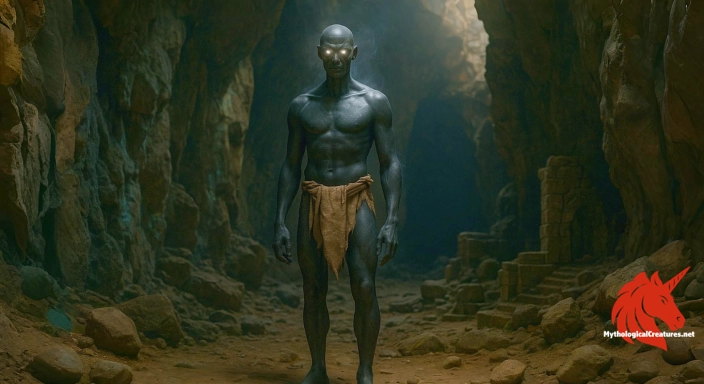
Supay
Supay - Represents the duality of death and the afterlife, embodying both benevolence and harm, and reflects cultural transitions from pre-Columbian spirituality to Christian demonology.
Origins & First Encounters
Supay emerges in the rich tapestry of Andean myth as an enigmatic figure whose roots extend deep into Quechua, Aymara and Inca cultural traditions. His origins, steeped in the mystique of the netherworld known as Ukhu Pacha, reveal a being whose nature is both capricious and compelling. From early indigenous narratives, he is portrayed as a spirit associated with the shadowy realm and the uncertain boundary between the living and the dead. His presence was once considered ambivalent, capable of bestowing blessings as easily as he could invoke misfortune. In the ancient world he was both a guide and a trickster, an entity whose duality symbolised the complexities of life and death. Early attestation in myth and ritual often depicted him as a mediator between mortal existence and the supernatural unknown. His depiction carries a depth that reflects the complex cosmological views held by the Andean peoples. Over time, his legacy would evolve as encounters with external belief systems redefined his character, leaving a lasting impression on the cultural imagination.
Source Texts & Tale Variants
The narrative of Supay is preserved through a variety of sources, ranging from oral traditions passed down through generations to the early chronicles recorded by colonial scribes. His story appears in rites and folklore that have sustained his image as both a benevolent and a fearsome presence. Indigenous accounts, though fragmentary, offer glimpses into a time when a singular spirit captured the essence of the underworld. Early ethnographic reports describe his role in guiding souls and influencing earthly fortunes, with details varying by region. The Spanish chroniclers reinterpreted these narratives, often aligning him with the archetypal Devil as seen in Christian iconography. This reimagining, while reshaping his original character, underscores the transformative power of cultural exchange. Multiple versions of his legend exist, each reflecting the unique cosmological views of distinct Andean communities. Despite variations, a common thread weaves through these accounts—a spirit whose dual capacity for harm and aid mirrors the unpredictable forces of nature.
Form & Powers
Descriptions of Supay’s appearance are as elusive as his nature, often reflecting the fluid boundary between corporeal existence and the world of shadows. In various renditions, he is depicted with an ever-shifting form that blends human contours with spectral, shadow-like qualities. Some traditions evoke images of a figure with elongated limbs and a countenance that flickers between beauty and terror. Certain accounts suggest that his eyes emit a soft, unsettling glow reminiscent of twilight’s last light, enhancing his mysterious allure. His attire is variably described, sometimes echoing the ceremonial garments of ancient Andean dress, yet reimagined to suit an infernal background. The motif of shadow is recurrent in descriptions of his body, with some portraying him as partially intangible, as if he were an extension of the environment itself. The lack of fixed features reinforces his character as a shapechanger who embodies the ephemeral nature of death and transition. These diverse portrayals suggest that physical appearance is less central to Supay than the powerful symbolism he carries as an intermediary between life and the mysterious beyond.
Regional Faces
Regional interpretations of Supay vary considerably across the Andean highlands, with local communities adapting his image to reflect their own cultural landscapes and needs. In Quechua regions, his association with the shadow is a poignant metaphor for the unseen forces that influence daily life, while Aymara traditions often imbue him with an edge of cautionary mysticism. In some Incan narratives, he is presented as a pivotal guardian of the underworld, controlling the passage of souls with a strict yet balanced judiciousness. Localised legends sometimes depict him as a capricious trickster who can either lure mortals into a journey beyond with gentle charm or ensnare them with dark intent. The contrasts in his portrayal reflect the interplay of regional beliefs, where his role as both benefactor and harbinger of doom is carefully balanced. Variations in ritual practices, such as night vigils and ceremonial dances, frequently include invocations of Supay, underscoring his enduring presence in community life. Over time, oral traditions have interwoven his image with local features such as rugged mountains, deep caves, and fast-flowing rivers. This melding of character with landscape highlights the adaptability of his myth, reinforcing the idea that Supay is as much a part of the natural world as he is a symbol of the metaphysical.
Cultural Parallels
In comparing Supay with other mythological figures, striking similarities emerge with underworld deities from diverse cultures. His ambivalence shares echoes with the dual-natured gods found in various Native American and European legends, where deities inhabit the liminal space between order and chaos. Like the Norse goddess Hel or the Greek deity Hades, Supay embodies the inevitability of death and the mysterious processes of transition found in afterlife beliefs. However, unlike these figures, his persona is not solely defined by rulership of the dead but also by an unpredictable temperament that can yield both favour and misfortune. European interpretations during the colonial period further conflated his characteristics with those of the Christian Devil, a transformation that obscured his original narrative context. Cultural parallels can also be drawn with the Slavic Chernobog, another shadowy figure whose presence defies a simple categorisation as wholly good or evil. Each of these mythic beings serves to remind humanity of the inescapable interplay between life’s light and dark aspects. This comparative approach reveals that Supay, much like his global counterparts, functions as a potent metaphor for the uncertainty and duality inherent in the cycle of existence.
Legacy & Modern Evolution
The evolution of Supay’s myth reflects a dynamic historical journey that has traversed ancient ritual, colonial reinterpretation, and modern cultural revival. Initially revered as an ambivalent spirit of both danger and protection, his character was radically transformed during the Spanish colonial era, when indigenous beliefs were reframed under Christian lenses. Today, his legacy endures in a reimagined form that integrates ancient symbolism with contemporary narrative techniques. Modern Andean artists, writers and cultural activists often portray him as a metaphor for the hidden depths of an evolving cultural identity. Festivals and theatre performances in the region sometimes celebrate his duality, emphasising both his mystical origins and his modern resonance as a symbol of personal and communal transformation. Scholars and cultural commentators alike have revisited his myth to uncover layers of meaning related to power, mortality and the nature of the human soul. As contemporary interpretations continue to evolve, Supay’s image serves as a reminder of the enduring power of myth to negotiate the tensions between past and present. His shifting role in societal narratives underscores the way in which folklore adapts to reflect the changing concerns and aspirations of each generation. In this timeless cycle of reinterpretation, Supay remains a captivating symbol of the interplay between darkness and light, offering insights into the profound mysteries of existence.
Interesting Fact
An intriguing aspect of Supay is how his originally ambivalent nature evolved under external influences, resulting in a complex figure that bridges indigenous spirituality and colonial demonology.
Mythology-aligned partners
Showcase your myth-friendly brand here
Run a store, studio, or platform that lives in the world of myth and folklore? A curated sponsor panel on these pages may fit.
Explore partnership optionsQuick Creature Info
Origin:
Associations:
Our Mythic Legendary Rating:

Also Sometimes Known As:
Habitat:
Supernatural Powers:
Physical Attributes:
Abilities:
Behavior:
Lore:
References
Discover Another Mythical Legend You May Not Have Heard Of?
Uncover the mysteries of ancient folklore and expand your knowledge of legendary beings from cultures around the world.
Dare to Meet the Tethys....
-94cd114c-3fc7-4605-8fe2-f0bb534b54e1_small.webp "Depiction of Tethys")
Curated by the Mythological Creatures Team
Series editor: Mythological Creatures Directory
Primary desk: Americas & Indigenous Traditions Desk
(rev. November 2025)