
Takayama Torakichi: Takayama Torakichi was an Edo period street urchin renowned for his claim of venturing into the other world and receiving tengu training.

Takayama Torakichi
Takayama Torakichi - Represents the fusion of everyday existence with supernatural myth, embodying Edo period urban folklore.
Origins & First Encounters
Takayama Torakichi emerged as an extraordinary figure in early 19th century Edo, a time when the boundaries between the mundane and the supernatural were fluid and ever-shifting. Originating from the impoverished streets as a street urchin, he experienced the harsh realities of urban life, yet his journey took an unexpected turn. He claimed to have ventured into kakuriyo, the mysterious other world, and returned with insights that defied ordinary experience. His bold assertion of having received training in the art and mystique of the tengu transformed him into a figure of both intrigue and reverence. Embracing the moniker "tengu kozō", or "tengu kid", he captured the imagination of a society that thrived on enchanting urban legends. His narrative bridged the gap between everyday hardship and the ethereal world of myth, resonating deeply with the common people of Edo. The social and cultural tapestry of the time provided fertile ground for his legend, as tales of the supernatural were in high demand. Over time, his story came to symbolise the transformative power of myth in a rapidly changing world. His life underscored the potential for extraordinary experiences to emerge from the most unremarkable beginnings. Ultimately, Takayama Torakichi’s legacy is a testament to the enduring appeal of the mysterious and the unexplained in human history.
Source Texts & Tale Variants
Primary sources and story variants have preserved the elusive memory of Takayama Torakichi through both written records and oral traditions. The urban chronicles and local ballads of Edo recount his adventures with a mixture of fact and myth, often embellishing his supernatural journey. Various manuscripts from the period contain sporadic references to his encounter with the other world, though details vary from one account to another. Kabuki plays and street performances often integrated elements of his story, further blurring the line between his lived experience and folklore. Many of these retellings highlight his encounters with the tengu and portray him as a conduit for otherworldly wisdom. Folkloric narratives passed down through generations enhanced his tale with dramatic flourishes and symbolic motifs. While archival records offer only fragmented glimpses of his life, the oral tradition has ensured that his legend continued to evolve over time. Stories circulated among common folk and were adapted by local storytellers, each variation contributing additional layers to his character. The multifaceted nature of these accounts underlines the complexities of preserving myth in a rapidly changing urban society. Each version, whether more grounded or fantastically embellished, has enriched the tapestry of his enduring legend.
Form & Powers
Detailed physical descriptions of Takayama Torakichi are scarce in the traditional records, yet imaginative retellings provide a vivid portrait of his appearance. Illustrations and accounts typically depict him as a lean and agile boy, embodying the resilience required to thrive in Edo’s bustling streets. His youthful face, marked by both the hardships of street life and an eerie, almost otherworldly glow, set him apart from his peers. Contemporary narratives sometimes describe his eyes as deep and alert, glimmering with the wisdom of one who has seen realms beyond mortal sight. In artistic renderings, his unkempt hair and tattered garments add to the impression of a life lived on the fringes of society. Some local tales even attribute subtle, almost imperceptible markings to his skin or attire, hinting at a mystical connection to the tengu. The blend of literal physicality with legendary embellishments suggests a figure who balanced the tangible and the supernatural. While his stature was modest, his presence was amplified by a quiet intensity that left a lasting impression. These depictions, though varied, consistently evoke a sense of a person transformed by encounters beyond the ordinary. Overall, the visual legacy of Takayama Torakichi remains a compelling fusion of realistic street life and the ethereal qualities of folklore.
Regional Faces
Regional variations of Takayama Torakichi’s legend reflect the diversity of local interpretations that emerged as his tale spread beyond Edo. In rural communities, his story was often adapted to resonate with the local understanding of the supernatural, integrating elements drawn from indigenous mountain lore. Some versions portray him as a solitary wanderer with ascetic qualities, whose face became a symbol of transformation and otherworldly encounter. Northern retellings tend to emphasise the harshness of nature and his perceived communion with wild, untamed spirits. In contrast, southern narratives often highlight his mischievous charm and the duality of his existence as both a street urchin and a mystic. Each region recalibrated his experiences to reflect local cultural nuances and the distinct character of regional folklore. These variations underscore how oral traditions can mould a single story to fit diverse socio-cultural contexts. The evolving narrative in different localities contributed layers of complexity to his overall mythos. As communities reinterpreted his feats, the tale absorbed local symbols and allegories, enriching its meaning. Thus, Takayama Torakichi’s legend remains a dynamic example of how folklore adapts to the cultural landscape of its audience.
Cultural Parallels
Comparative exploration reveals that Takayama Torakichi’s narrative shares striking similarities with liminal figures found in other cultural mythologies around the world. His portrayal as a youthful individual who transitions between mortal and supernatural realms echoes the archetypes of folk heroes seen in European and Asian traditions alike. Figures such as the wandering shamans of Siberian lore or the mischievous sprites of Celtic myths resonate with the dual nature of his existence. The blending of everyday hardship with a transformative supernatural encounter mirrors the journey outlined in countless rites of passage in global folklore. Like many mythic protagonists, his story embodies a tension between vulnerability and invincibility, reflecting universal themes of growth and transcendence. His association with both street life and mysticism invites comparisons with legendary tricksters who challenge societal norms through unconventional wisdom. In analysing these parallels, it becomes evident that his tale is part of a broader narrative tradition where ordinary individuals are elevated by extraordinary experiences. The cross-cultural connections underscore how communities worldwide employ myth to negotiate the complexities of identity and destiny. By examining such similarities, one can appreciate the shared human fascination with journeys that transcend the limits of the everyday. Ultimately, Torakichi’s legend serves as a bridge linking the specific cultural context of Edo with the universal motifs found in global mythology.
Legacy & Modern Evolution
Over the decades following his lifetime, the legend of Takayama Torakichi has evolved and expanded within the framework of Japanese cultural memory. His story, once rooted in the real struggles of a street urchin in Edo, gradually absorbed layers of myth and supernatural allure, largely due to its transmission through oral and performative traditions. Modern reinterpretations have reimagined his journey as a symbol of resilience and the transformative power of embracing the unknown. Artists, writers, and filmmakers have all drawn inspiration from his tale, integrating elements of traditional tengu lore with contemporary sensibilities. The reinterpretation of his image often sees him portrayed as a whimsical yet poignant figure, reflecting challenges and triumphs in urban life. As Japan underwent rapid modernisation, the retelling of his adventures provided both a nostalgic link to the past and a dynamic commentary on modern society. Cultural events and local festivals occasionally feature commemorations of his legend, ensuring that his narrative continues to resonate with new generations. His evolution from a marginal street urchin to a mythological icon mirrors the broader shifts in societal attitudes towards folklore and identity. Historians and cultural critics find in his tale a rich subject for exploring the intersections of reality and myth in Japan's dynamic urban history. Ultimately, Takayama Torakichi’s enduring legacy highlights the timeless allure of myth and its power to elevate the personal into the realm of the extraordinary.
Interesting Fact
An intriguing aspect of Takayama Torakichi's legend is how his self-fashioned narrative as a tengu-trained street urchin continues to captivate, blurring the lines between historical reality and myth.
Partner with Mythological Creatures
Bring your myth-based world into ours
From game settings to narrative worlds, we work with partners who treat myths with care. Share your project for a potential sponsor slot.
Partner with usQuick Creature Info
Features:
Our Mythic Legendary Rating:

Also Sometimes Known As:
Habitat:
Supernatural Powers:
Physical Attributes:
Abilities:
Behavior:
Lore:
Related Creatures, Tales or Lore
- TTengu
- AAbe no Seimei
- YYamabushi
References
Discover Another Mythical Legend You May Not Have Heard Of?
Uncover the mysteries of ancient folklore and expand your knowledge of legendary beings from cultures around the world.
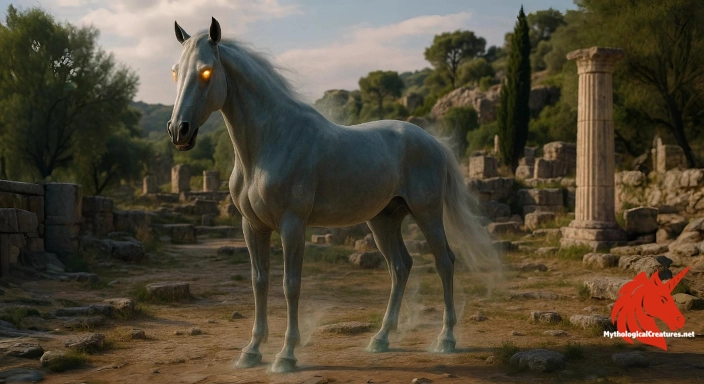
Dare to Meet the Taraxippus....
Curated by the Mythological Creatures Team
Series editor: Mythological Creatures Directory
Primary desk: Asian & Pacific Myth Cycles Desk
(rev. November 2025)