
Tefnut: Tefnut is an ancient Egyptian goddess associated with moisture and the production of water.
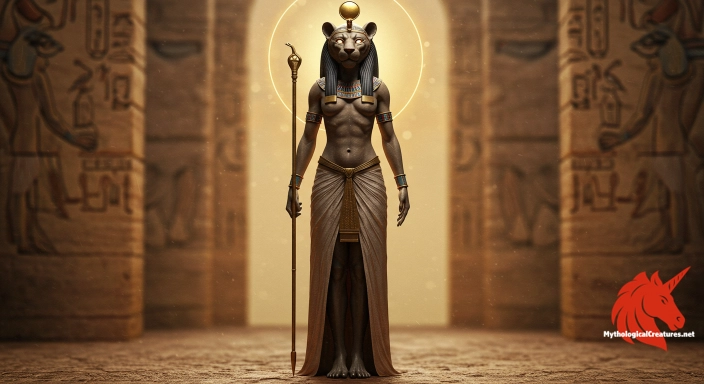
Tefnut
Tefnut - Tefnut plays a crucial role in the cosmic balance between moisture and dry air and is a key figure in the Heliopolitan creation myth.
the legend in five swipes.
the legend in five swipes.
Where does Tefnut come from?
Tefnut emerges as one of the more enigmatic figures in the ancient Egyptian pantheon, her essence embodying the vital moisture that rendered the harsh desert bloom with life. Born from the cosmic interplay alongside her brother Shu, she occupies a significant niche in the intricate tapestry of creation and balance. Her origins, shrouded in the early mythic narratives of the Heliopolitan Ennead, introduce a deity whose role was as much about nurturing as it was about the raw forces of nature. Early inscriptions and temple texts, including passages from the Pyramid Texts, provide a glimpse into her function as a producer of water, integral to the sustenance of life in a challenging climate. Embedded in the cultural rituals of ancient Egypt, her symbolism extended beyond moisture to encompass elements of both regeneration and divine wrath. Her mysterious association as one of the goddesses capable of manifesting as the fiery Eye of Ra only deepened the layers of her symbolic narrative. Celebrated in royal iconography and everyday offerings, Tefnut reflected the balance between the arid and the wet, a duality at the heart of Egypt’s natural order. The depth of her myth and her subtle yet powerful presence underscore a legacy that continues to intrigue those who study ancient religions. Across dynasties, she was venerated as much for her nurturing attributes as for her capacity to unleash the potent forces of water. Her enduring mystique thus represents a union of life-giving benevolence with the wild, untamed elements of nature.
Where can you read about Tefnut?
Ancient records and sacred texts furnish a multifaceted glimpse into Tefnut’s character, with the Pyramid Texts offering some of the earliest attestations of her divine influence. Diverse accounts from various epochs depict her as a goddess whose power was channelled through the life-sustaining force of water. Several story variants place her origins alongside cosmic elements such as air and light, frequently pairing her with her brother Shu to illustrate the natural balance of moisture and dryness. In some traditions, she emerges as a creation of the primordial deity Atum, while other texts hint at a direct emanation from the fiery aspect of Ra. The Coffin Texts and later ritual inscriptions expand on these foundational myths, providing nuanced portrayals of her ability to generate water and nurture the growth of the land. Fragmentary narratives also show her as a nurturing yet formidable force, capable of both replenishing and overwhelming the natural order. Different temple reliefs and funerary texts contribute to a layered tradition that preserves her varied roles in the cosmic drama. This multifarious documentation underscores her importance within the broader framework of Egyptian religious thought. The tapestry of primary sources thus not only solidifies Tefnut’s significance but also mirrors the evolving understanding of natural elements in ancient Egypt. Each story variant enriches the myth by highlighting her complex interplay with life, destruction, and rebirth.
The Appearance and Powers of Tefnut
Tefnut is often depicted with features that encapsulate both grace and a latent intensity, symbolising the gentle and tumultuous aspects of moisture. Artistic representations frequently portray her with an elegant human form, accentuated by adornments that evoke the celestial sphere, such as a solar disc or uraeus. In certain portrayals her head is rendered with lioness-like characteristics, a detail that speaks to her fierce role as the Eye of Ra and the dynamic power inherent in nature’s cycles. Her attire, often flowing and fluid, is designed to mirror the movement of water, with rippling lines that suggest both calm and energy. Statues and temple reliefs capture her with a delicate balance of softness in her facial features and an underlying strength conveyed through her posture. The stylistic nuances in her depiction—ranging from slender, almost ethereal forms to more robust, muscular representations—reflect a diverse iconographical tradition. Variations in her physiognomy also echo the local artistic influences across different regions of Egypt, with each style imbuing her with distinctive marks of divinity. Some images highlight her serene, nurturing aspect while others emphasise a fierce, almost predatory aspect linked to her protective role. The interplay between her gentle demeanour and raw elemental power is rendered with meticulous attention to detail, capturing the paradoxical nature of water itself. Overall, her visual portrayal is a study in contrasts, blending elegance with the untamed force of nature.
Where was Tefnut best known?
The depiction of Tefnut varies notably across different regions of ancient Egypt, with local traditions moulding her image to reflect both environmental and cultural priorities. In the sacred precincts of Heliopolis, she is firmly established within the Ennead, where her identity is tightly interwoven with that of her counterpart Shu, symbolising the delicate equilibrium of moisture and dryness. In Upper Egypt, artistic interpretations tend to accentuate her lioness attributes, lending her a more commanding and robust presence. Conversely, in Lower Egypt her portrayal can assume a more serene and nurturing aspect, underlining her role as a life-bringer amidst the arid surroundings. Localised temple reliefs and inscriptions reveal that regional artists often adapted her iconography to reflect specific climatic conditions and local agricultural rituals. In some communities, she was syncretised with native goddesses, further expanding her attributes to include fertility and seasonal renewal. Variations in iconography also resulted from differing artistic conventions across dynasties, leaving behind a legacy of multifaceted representations. Some locales emphasised her association with the natural cycles of the Nile, while others highlighted her cosmic significance as part of the divine order. Ultimately, these regional adaptations underscore the flexibility of her myth, demonstrating how a single deity could reflect the diverse needs and aesthetic sensibilities of ancient Egyptian society. This regional plurality enriched her legacy, making her a truly dynamic figure in Egypt’s religious landscape.
Which figures are similar to Tefnut?
Exploring the figure of Tefnut alongside deities from other cultural traditions reveals remarkable thematic resonances centred on the elemental forces of water and moisture. Her role as a custodian of moisture finds echoes in various pantheons, where water deities embody the dual aspects of life-giving nurture and formidable power. In the Greek tradition, while the figures do not always parallel Tefnut directly, gods and goddesses associated with rain and the sea evoke a similar balance between fertility and tempestuous energy. Mesopotamian myths offer primordial beings tied to the forces of water, presenting an intriguing counterpoint to Tefnut’s gentler yet equally potent character. In Eastern philosophies, the concept of complementary opposites, reminiscent of the relationship between Tefnut and Shu, aligns with ideas such as yin and yang, where moisture contrasts with dryness to achieve cosmic harmony. Similar themes emerge in indigenous American and South Asian mythologies, where water is often revered for its vital and dynamic properties. Though her form is distinctly Egyptian, Tefnut’s attributes resonate with these broader global narratives that celebrate nature’s capacity to nurture and destroy simultaneously. The multifunctional symbolism she carries thus bridges disparate mythological traditions, emphasising the universal human effort to understand and revere the forces of nature. These comparative insights highlight how a goddess of moisture can serve as a unifying archetype across various cultures. By drawing on these cultural parallels, one can appreciate Tefnut’s enduring impact on the discourse of natural and cosmic balance throughout history.
Why is Tefnut still popular?
Through the vast expanse of history, Tefnut has gracefully transitioned from the spiritual landscape of ancient temples into a symbol rich with modern ecological and artistic connotations. Her ancient portrayal as the embodiment of moisture continues to inform contemporary debates on environmental balance and the imperatives of nature within human society. Early depictions in hieroglyphs and temple reliefs have inspired modern interpretations in literature, film, and visual arts that explore themes of regeneration and the cyclical nature of existence. The evolving appreciation for her dual characteristics—both nurturing and ferocious—mirrors modern concerns about sustainability and the delicate interplay between human intervention and natural processes. Artists and writers today often draw on her image to evoke a sense of timeless mystery and the enduring power of nature. This reinvention extends to academic circles, where Tefnut is examined as a multifaceted symbol that encapsulates ancient wisdom and modern ecological imperatives. Contemporary religious and spiritual movements occasionally incorporate her motifs, celebrating the ancient interconnectedness between the divine and the natural world. Her visual and symbolic legacy has also been reimagined in digital media and public art installations, thereby keeping her myth vibrant in the modern cultural lexicon. As newer generations rediscover the rich narratives of the past, Tefnut’s legacy continues to inspire renewed dialogue about the reverence of nature and the complexities of existence. In every reinterpretation, her enduring spirit challenges us to reflect on the balance between life's nurturing flows and its inevitable, sometimes tumultuous, disruptions.
Interesting Fact
Tefnut uniquely embodies the union of opposing elements—moisture and dry air—demonstrating the ancient Egyptian belief in balanced duality.
Mythological Treasures
Egyptian Legends: A field guide to the gods and monsters of ancient Egypt
Guardians of the living and devourers of the dead, with the role each played in judgement.
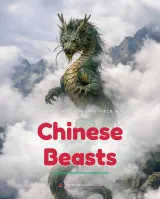
Chinese Beasts: A field guide to the dragons and demon kings of Chinese myth
From river dragons to demon kings, with the legends that shaped five thousand years of storytelling.
Japanese Yokai: A field guide to the spirits and demons of Japanese folklore
Fifteen spirits, with the signs to watch for and what the old tales say to do if you meet one.
the legend in five swipes.
For publishers and studios
Your next readers are already here
Many of our visitors are looking for books, campaigns, and resources that deepen their journey into myth. Position your title or setting here.
Discuss a placementQuick Creature Info
Origin:
Associations:
Our Mythic Legendary Rating:

Also Sometimes Known As:
Habitat:
Supernatural Powers:
Physical Attributes:
Abilities:
Behavior:
Lore:
References
Discover Another Mythical Legend You May Not Have Heard Of?
Uncover the mysteries of ancient folklore and expand your knowledge of legendary beings from cultures around the world.
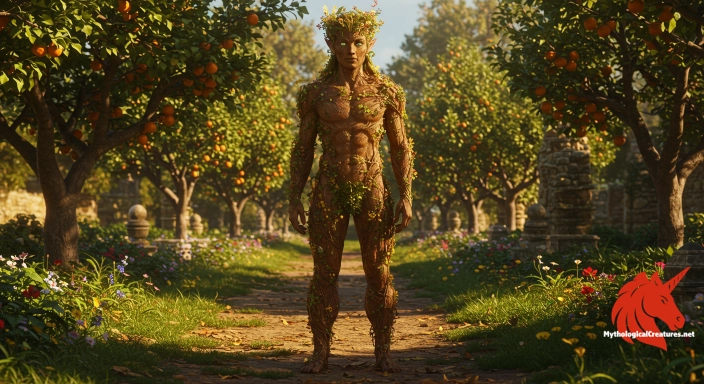
Dare to Meet the Vertumnus....
The Mythological Creatures Book Series
Yokai, Greek, Norse, Egyptian & Chinese. Five illustrated field guides to the creatures the old stories either warned or told you about.


Curated by the Mythological Creatures Team
Series editor: Mythological Creatures Directory
Primary desk: Hellenic & Ancient Mediterranean Desk
(rev. November 2025)