
The Graeae: The Graeae, also known as the Grey Sisters, are three ancient mythological sisters with gray hair and a single shared eye and tooth.
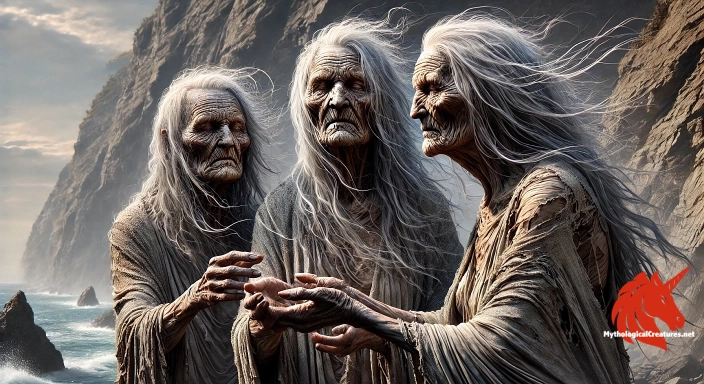
The Graeae
The Graeae - They represent the liminal space between knowledge and ignorance, playing a crucial role in the myth of Perseus.
Origins & First Encounters
The Graeae are among the most enigmatic figures in ancient myth, embodying the mysterious interplay between age and wisdom. Born of the primordial sea deities Phorcys and Ceto, these sisters have been celebrated as living symbols of time’s relentless passage. Their singular physical trait—a shared eye and tooth—has intrigued storytellers and audiences alike for centuries. Emerging from early Greek epic traditions, they quickly became central to the heroic narratives, notably in the tale of Perseus. Their depiction as aged women with grey hair not only reflects physical decay but also carries a deeper resonance of accumulated knowledge. Ancient narratives portray them as caretakers of hidden wisdom and as obstacles whose peculiar condition challenges the heroes. They serve as potent reminders of the inevitability of ageing and the price of deep, mysterious power. Their myth continues to fascinate both scholars and enthusiasts, offering rich insights into ancient views on femininity, power, and vulnerability. The enduring legacy of the Graeae is a testimony to how myth can encapsulate the complexities of both beauty and decay. Their role in mythology transcends mere physical description, providing a multi-layered symbol of transformation and continuity.
Source Texts & Tale Variants
Ancient literary sources such as Hesiod’s works and Apollodorus’s accounts provide early references to the Graeae, offering foundational insights into their myth. These texts record details of their shared lifeforce and link them explicitly to pivotal heroic exploits like that of Perseus. Over time, fragments of lost works and scholia have added nuances to their portrayal, enriching our understanding of their character. Variations in the narrative sometimes emphasise different aspects of their personality, ranging from cryptic seers to formidable guardians of secret knowledge. In some accounts, the single eye is imbued with symbolic meaning, representing a window into a unified cosmic vision. Later literary reworkings during the Hellenistic and Roman periods introduced additional layers of allegory and mysticism. The evolving retellings captured in medieval commentaries and rennaissant texts further diversified their mythos. Each variant contributes a unique perspective that underlines their enigmatic charm and the cultural importance of shared wisdom. Despite these variations, core elements like their familial ties and distinctive physical traits have remained remarkably consistent. This continuity across sources highlights the enduring power of the Graeae myth in the collective cultural memory.
Form & Powers
The Graeae are vividly depicted as beings whose appearance is steeped in the marks of time and experience. Their striking grey hair is not merely a sign of age but a symbol of accumulated wisdom and the burdens of longevity. They are often illustrated with deeply lined faces and expressions that reflect both resilience and weariness. The most singular aspect of their anatomy is the obscure fact that they share one eye among them, a feature that confers both a mystical insight and an eerie sense of vulnerability. In addition to the shared eye, they also possess a single tooth that serves as a powerful emblem of their interdependence. Their bodies are typically shown as bent and frail, yet every wrinkle and scar contributes to an aura of mysterious authority. Artistic representations sometimes accentuate their ragged garments and draped robes, which enhance the impression of time-worn dignity. While their forms might evoke frailty, the very aspects of their physicality reveal a subtle strength born of shared destiny. This duality between corporeal decay and a potent, enigmatic presence creates a compelling tableau that has fascinated artists through the ages. The collective sharing of these features not only blurs individual identity but also symbolises a unity of purpose and fate.
Regional Faces
Regional interpretations of the Graeae reflect the diversity of cultural contexts within which their myth has been retold. In the core regions of ancient Greece, they were seen as archetypal figures of ageing and mystery whose traits were emblematic of both wisdom and forewarning. Localised depictions often emphasised their communal nature, portraying them as a single entity divided among three distinct personas. In some Hellenistic communities, the Graeae were incorporated into local religious rites, where their singular vision symbolised a portal to divine insight. Roman interpretations, while borrowing heavily from their Greek origins, sometimes placed greater emphasis on their roles as omens, marking pivotal moments in the fate of heroes. Folkloric retellings in various Mediterranean regions enriched the myth by integrating local ritualistic elements and symbolism. Regional art from disparate areas occasionally adapted their features to resonate with the cultural aesthetics and spiritual beliefs of the community. Despite these local adaptations, the essential elements of grey hair, shared eye, and an air of mysticism have remained steadfast. Such variations attest to the adaptability of myth, where local colours and traditions allow the Graeae to embody different meanings. The regional diversity in their portrayal underscores how universal mythic themes can be reshaped to address distinct societal values and historical contexts.
Cultural Parallels
The motif of a triad of enigmatic female figures is not unique to Greek mythology, and the Graeae often find parallels in various cultural traditions across the world. Similar to the triple goddess archetypes in Celtic or Norse lore, the Graeae encapsulate the notion of collective wisdom and the cyclicality of life. Their shared eye has been compared to the singular, mystical vision present in other mythological seers and oracles from diverse traditions. Like the Norns of Norse mythology, who determine the destinies of gods and men, the Graeae symbolize an inevitability that transcends individual power. Across different cultural milieus, groups of three elder women have been revered or feared as custodians of hidden truths and prophetic insights. Such figures in various narratives often serve as both guides and obstacles, echoing the duality found in the Graeae’s role. In literary and artistic traditions, similar triads have been used as metaphors for the interplay between fate, death, and rebirth. This widespread motif suggests that the philosophical questions explored by the Graeae have a universal appeal. The shared attributes and functions across cultures illuminate how disparate mythologies address the mysteries of existence. These cultural parallels reinforce the idea that the human fascination with themes of age, wisdom, and destiny is a constant thread in mythic storytelling.
Legacy & Modern Evolution
The myth of the Graeae has continually evolved, adapting to new cultural, artistic, and intellectual environments over the millennia. Classical accounts laid the foundational imagery, which was later reimagined by Renaissance artists and modern storytellers alike. Their unique physical traits, particularly the shared eye and tooth, have come to symbolise complex themes such as collective memory and intertwined destinies. Contemporary reinterpretations in literature and film often infuse the Graeae with symbolic depth, exploring issues of femininity, ageing, and the burden of shared experience. Modern artistic renditions sometimes present them in more nuanced, less literal forms, employing metaphorical as well as aesthetic transformations. The legacy of these figures has also been embraced by feminist critiques, who see in them an allegory of communal resilience and the subversion of traditional roles. As cultural symbols, the Graeae have come to represent the passage of time and the merging of individual identity into a greater collective narrative. Their evolving portrayal reflects broader shifts in societal values regarding age and wisdom. Discussions in contemporary cultural studies have highlighted their enduring relevance as embodiments of both mystery and continuity. Today, the myth of the Graeae remains a vital source of inspiration, sparking new interpretations and creative expressions in a modern context.
Interesting Fact
An intriguing aspect of the Graeae is their unique vulnerability: when Perseus seized their shared eye, it temporarily incapacitated them, revealing the inherent risks of their interdependent existence.
Advertising opportunity
Showcase your mythology project
We offer limited sponsor placements for books, courses, games, and creators aligned with our audience.
View partnership optionsQuick Creature Info
Origin:
Features:
Associations:
Our Mythic Legendary Rating:

Also Sometimes Known As:
Habitat:
Supernatural Powers:
Physical Attributes:
Abilities:
Behavior:
Weaknesses:
Lore:
Related Creatures, Tales or Lore
- TThe Fates (Moirai)
- TThe Gorgons
- TThe Hesperides
References
Discover Another Mythical Legend You May Not Have Heard Of?
Uncover the mysteries of ancient folklore and expand your knowledge of legendary beings from cultures around the world.
Dare to Meet the Yacumama....

Curated by the Mythological Creatures Team
Series editor: Mythological Creatures Directory
Primary desk: Hellenic & Ancient Mediterranean Desk
(rev. November 2025)