
Themis: Themis is an ancient Greek Titaness and the personification of justice, law, and divine order.
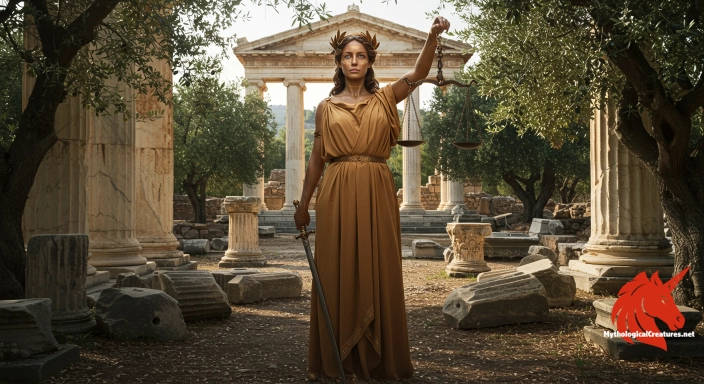
Themis
Themis - Themis embodies the principles of law, order, and justice, influencing both divine governance and mortal legal systems.
Origins & First Encounters
Themis is celebrated as the ancient personification of justice, divine order, law, and custom, reflecting the core values of early Greek society. Born as one of the twelve Titans, she emerges from the union of Gaia and Uranus, symbolising the primordial forces that underpin cosmic balance. Her presence in mythology marked a turning point in how justice and natural order were conceived and revered. In early poetic works, her role bridges the gap between the divine and the mortal, offering guidance through oracles and prophetic insights. The goddess embodies both the abstract concept of law and the tangible process of justice, making her an enduring emblem of order. With her close association with Zeus as his second wife, Themis helped shape the governing principles of the gods and, by extension, mortal beings. Early attestations in texts such as Hesiod’s Theogony place her at the heart of the cosmogony. Her timeless symbol, the scales of justice, encapsulates the dual nature of fairness and retribution. The cultural context in which she was worshipped underscores a deep-rooted belief in balance and the proper alignment of cosmic forces. Her legacy remains a testament to ancient civilizations’ commitment to order and ethical governance.
Source Texts & Tale Variants
Ancient literary sources such as Hesiod’s Theogony and later compilations by Apollodorus provide some of the earliest written accounts of Themis. Various fragments of lost works and inscriptions have preserved details of her myth, revealing layers of interpretation over time. In these texts, she is often depicted as a guardian of both oracles and the moral order, reinforcing her dual role. Different story variants present her as a mediator in divine disputes as well as a teacher of the sacred laws that govern human conduct. Some accounts focus on her prophetic powers, with her guidance being sought by Zeus and other deities. Oral traditions passed down through generations also contributed significantly to the evolution of her myth, merging ritual practice with narrative art. Localised cult practices often added nuances, intertwining her myth with regional legal and social customs. Variants in her legend sometimes highlight her influence over natural and social orders, blending the spiritual with the judicial. These sources, despite their variations, collectively illustrate a figure central to both cosmic and civic morality. The enduring textual legacy of Themis reinforces her role as the paragon of balanced, equitable law.
Form & Powers
Artistic depictions of Themis consistently reveal a dignified and majestic presence that captures the essence of unwavering justice. She is typically portrayed wearing flowing, elegantly draped robes that speak to the timeless nature of her authority. The textures and folds of her garments are rendered with a sense of movement, symbolising the dynamic process of balancing justice and mercy. Often, she is depicted holding a pair of scales, a visual metaphor for fairness and measured judgement. In some artistic traditions, a blindfold adorns her face, highlighting the impartiality required by true justice, although this element was more pronounced in later representations. Her countenance is calm and introspective, embodying wisdom and the clarity of divine insight. Detailed sculptures and reliefs capture delicate features, such as gently arched brows and subtle expressions that invite respect and contemplation. Some portrayals even include a scepter or set of tablets, merging her aspect as a lawgiver with her prophetic duties. Despite variations in style, her overall physical form consistently exudes both serenity and a formidable sense of authority. The visual legacy of Themis bridges the gap between myth and moral ideal, offering a timeless image of order and propriety.
Regional Faces
Across different regions of the ancient Greek world, the goddess Themis was venerated in ways that reflected local customs and societal needs. In some city-states, her cult was intertwined with communal rituals that celebrated the natural order and the rule of law. Local altars and sacred sites served not only as places of worship but also as venues for community judgement and dispute resolution. In the Hellenistic period, her iconography adapted to regional artistic traditions, showcasing variations in how justice was visually represented. In parts of Greece, her role as an oracle was emphasised, merging the domains of prophecy and legal authority. Regional festivals sometimes featured processions and dramatic representations that highlighted her function as the adjudicator of both mortal and divine affairs. Outside mainland Greece, such as in the Eastern Mediterranean, syncretic influences added layers of Near Eastern symbolism to her depiction. The adoption of her attributes by Roman culture, where she became associated with Justitia, further illustrates the fluidity of her regional representations. Variations in local artistic style meant that some depictions accentuated her maternal qualities, while others portrayed her as a stern arbiter of cosmic balance. Despite these differences, the core impression of Themis as an emblem of fair, divine justice remained universally recognisable.
Cultural Parallels
The figure of Themis invites comparison with a number of similar deities from diverse cultural traditions. In Roman mythology, the goddess Justitia carries a striking resemblance to Themis, embodying the principles of balanced scales and moral rectitude. Egyptian mythology presents Ma'at, whose role in upholding cosmic order mirrors Themis’ function as a divine lawgiver. Both figures reinforce the idea that justice and truth are central to maintaining the harmony of the universe. In Norse lore, deities like Forseti, though less elaborately depicted, similarly mediate disputes and symbolise fairness within the community. The blending of myth and legal tradition in each case underlines a shared human endeavour to understand and administer justice. Cross-cultural exchanges over time have allowed these deities to influence one another, creating a tapestry of symbolic representations that cross the boundaries of civilisation. The consistent theme of impartial responsibility is evident in the narratives surrounding all these figures, despite differences in cultural context and artistic treatment. Such comparative insights reveal how various societies have harnessed myth to frame their legal and ethical standards. The study of these parallels deepens our understanding of the universal human quest for order, equity, and the sanctity of law.
Legacy & Modern Evolution
Themis has undergone a significant evolution from her origins in ancient myth to her lasting impact on modern symbols of justice. In classical times, she embodied not only the abstract ideals of law and order but also the practical functions of prophecy and societal guidance. Her early depictions laid the groundwork for a visual and ideological tradition that has influenced countless representations of judicial fairness. During the Renaissance, artists and thinkers revisited her myth, reinterpreting her image to align with emerging philosophies of human rights and legal equity. Her attributes, particularly the scales of justice, became a staple in the iconography associated with legal institutions across Europe. In contemporary society, the echoes of her myth can be seen in the design of courthouses and the symbolism employed in legal emblems. Modern interpretations often blend classical imagery with new artistic perspectives, giving Themis a dual identity as both an ancient deity and an enduring moral archetype. The principles she represents continue to inspire debates about ethics and the administration of law in today’s world. Her enduring presence in literature, art, and public ceremonies serves as a reminder of the timeless nature of fairness and order. Ultimately, Themis remains a potent symbol of the intrinsic connection between divine order and human civilisation, bridging millennia of cultural understanding.
Interesting Fact
An interesting observation about Themis is that her very name translates to 'justice', reflecting her profound influence on the development of legal and moral order in ancient Greek culture.
Limited sponsor opportunity
One slot, carefully chosen partners
We only feature a small number of relevant sponsors at any time. If you create serious myth content, we would like to hear from you.
Partner with usQuick Creature Info
Origin:
Associations:
Our Mythic Legendary Rating:

Habitat:
Supernatural Powers:
Physical Attributes:
Abilities:
Behavior:
Lore:
References
Discover Another Mythical Legend You May Not Have Heard Of?
Uncover the mysteries of ancient folklore and expand your knowledge of legendary beings from cultures around the world.
Dare to Meet the Anchimayen....

Curated by the Mythological Creatures Team
Series editor: Mythological Creatures Directory
Primary desk: Hellenic & Ancient Mediterranean Desk
(rev. November 2025)