
Theseus: Theseus is a legendary hero of Greek mythology, renowned for slaying the Minotaur and uniting Attica under Athenian rule.
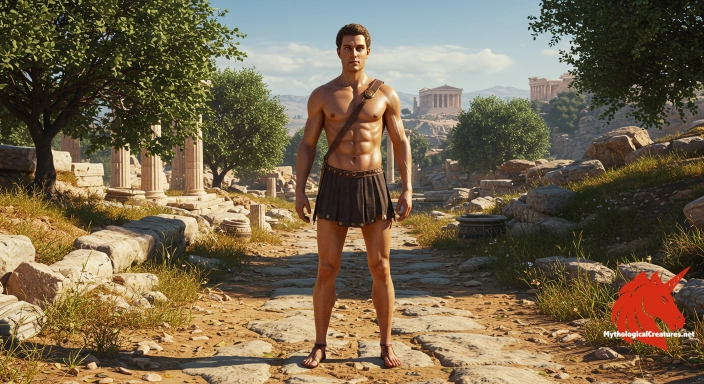
Theseus
Theseus - Theseus is celebrated as a unifying hero who established Athenian rule and laid the foundations for Athenian society through his legendary feats, including slaying the Minotaur.
Origins & First Encounters
Theseus stands as one of the most illustrious figures in Greek mythology, celebrated not only for his heroic feats but also for the profound influence he had on shaping Athenian identity. Born of complex lineage—either as the son of King Aegeus or, in certain traditions, of the sea god Poseidon—his origins are as enigmatic as they are fascinating. Raised by his mortal mother Aethra, he was primed from an early age for a destiny that flouted the boundaries between man and divine. His long and arduous journey to Athens was marked by numerous challenges that moulded his character and cemented his reputation as a daring adventurer. Along his route, Theseus encountered both perilous adversaries and loyal companions, each episode adding to the tapestry of his legend. His triumph over the fearsome Minotaur, a half-man and half-bull creature, epitomises his capacity to overcome monstrous odds through both wit and strength. The very narrative of his life served as an archetype for the heroic ethos of ancient Greece and became intertwined with the civic pride of Athens. Even today, the story of Theseus resonates with a timeless appeal, bridging the realms of myth and moral exemplariness.
Source Texts & Tale Variants
An abundance of ancient texts and oral traditions serve as the backdrop to Theseus’s storied life, each offering its own nuances to his myth. Early authors such as Pherecydes and Demon laid the foundations of his narrative, while later chroniclers like Plutarch and Pausanias expanded on the themes of heroism and civic unification. These varied accounts not only recount his monumental deeds, but also explore the more intricate aspects of his lineage, love affairs, and betrayals. Competing versions of his encounters—be it the famed battle with the Minotaur or his entanglements with figures like Ariadne—demonstrate the fluidity of myth and its adaptation to different audiences over time. The sources often oscillate between emphasising his mortal vulnerabilities and celebrating his divine attributes. Intricate narratives detailing his labours and wanderings reflect regional differences and evolving cultural priorities. Over the centuries, authors have skilfully interwoven local lore with pan-Hellenic themes, thereby enriching his legend. Consequently, the primary sources not only provide a window into the ancient world, but also underscore the adaptability and timelessness of Theseus’s myth.
Form & Powers
Artistic depictions of Theseus often capture him as the paragon of athletic grace and classical beauty. He is frequently portrayed with an impeccably balanced physique, where robust musculature meets refined proportions, symbolising both strength and nobility. Ancient vase paintings and sculptural fragments accentuate his firm jawline, steady gaze, and an expression imbued with both determination and wisdom. His attire, typically rendered as traditional Greek armour, underscores his readiness for the many battles that punctuated his adventurous life. In some representations, he is shown bearing a distinctive helmet and a sword, visual motifs that have become synonymous with his identity as a warrior. Variations in his portrayal occasionally highlight a youthful exuberance or a more measured, mature dignity reflective of his kingly accomplishments. The idealised aesthetics of Theseus not only serve to immortalise his physical prowess, but also embodied the Greek cultural ideal of heroic perfection. Over time, these physical attributes have evolved in artistic interpretations, each rendition offering a slightly different insight into the character’s enduring appeal.
Regional Faces
The myth of Theseus has been a canvas upon which diverse regional expressions of Greek culture have been vividly painted. In Athens, he is revered as a civilising force who not only subdued the Minotaur but also united disparate communities under a single, cohesive identity. Local cults and rituals celebrate his divine ancestry, creating a multifaceted character who is as much a local hero as he is a mythological icon. In other parts of Greece, variants of his tale have been adapted to mirror the geographical and cultural particularities of each community, sometimes emphasising his connection to the sea or the rugged landscapes of the interior. Some regions stress his role as a progenitor of social order and political unity, while others celebrate his wisdom in navigating personal and civic challenges. These local adaptations often incorporate distinctive regional symbols and rites, thereby reinforcing the communal bond to his legend. Such regional transpositions of his story not only highlight the widespread appeal of his character, but also underscore the flexibility of myth in addressing local concerns. Through these variations, the narrative of Theseus transforms into a living tradition interwoven with the identity and history of each locale.
Cultural Parallels
The heroic saga of Theseus invites comparisons with a host of figures across the mythological spectrum, underscoring common archetypal themes shared by ancient cultures. Much like Romulus, who is celebrated as the founder of Rome, Theseus embodies the qualities of leadership and ingenuity that are pivotal to the establishment of a civilisation. His confrontation with the Minotaur finds a resonant echo in other legendary battles where humans triumph over monstrous forces, an archetype seen in the labours of Hercules and Perseus. These parallel narratives accentuate the tension between order and chaos, a recurring motif that spans the Mediterranean world. While Hercules is often admired for his sheer physical strength, Theseus is venerated for his strategic mind and balanced moral judgement, offering a complementary perspective on heroism. Such cross-cultural connections demonstrate how varying societies used myth to reinforce the values of courage, sacrifice, and the relentless pursuit of communal harmony. Comparative studies reveal that these mythic heroes not only served as embodiments of national pride, but also as vehicles for exploring the human condition. Ultimately, Theseus’s narrative stands alongside other mythic traditions as a testament to the enduring power of heroic storytelling across cultures.
Legacy & Modern Evolution
The myth of Theseus has undergone a profound evolution from its ancient roots to its modern reinterpretations, continuously adapting to the prevailing cultural contexts of each era. In classical antiquity, he was not only a figure of brute strength and mental acuity but also an emblem of civic unity and national pride. Over the centuries, as literary and artistic expressions blossomed, Theseus’s adventures were reimagined to reflect the changing ideals and moral frameworks of successive generations. Renaissance artists and writers rediscovered his tale, imbuing it with layers of allegory and humanistic value that resonated with contemporary audiences. In modern times, his legend has traversed the realms of literature, cinema, and digital media, evolving into a symbol of resilience and ingenuity in the face of insurmountable challenges. The story continues to inspire new re-tellings, each adaptation highlighting aspects of heroism that speak to the universal human struggle for identity and justice. As scholars and creators alike revisit the myth, Theseus stands as a dynamic testament to the power of narrative in shaping cultural consciousness. His legacy endures not only as an essential part of ancient mythology, but also as a perennial source of inspiration that bridges the gap between the mythic past and the contemporary world.
Interesting Fact
An intriguing aspect of Theseus’ myth is the ambiguity of his divine parentage, which highlights the ancient Greek belief in heroes who bridge the mortal and divine worlds.
For serious mythcraft
Your project belongs among the legends
If your work deepens how people understand, play with, or teach mythology, a sponsor placement here keeps it in front of the right readers all year.
Submit a sponsorship enquiryQuick Creature Info
Origin:
Features:
Associations:
Our Mythic Legendary Rating:

Also Sometimes Known As:
Habitat:
Supernatural Powers:
Physical Attributes:
Abilities:
Behavior:
Weaknesses:
Lore:
References
Discover Another Mythical Legend You May Not Have Heard Of?
Uncover the mysteries of ancient folklore and expand your knowledge of legendary beings from cultures around the world.
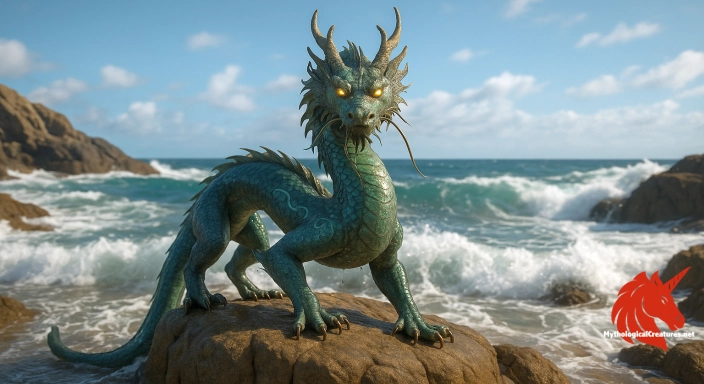
Dare to Meet the Ao Guang....
Curated by the Mythological Creatures Team
Series editor: Mythological Creatures Directory
Primary desk: Hellenic & Ancient Mediterranean Desk
(rev. November 2025)