
Perseus: Perseus is a legendary Greek hero and the founder of the Perseid dynasty.
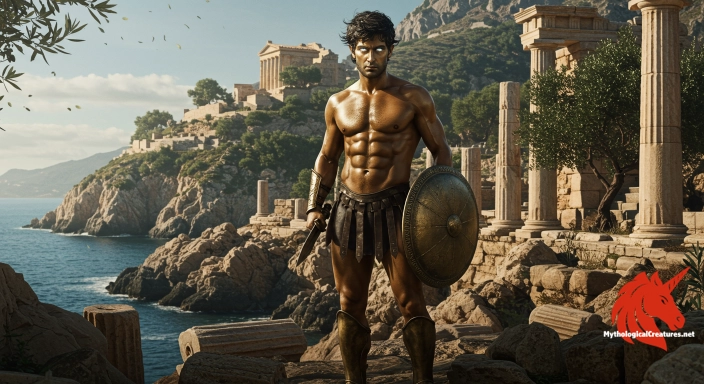
Perseus
Perseus - Renowned for slaying the Gorgon Medusa and rescuing Andromeda, his deeds cemented his legacy in Greek mythology and established the Perseid dynasty.
the legend in five swipes.
the legend in five swipes.
Perseus Origins: The Earliest Accounts
Perseus emerges as one of the most celebrated figures in ancient Greek lore, a hero whose divine beginnings and arduous quests captured the imagination of many. Born to Zeus and the mortal Danaë, his birth itself was a blend of celestial intervention and human vulnerability. His story is threaded with themes of fate and heroism, establishing him as the legendary founder of the Perseid dynasty. The myth surrounding Perseus not only highlights his remarkable achievements but also reflects the broader cultural and religious context of his time. His adventures, from the defiant challenge against monstrous foes to the delicate rescue of a princess, articulate an enduring narrative of bravery and ingenuity. The interplay between mortal limitations and divine support elevates his tale beyond a simple legend, symbolising the eternal conflict between chaos and order. Set against a richly imaginative backdrop, his feats form a core part of a larger mosaic of Greek heroics that predate even Heracles. His narrative resonates with those who seek to understand the complexities of divine ancestry and mortal endeavour in myth. Through his enduring legend, Perseus continues to enlighten the human spirit about the sacrifices and victories that define the heroic journey.
Which versions of the Perseus story survive?
The myth of Perseus has been preserved through a variety of ancient texts and artistic depictions, each adding layers of nuance to his legendary exploits. Classical authors like Apollodorus, Hesiod, and later Ovid in his Metamorphoses offer diverse renditions that capture different facets of his character and adventures. Various literary sources present his daring beheading of Medusa, each emphasising distinct elements of cunning, courage, or divine assistance. Artistic representations on Greek vases and sculptures have also contributed significantly to the narrative, allowing us to visualise his iconic attributes such as the reflective shield and winged sandals. Diverse story variants emerged as his legend traversed the Mediterranean world, with each culture adapting the myth to its local traditions and values. Some accounts highlight the role of divine intervention, while others paint him as a self-reliant and resourceful mortal hero. Manuscripts and later Roman adaptations further enriched his story, ensuring that the myth of Perseus remained flexible yet enduring. The multiplicity of sources results in a tapestry of interpretations that underscore the universal appeal of his heroic journey. Through these evolving narratives, his myth continues to be a subject of reinterpretation and fascination.
Perseus: Form, Powers and Weaknesses
Classical depictions of Perseus often stress his remarkable physical prowess and heroic bearing, presenting him as an idealised figure of strength and beauty. His chiseled features and poised stance evoke an image of a warrior sculpted by both divine lineage and mortal determination. Ancient art commonly portrays him with a well-defined musculature and an aura of calm resolve, capturing his readiness to confront any adversary. His eyes, set in a noble visage, are frequently depicted as windows to a soul emboldened by both duty and destiny. Recognisable elements such as his winged sandals, a skilfully crafted sword, and the legendary reflective shield contribute to his distinctive iconography. Artists have often taken creative liberties, sometimes depicting him with windswept hair and an expression that marries youthful vigour with mature wisdom. Variations in artistic traditions reveal both a softer, more heroic allure and a hardened, battle-tested demeanour. In some portrayals, remnants of scars and weathered features further underscore the gravity of his encounters with monstrous beings. The careful blend of aesthetic elegance and martial readiness in his depictions not only celebrates his divine origins but also reinforces his status as a paragon of classical heroism.
The Geography of the Perseus Legend
Perseus’s myth, while rooted in the traditions of Ancient Greece, has been embraced and adapted by various regional cultures across the Mediterranean. In mainland Greece, local celebrations and temple dedications often highlight not only his daring feats but also his role as a progenitor of royal lineage. The artistic and literary renditions from the Aegean islands sometimes imbue his figure with qualities that align closely with local values, emphasising community and divine favour. In contrast, Roman interpretations of his story tend to be more dramatic, aligning his heroic journey with the narratives of imperial destiny and civic pride. Eastern Mediterranean variants add their own layers of symbolism, often portraying him as a larger-than-life figure capable of bridging the gap between mortal struggles and divine purpose. Northern traditions, while less prolific, occasionally cast him in a more morally complex light, reflecting region-specific interpretations of heroism and consequence. Festivals and local dialectal recountings have contributed to diverse readings of his character, thereby reinforcing the adaptability of his legend. This regional plurality demonstrates how Perseus's myth transcends geographical confines, resonating with differing cultural motifs and aesthetic ideals. By the continual reinterpretation across regions, his narrative acts as a vibrant tapestry that is as varied as it is timeless.
Perseus: Counterparts Around the World
Perseus stands as a central archetype in the realm of heroic myths, inviting parallels with numerous other legendary figures from different cultural traditions. His valor in the face of monstrous adversaries brings to mind similar feats performed by heroes such as Cadmus and Bellerophon, each of whom embodies the archetypal struggle between order and chaos. The confrontation with Medusa resonates with other mythic battles against malevolent forces, drawing comparisons to motifs prevalent in Near Eastern and even Norse mythologies. His divine parentage, shared with figures like Heracles, underscores a recurring pattern in mythology where half-divine heroes navigate the boundaries between mortal frailty and celestial power. This blend of human and godly qualities finds echoes in various cultural legends that celebrate the hero’s journey through trials and tribulations. The iconic use of his reflective shield to overcome a fearsome enemy has itself become a symbol that bridges multiple mythologies, reflecting universal themes of ingenuity and courage. In literary and artistic circles, his adventures have been juxtaposed with those of later heroes, forming a bridge between ancient myth and modern storytelling. Such cross-cultural connections reveal that the underlying narrative of overcoming great odds transcends both time and geography. The enduring spirit of his myth continues to inspire comparisons and reinterpretations, affirming the shared human fascination with the heroic quest.
Perseus: The Legend's Second Life
The legacy of Perseus has evolved remarkably through the centuries, continually adapting to the cultural and artistic sensibilities of each era. In ancient Greece, his exploits were immortalised through vase paintings and sculptures, each depiction reinforcing his status as a paragon of divine heroism. The Renaissance witnessed a revival of classical themes, with artists and writers reimagining Perseus’s journey to reflect contemporary ideals of beauty and moral bravery. His story has repeatedly surfaced in modern literature, cinema, and even comic books, each medium distilling his myth into a narrative that speaks to modern audiences. The transformation of his myth over time illustrates the dynamic nature of cultural storytelling, where elements of the old are continually reinterpreted in light of new artistic visions. Modern portrayals often cast him as a symbol of resilience and the defiant spirit of humanity, transcending the boundaries of his ancient origins. The evolution of his image—from chiseled marble statuary to digital renderings—demonstrates the enduring appeal of the heroic quest as a narrative blueprint. Contemporary discussions frequently explore his myth as a reflection of the timeless conflict between light and darkness, courage and folly. As academic and popular discourses reiterate his relevance, Perseus’s legend endures as both an inspiring mythic figure and a versatile narrative tool that links the past with the present.
Interesting Fact
An intriguing aspect of Perseus's mythology is his dual relationship with Heracles, being both his half-brother and great-grandfather, which highlights the complex genealogies often found in Greek myths.
Mythological Treasures
Greek Myths: A field guide to the monsters of ancient Greece
Every monster here earned its place in legend, and each gets a full page of artwork and the story behind it.
Japanese Yokai: A field guide to the spirits and demons of Japanese folklore
Fifteen spirits, with the signs to watch for and what the old tales say to do if you meet one.
Norse Sagas: A field guide to the beasts of the Viking world
Drawn from the saga accounts themselves, with the powers, weaknesses and doom of each being set out.
the legend in five swipes.
Reach myth fans
Connect your myth-driven brand with this audience
Our readers are writers, educators, gamers, and collectors who care about mythology. Enquire about a limited sponsor placement on creature pages.
Enquire about sponsorshipQuick Creature Info
Origin:
Features:
Associations:
Our Mythic Legendary Rating:

Habitat:
Supernatural Powers:
Physical Attributes:
Abilities:
Behavior:
Weaknesses:
Lore:
Related Creatures, Tales or Lore
References
Discover Another Mythical Legend You May Not Have Heard Of?
Uncover the mysteries of ancient folklore and expand your knowledge of legendary beings from cultures around the world.
Dare to Meet the Jinmenju....

The Mythological Creatures Book Series
Yokai, Greek, Norse, Egyptian & Chinese. Five illustrated field guides to the creatures the old stories either warned or told you about.


Curated by the Mythological Creatures Team
Series editor: Mythological Creatures Directory
Primary desk: Hellenic & Ancient Mediterranean Desk
(rev. November 2025)