
Thriae: The Thriae are a triad of virginal nymphs from Greek mythology known for their ethereal beauty and mysterious nature.
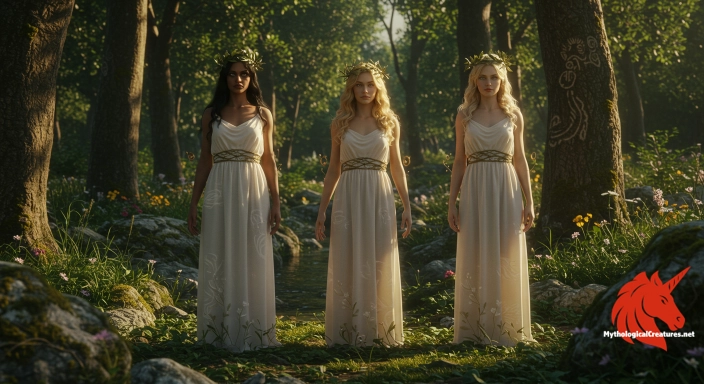
Thriae
Thriae - The Thriae exemplify the motif of divine triads in Greek myth, highlighting the importance of nature and prophecy.
Origins & First Encounters
The Thriae remain one of the more captivating ensembles within Greek mythology, emerging as three virginal nymphs whose mystique has endured through the ages. Their origins are wrapped in the enigma of ancient lore, presenting them as a divine triad that embodies purity, prophecy, and the natural world's secret charms. The myth places them among other significant triadic figures in Greek traditions, suggesting a deliberate symbolism in groups of three. Each sister—Melaina, Kleodora, and Daphnis (or Corycia)—carries an intrinsic meaning in her name, pointing to themes of darkness, distinguished talent, and the emblematic laurel. Their initial attestation finds roots in classical musings where brief yet vivid references alluded to their divine roles. In the broader cultural landscape of ancient Greece, they symbolise the interplay between nature’s eternal cycles and the ephemeral human experience. Their portrayal as virginal deities also reinforces ideas of untouched beauty and sacred potency, celebrated by the local cults and oral traditions. The enduring appeal of the Thriae lies in their ability to encapsulate both the tangible elements of nature and the intangible realms of prophetic wisdom.
Source Texts & Tale Variants
Ancient literary fragments and local mythographic accounts provide the backbone for our understanding of the Thriae, despite the brevity with which they are mentioned. Early Greek sources subtly integrated these nymphs into their narratives without devoting extended passages solely to their exploits. The sparse literary mentions have made their interpretation a matter of piecing together brief texts and regional folklore traditions. Variants of their story are evident in different localised texts, some of which elevate them to the status of oracle-like figures steeped in mystery. The evolution of their narrative over time speaks to the variability of myth, where regional cults would adapt and embellish their oaths and rituals. In some accounts, the sisters are portrayed as custodians of profound wisdom, while other fragments hint at their involvement in sacred rites. Folkloric traditions later in antiquity have continued to celebrate these figures in ways that mirror the shifting dynamics of Greek religious practices. This amalgamation of textual evidence and local legend has cemented their place as emblematic figures of ancient myth, inviting varied interpretations through the centuries.
Form & Powers
The Thriae are traditionally envisioned as embodiments of both ethereal beauty and the raw elements of nature, their appearances marked by a striking otherworldly grace. Melaina, whose name suggests a connection with the darkness, is often imagined with deep, shadowy tresses and an inscrutable expression, hinting at the mysteries concealed within her being. Kleodora, celebrated for her legendary gift, is depicted with a luminous countenance and a poised demeanour that evokes an air of distinguished charm and quiet wisdom. Daphnis, associated with laurel, is frequently shown with delicate features and hints of natural embellishments, such as intertwined leaves that symbolise renewal and triumph. Their figures are rendered with a refined delicacy, accented by a modest yet captivating presence that transcends ordinary beauty. Artistic representations, though sporadic, tend to merge the classical ideal of grace with subtle hints of nature’s dynamic forces. Their attire, as imagined by later mythographers and painters, seems to draw upon the very elements they personify, woven from the interplay of light and shadow. Such vivid imagery has enabled them to flourish as timeless icons in the visual lexicon of myth, encapsulating both the purity of their divine nature and the inscrutability of the natural world.
Regional Faces
The portrayal of the Thriae has been notably malleable, adapting to the cultural and geographical nuances of ancient Greece. In some local traditions, particularly within the pastoral landscapes and rugged terrains of the Hellenic world, they are revered as protectors of secluded groves and hidden springs. These regional adaptations often imbue the sisters with specific qualities or local significance that highlight their connection to the natural environment. In one variation, the Thriae are thought to have presided over seasonal rites, wherein herdsmen and agriculturists would invoke their presence to secure favourable harvests. Other traditions depict them as ephemeral custodians of secret knowledge—a role that aligns them with the mystic lore of certain isolated mountain regions. Their names, and thereby their perceived attributes, can acquire varied nuances depending on the local legend, reinforcing the idea of a living myth tailored to each community's needs. Such regional interpretations underscore a broader cultural motif where nymphs serve as bridges between the tangible world of nature and the intangible realm of the divine. Consequently, the Thriae’s legacy is as multifaceted as the landscapes that revered them, each region infusing their myth with unique local colour and spiritual resonance.
Cultural Parallels
The triadic composition of the Thriae invites a wealth of comparative insights, linking them with other groups of three prominent in various mythological traditions. Their assembly shares a conceptual resemblance with the famous trio of the Fates, who similarly encapsulate the inescapable threads of destiny and the intricate balance between order and chaos. Comparable echoes can be found in the Graeae, enigmatic sisters with a shared vision that symbolises the blurred line between the known and the obscure. Across different cultures, similar sets of three goddesses or spirits have been venerated, highlighting a nearly universal appeal for the number three as emblematic of harmony and complete expression. The Thriae also display parallels with triple goddess figures in Celtic and other Indo-European myths, where the interdependence of life, death, and rebirth is celebrated. These cross-cultural motifs suggest that the concept of a triad serves as an effective metaphor for the multifaceted nature of both the divine and the natural world. Through comparative analysis, the Thriae emerge not merely as isolated figures in Greek myth but as part of a larger, interconnected tapestry of mythological archetypes. Their enduring image continues to spark discussions on the role of triplicity in the symbolic representation of power, mystery, and the eternal cycles of existence.
Legacy & Modern Evolution
The historical evolution of the Thriae reflects a fascinating journey from their ancient origins to modern artistic and literary reinterpretations. Initially, these nymphs were fleeting figures in classical texts, their presence amplified over time through the interpretive lens of regional legends and later mythographers. As the Renaissance rekindled interest in classical antiquity, painters and poets began to explore their enigmatic allure, imbuing their appearances with layers of allegory and symbolic depth. In more recent times, the Thriae have found new life in contemporary literature and digital media, where their representation encompasses both a nod to antiquity and a reinterpretation for modern audiences. Modern artistic renditions often blend classical motifs with avant-garde sensibilities, resulting in portrayals that are both timeless and refreshingly innovative. Their image has come to symbolise the enigmatic complexity of nature and the ever-present allure of hidden wisdom. In academic and casual discussions alike, they are celebrated as part of an enduring mythological tradition that continues to inspire curiosity and exploration. Thus, the Thriae remain emblematic of the enduring power of myth to evolve, inspire, and connect disparate eras through a shared language of symbolism and beauty.
Interesting Fact
An intriguing aspect of the Thriae is their embodiment of the triadic pattern, a recurring theme in Greek mythology that symbolises balance and harmony within the natural and divine realms.
Advertising opportunity
Showcase your mythology project
We offer limited sponsor placements for books, courses, games, and creators aligned with our audience.
View partnership optionsQuick Creature Info
Origin:
Associations:
Our Mythic Legendary Rating:

Also Sometimes Known As:
Habitat:
Supernatural Powers:
Physical Attributes:
Abilities:
Behavior:
Lore:
Related Creatures, Tales or Lore
- GGraeae
- MMoirai
- HHesperides
References
Discover Another Mythical Legend You May Not Have Heard Of?
Uncover the mysteries of ancient folklore and expand your knowledge of legendary beings from cultures around the world.
Dare to Meet the Mahagiri....

Curated by the Mythological Creatures Team
Series editor: Mythological Creatures Directory
Primary desk: Hellenic & Ancient Mediterranean Desk
(rev. November 2025)