
Titivillus: Titivillus is a demonic entity from medieval Christian folklore reputed to be the patron demon of scribes.
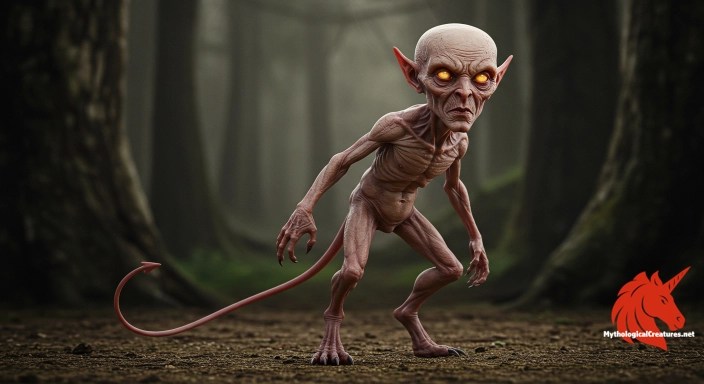
Titivillus
Titivillus - Reflects the medieval attempt to explain human error in sacred and scholarly works, and serves as a satirical commentary on clerical diligence.
Origins & First Encounters
Titivillus is a figure from medieval demonology, famously known as the mischievous patron of scribes who infuses errors into their painstakingly copied manuscripts. Its origins stem from early European thought, where the inexplicable nature of human error was often attributed to supernatural mischief. The earliest attestation of his name appears in the c.1285 Tractatus de Penitentia by Johannes Galensis, placing him firmly within the context of scholastic and religious culture. Emerging at a time when the labour of manuscript copying was both sacred and arduous, his myth provided scribes with an ingenious explanation for the inevitable imperfections in their work. His character encapsulated the intersection of divine oversight and human fallibility, reflecting a period when even the smallest mistake was laden with moral significance. Over the centuries, the legend of Titivillus expanded to include disturbances in church services, where mispronounced or mumbled words were attributed to his unseen influence. The demon’s presence thus served both as a cautionary tale and a humorous scapegoat for the unavoidable errors that punctuated daily life. His enduring legacy is a testament to medieval society’s inventive efforts to account for human imperfection in both sacred and scholarly endeavours.
Source Texts & Tale Variants
Medieval texts provide a rich tapestry of references that shed light on the evolving myth of Titivillus. The primary source, the Tractatus de Penitentia by Johannes Galensis from c.1285, laid the foundation for his association with scribal errors and miscommunications. Additional attributions, such as those from Caesarius of Heisterbach, further embedded him in the spiritual geography of medieval error-making. An anonymous 15th-century treatise, Myroure of Oure Ladye, offers a self-introduction by the demon which is both self-deprecating and imbued with a sense of resigned duty. Beyond devotional literature, his character was also embraced by dramatic pageants like the Towneley Cycle and by medieval plays such as Mankind, where he adopted a role of subversive comedy. These disparate sources illustrate how his persona was adapted to serve various narrative purposes—both frightening and farcical—in different contexts. Each textual reference contributes to a multifaceted picture of a demon who was as much a scapegoat for human error as he was a moral admonisher. The interplay of these sources reveals a deliberate ambiguity that allowed his myth to flourish in both religious and secular domains. In essence, the multiple attestations of Titivillus testify to a medieval cultural practice of conflating the supernatural with everyday human mishaps.
Form & Powers
Although early texts rarely provide detailed physical descriptions, later interpretations have gradually shaped an image of Titivillus that is both grotesque and enigmatic. He is often imagined as a diminutive, wiry creature with a sallow complexion that suggests decay and mischief. Common depictions attribute to him small, pointed horns and a wry, cunning smile that belies his sinister purpose. His elongated fingers are sometimes seen as instruments of subtle interference, each one deftly poised to disrupt the flow of even the most carefully written manuscript. Many imaginative accounts bestow upon him eyes that glitter with a mischievous intelligence, as if he is forever surveying the errors he has sown. In some artistic renditions, he is garbed in tattered scholarly vestments, a deliberate nod to the realm where his misdeeds were most keenly felt. Variations in his imagery reflect regional differences, with some portrayals leaning towards a spectral imp and others towards a more corporeal, monstrous figure. These vivid, albeit speculative, physical details serve to humanise the abstract concept of error, making the demon both a recognizable and enduring figure in the arts. Ultimately, Titivillus’s mutable form encapsulates the dual nature of his myth: at once a feared agent of chaos and a subject of wry humour.
Regional Faces
The myth of Titivillus underwent significant transformation as it traversed different regions of medieval Europe, adapting to a variety of cultural and linguistic contexts. In England, his image was often reinterpreted with a lighter touch, appearing in theatrical performances and pageants where his interference with church services was portrayed with playful irony. Continental traditions, by contrast, tended to emphasise his more ominous attributes, painting him as a relentless force behind every scribal lapse and liturgical slip. In parts of France and Germany, local folklore expanded his role, attributing to him not only the corruption of manuscripts but also the distortion of sacred recitations. Such regional variations allowed communities to embed their own cultural values and humour into the myth, making Titivillus a local embodiment of both frustration and amusement. Artistic representations in these areas range from starkly demonic imageries to almost impish caricatures, underscoring the versatility of his character. These adaptations also reflect broader societal attitudes toward error and the supernatural, blending serious moral caution with a wink towards everyday imperfection. The alterations in his depiction across regions illustrate how local narratives can transform a singular mythic figure into a multi-dimensional symbol. Ultimately, the diverse regional portrayals of Titivillus reveal a rich interplay between universal themes of error and the particularities of local culture.
Cultural Parallels
Titivillus occupies a distinctive niche among mythological figures, his role inviting comparisons with various other cultural embodiments of mischief and error. He is often seen as a medieval precursor to the modern gremlin, whose capricious interventions are blamed for unexpected failures in complex systems. His function also bears similarities to trickster figures in other traditions, such as Loki in Norse mythology, whose antics disrupt the natural order. Unlike many broader tricksters, however, Titivillus is narrowly focused on the realm of textual and liturgical errors, making his influence both specialised and relatable to the concerns of his time. This particularity distinguishes him from other demonic figures whose spheres of activity are more expansive and abstract. His myth, straddling the line between malevolence and playful retribution, provides a lens through which to view the human need to personify mistakes. In comparing him with similar entities, one finds that his enduring appeal lies in his capacity to draw humour from chaos while still serving as a moral cautionary tale. His selective targeting of scribal work and sacred speech highlights a unique cultural preoccupation with precision and reverence. Thus, the case of Titivillus stands as a compelling example of how societies across time have attributed supernatural agency to the phenomena of error and miscommunication.
Legacy & Modern Evolution
The historical evolution of Titivillus’s myth is as intriguing as the demon himself, charting a course from a frightful scapegoat to a figure of satirical commentary. Initially, his image was tightly bound to the practical exigencies of medieval manuscript production, where every error was a potential moral and scholarly failing. Over time, humorous reinterpretations began to emerge, particularly through theatrical productions and dramatic cycles that embraced his role as an agent of chaos in a light-hearted manner. This transformation mirrors a broader cultural shift towards accepting the inevitability of human error with a blend of exasperation and amusement. In modern scholarship, Titivillus is often referenced in a tongue-in-cheek context, symbolising the persistent and often inexplicable nature of mistakes. Contemporary portrayals in literature and art continue to evoke his dual identity as both a cause for concern and a charming emblem of human imperfection. His legacy endures in the way that modern discussions about fault and error occasionally invoke his name as a metaphor for unintended blunders. The shifting perceptions of his character—from a demonic culprit to a humorous scapegoat—reflect wider transitions in societal attitudes towards error and accountability. Today, the myth of Titivillus remains a fascinating intersection of historical superstition, academic frustration, and the timeless quest to find meaning in the flaws that define human endeavour.
Interesting Fact
It is noteworthy that Titivillus's legend has left a lasting imprint, with even modern reference works like the Oxford English Dictionary indirectly affected by the enduring misreferences linked to his myth.
For myth educators and toolmakers
Built a resource for mythology learners?
If you offer courses, teaching tools, or research platforms focused on myth and folklore, consider a discrete placement on our reference pages.
Introduce your resourceQuick Creature Info
Features:
Associations:
Our Mythic Legendary Rating:

Also Sometimes Known As:
Habitat:
Supernatural Powers:
Physical Attributes:
Abilities:
Behavior:
Weaknesses:
Lore:
References
Discover Another Mythical Legend You May Not Have Heard Of?
Uncover the mysteries of ancient folklore and expand your knowledge of legendary beings from cultures around the world.
Dare to Meet the Fuzanglong....

Curated by the Mythological Creatures Team
Series editor: Mythological Creatures Directory
Primary desk: Hellenic & Ancient Mediterranean Desk
(rev. November 2025)