
Tsurara-onna: Tsurara-onna, known as the icicle woman, is a spectral entity in Japanese folklore that emerges from a transformed icicle.
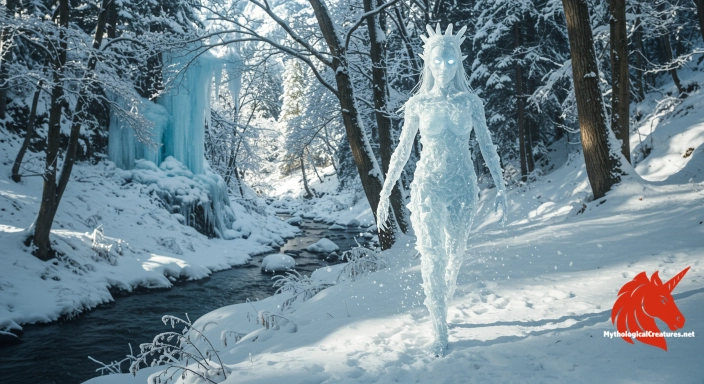
Tsurara-onna
Tsurara-onna - Represents the transient, dangerous allure of winter and the blurred line between nature and the supernatural
Origins & First Encounters
Tsurara-onna emerges from the mists of Japanese folklore as a captivating embodiment of winter’s harsh splendour. Her myth, encapsulating the transformation of an icicle into a feminine spectre, dates back to rural oral traditions that celebrated the beauty and danger of the cold season. The legend likely originated in regions where the natural phenomenon of icicle formation inspired communities to imbue nature with a supernatural presence. Early accounts, transmitted through generations, emphasised the interplay between nature’s artful creations and its perilous aspects. Over time, her narrative was interwoven with other local winter spirits, echoing themes of both seduction and warning. This multifaceted character has been embraced as a symbol of winter’s dichotomy—its capacity to both nurture and devastate. The story was first attested in isolated folktale collections before becoming a staple of local winter lore. Her enduring presence in cultural memory underscores the complex relationship between humans and the natural world in Japanese tradition.
Source Texts & Tale Variants
Traditional sources of the Tsurara-onna myth are largely rooted in regional oral storytelling traditions, with the narrative appearing in various local folktale compilations. Despite the scarcity of early literary texts, later collections of winter legends have perpetuated her image as a mysterious icicle spirit. Some versions of the tale highlight her sudden appearance during biting winter nights, while others suggest she is an inevitable by-product of nature’s cold magic. The story’s variants often provide subtle distinctions between her and other prominent winter figures, adding layers of complexity to her identity. Illustrative texts and later artistic representations have contributed further to the myth’s evolution, reinforcing her enigmatic allure. Other narratives sometimes blend her identity with that of the more benevolent yuki-onna, thereby enriching the cultural tapestry. The oral tradition plays a significant role in maintaining the fluidity of her character, allowing each retelling an opportunity to adapt to local contexts. Collectively, these diverse sources and story variants highlight the evolving nature of folklore as it responds to cultural and environmental influences.
Form & Powers
Tsurara-onna is depicted with an extraordinary elegance that mirrors the delicate but ruthless beauty of winter ice. Her form is said to possess the crystalline translucence of an icicle, with surface details that glisten under the faint light of the winter moon. Many accounts describe her skin as having a subtle luminescence, reminiscent of frost that delicately covers the darkened landscape. Artists often portray her hair as flowing strands of ice that shimmer with an otherworldly radiance, evoking the intricate designs of frozen waterfalls. Her eyes, cold and piercing, are imagined to capture the stark clarity and depth of a frozen lake. Variations in her depiction sometimes suggest a fragile form that belies a hidden ferocity, much like the unexpected strength of solid ice. Some narratives accentuate the ornate and almost sculptural quality of her icy features, setting her apart from other supernatural beings. In every portrayal, her physical appearance encapsulates the paradox of winter—a blend of ethereal beauty and perilous cold.
Regional Faces
Across Japan, the figure of Tsurara-onna exhibits notable regional adaptations that colour her myth with local flavour. In northern and mountainous areas, she is sometimes revered as a protective guardian of the winter landscape, while communities in other regions view her appearance as an ominous sign of an unusually harsh winter. Certain local traditions maintain a strict delineation between her and the more celebrated yuki-onna, emphasising her distinct origin as a transformed icicle. Tales from different islands convey varying emotional tones, from melancholic beauty to a stark warning against challenging nature’s rigours. Some regions describe her with a gentler aspect, where her presence is seen as a transient yet poignant moment of life suspended in ice. Conversely, other local versions stress a more fearsome temperament, where her fleeting appearance warns of impending hardship. These regional nuances reflect the broader tendency in folklore to adapt mythic symbols to the immediate environmental and cultural context. The variations not only enrich the myth but also illustrate how natural phenomena are interwoven with local identity and seasonal experience.
Cultural Parallels
Tsurara-onna shares thematic and symbolic similarities with several winter-associated spirits found in other cultural traditions. Her narrative is often compared with that of the yuki-onna, a similarly enigmatic spirit whose melancholic beauty and elemental power capture the imagination of many. Beyond Japan, echoes of her icy essence can be observed in the lore of Scandinavian frost beings and even the Slavic winter deities, each embodying the awe and trepidation inspired by winter. The comparative analysis reveals that across cultures, winter is frequently personified through figures that combine alluring charm with an underlying menace. This cross-cultural resemblance underscores a universal response to nature's winter hardships, where beauty and danger are intertwined. Like many mythological entities, Tsurara-onna functions as a symbolic warning about the uncontrollable forces of the natural world. The distinct yet overlapping characteristics among these spirits reflect the adaptability of folklore in addressing shared human experiences related to seasonal extremes. Ultimately, her portrayal reinforces universal themes of transformation, impermanence, and the dualistic nature of winter.
Legacy & Modern Evolution
Over the centuries, the legend of Tsurara-onna has undergone a remarkable evolution, mirroring shifts in societal attitudes toward nature and the supernatural. Initially rooted in the oral traditions of rural Japan, her story has gradually been reinterpreted in literary works, artistic depictions, and modern digital media. Early portrayals focused on the mysterious and predatory aspects of her icy nature, but later adaptations have also explored her as a figure of tragic beauty and poignant symbolism. Contemporary renderings in graphic novels and animated tales capture her duality with a blend of horror and aesthetic allure. Modern reinterpretations often juxtapose her ethereal presence with themes of environmental fragility and climate change, resonating with a modern audience. Her legacy is intertwined with the broader narrative of how myth adapts to reflect changing societal values and ecological concerns. The transformation of her image over time demonstrates the enduring power of folklore to encapsulate both timeless fears and the ever-changing relationship between humans and nature. Today, Tsurara-onna stands not only as a relic of ancient myth but also as a dynamic symbol that continues to evolve in modern cultural expressions.
Interesting Fact
The legend of Tsurara-onna blurs the line between natural phenomena and supernatural myth, reflecting how a simple icicle can be reimagined as a captivating yet ominous spirit in the rich tapestry of Japanese folklore.
For serious myth projects
Feature your work alongside the legends
From academic works to story-rich games, we highlight projects that respect world mythologies. Talk to us about a measured, long-term placement.
Start a conversationQuick Creature Info
Associations:
Our Mythic Legendary Rating:

Habitat:
Supernatural Powers:
Physical Attributes:
Abilities:
Behavior:
Weaknesses:
Lore:
Related Creatures, Tales or Lore
- YYuki-onna
- SSnow Queen
- IIce Maiden
References
Discover Another Mythical Legend You May Not Have Heard Of?
Uncover the mysteries of ancient folklore and expand your knowledge of legendary beings from cultures around the world.
Dare to Meet the Cadborosaurus....
Curated by the Mythological Creatures Team
Series editor: Mythological Creatures Directory
Primary desk: Asian & Pacific Myth Cycles Desk
(rev. November 2025)