
Tyche: Tyche is the ancient Greek goddess who governs fortune and destiny, overseeing the prosperity and fate of cities.
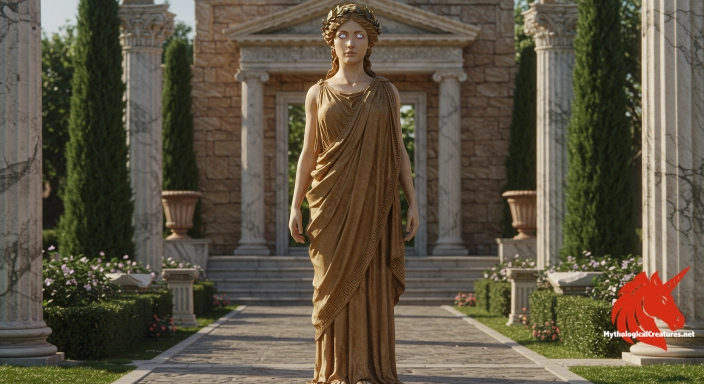
Tyche
Tyche - Personifies the unpredictable nature of fate in both personal and communal affairs, influencing events from natural phenomena to athletic victories.
the legend in five swipes.
the legend in five swipes.
Tyche: How the Story Began
Tyche emerges as a striking embodiment of fortune and the ever-changing destiny of cities. Rooted in the complex fabric of Greek mythology, she is traditionally believed to be the daughter of the Titans Tethys and Oceanus, or at times attributed as a progeny of Zeus, which underscores her divine origin and inherent authority. Early mythological accounts present her as a gentle guide offering hope and assurance during times of uncertainty, reflecting the anxieties and aspirations of urban life. Her role gradually evolved from simply heralding positive omens to symbolising the capricious nature of fate itself, bridging personal and civic destinies. Many ancient cities nurtured their own local manifestations of Tyche, each intricately linked to urban identity and communal pride. As cultural dynamics shifted during the Hellenistic period, her influence expanded dramatically, mirroring the political and social transformations of the era. Citizens looked to her not only for prosperity but also for explanations of sudden misfortunes that seemed beyond mortal control. The goddess’s multifaceted character made her a central figure in both religious practice and everyday life, uniting diverse communities in the quest for balance between stability and change. Her enduring myth continues to evoke a sense of mystery, reflecting the timeless interplay between chance, human endeavour, and divine intervention.
The Source Texts Behind Tyche
Ancient literary and archaeological sources provide a rich tapestry of references to Tyche, attesting to her widespread veneration. Historical writings mention her in contexts where inexplicable natural or political events were ascribed to her mysterious influence. Coins minted during the Hellenistic period, notably those from the reign of Demetrius I Soter, capture her image and serve as invaluable evidence of her cult status. Poetic works by eminent figures such as Pindar recount episodes where she intervened to grant victory, highlighting her role in both sport and society. In addition to literary sources, sculptural depictions and temple remains further illuminate the goddess’s iconography over successive generations. These varied sources provide insights not only into her divine attributes but also into the socio-political conditions that led communities to seek her favour during times of uncertainty. In several inscriptions and reliefs, localised versions of Tyche are documented, subtly differing in detail yet consistent in their core symbolism. The multiplicity of these sources underscores the adaptability of her myth, which allowed different cultures and eras to reinterpret her significance. Taken together, the surviving texts and artefacts weave a complex narrative that continues to intrigue scholars and enthusiasts of ancient mythology.
Tyche: Appearance and Abilities
Tyche is frequently depicted as a graceful figure whose physical attributes intricately symbolise both protection and the capriciousness of fate. In many classical images, she wears a distinctive mural crown that evokes the fortified walls of a city, emphasising her role as a guardian of urban prosperity. Her serene visage is often rendered with a calm and wise expression, reflecting an impartiality that mirrors the unpredictable swings of fortune. Artistic portrayals sometimes show her holding a cornucopia, a potent emblem of abundance and the blessings that can fall unexpectedly upon a community. In other representations, she is depicted grasping a rudder or similar navigational tool, symbolising her capacity to steer the destinies of cities through turbulent times. The style and intricacy of her garments often indicate the period and region of the artwork, ranging from detailed drapery in statues to simplified, bold lines in coin engravings. Variations in her portrayal reveal a blend of idealised beauty and symbolic regalia, with each depiction striving to capture the elusive balance between benevolence and impassivity. Through these artistic choices, Tyche’s physical iconography not only reflects her divine mandate but also serves as an ongoing metaphor for the transient and unpredictable nature of luck.
Where is the legend of Tyche strongest?
Tyche’s image and legend experienced significant regional adaptations as her worship spread throughout the ancient world. In many Greek cities, local versions of Tyche emerged that explicitly reflected the unique architectural and cultural landscapes of those urban centres. Urban deities often assumed traits that celebrated not just general fortune, but the specific civic identity and ambitions of the community that honoured them. In the Roman world, Tyche was frequently intertwined with the figure of Fortuna, yet her distinctive urban character remained prominent in public iconography and ritual practice. The Parthian Empire also embraced her symbolism, adapting her image in coins and royal imagery to bolster claims of legitimacy and control over a diverse populace. Local festivals and civic rites often celebrated her as an intrinsic patron who not only granted prosperity but also served as a reminder of the capricious nature of destiny. Differences in stylistic elements, such as the design of her crown or the depiction of attendant symbols like the cornucopia, highlight the regional creativity and cultural fusion inherent in her worship. These regional variations, while diverse, universally emphasise her central role in securing a favourable fate for both the individual and the community. Such adaptations underscore the fluid nature of mythmaking, where a single divine archetype can be reshaped to reflect the values and circumstances of different societies.
Tyche: Similar Beings in World Folklore
Comparative analysis reveals striking parallels between Tyche and other mythological figures associated with luck and fate across diverse cultures. While her Roman counterpart Fortuna shares many attributes with Tyche, the latter’s emphasis on the destiny of entire cities distinguishes her within the pantheon of fortune deities. Similar themes can be found in the mythologies of various cultures where divine feminine figures symbolise the balance between order and chaos, mirroring human experiences of success and setback. Parallels arise with deities such as the Hindu goddess Lakshmi, whose blessings signify wealth and fortune, and even with the downstream concepts embodied by the Norse Norns, though these figures focus more on predetermination than on urban wellbeing. Each of these deities encapsulates the ambivalence inherent in chance—bestowing abundance as readily as they might bring misfortune. Artistic and literary depictions across these traditions frequently employ common symbols like cornucopias or regal headdresses, highlighting a shared visual language of prosperity and fate. Despite differences in cultural context and emphasis, these figures collectively articulate humanity’s age-old struggle to understand and navigate the unpredictable forces that shape life. Through cross-cultural study, the enduring appeal of Tyche lies in her ability to universally represent a hopeful yet ultimately uncontrollable aspect of existence, a theme explored repeatedly in myths around the world. Thus, Tyche not only occupies a unique niche within Greek myth but also resonates with a broader, global archetype of fortune’s mercurial nature.
Tyche in Books, Film and Games
Tyche’s legacy has endured through the ages, evolving from an ancient deity of civic fortune into a symbol that continues to capture modern imaginings of luck and destiny. Her image, immortalised in Hellenistic coinage and public monuments, once served as a tangible reassurance to citizens that even amidst political upheaval and natural calamities, the divine maintained a measured balance. Over time, her representations transitioned from a specific guardian of cities to a broader icon of chance, influencing artistic and literary portrayals of fate. In periods of social and political transformation, her myth provided both solace and explanation for the fluctuating fortunes of communities. The legacy of Tyche is evident in the manner in which modern culture often references the idea of luck as a capricious and omnipresent force—sometimes benevolent, sometimes indifferent. Contemporary art, literature, and even popular media continue to draw upon the imagery and symbolism once dedicated to her, reflecting an enduring dialogue with the themes of fortune and destiny. Scholars and enthusiasts alike regard her as an emblem of the unpredictable interplay between human endeavour and the vast, uncontrollable forces of chance. As a result, Tyche’s story remains a powerful reminder of our perpetual fascination with fate and the quest for stability amid life’s inherent uncertainties.
Interesting Fact
An interesting observation about Tyche is that her iconography on coins and in art was adapted across multiple cultures, reflecting the universal human fascination with the forces of luck and destiny.
Mythological Treasures
Greek Myths: A field guide to the monsters of ancient Greece
Every monster here earned its place in legend, and each gets a full page of artwork and the story behind it.
Japanese Yokai: A field guide to the spirits and demons of Japanese folklore
Fifteen spirits, with the signs to watch for and what the old tales say to do if you meet one.
Norse Sagas: A field guide to the beasts of the Viking world
Drawn from the saga accounts themselves, with the powers, weaknesses and doom of each being set out.
the legend in five swipes.
For myth educators and toolmakers
Built a resource for mythology learners?
If you offer courses, teaching tools, or research platforms focused on myth and folklore, consider a discrete placement on our reference pages.
Introduce your resourceQuick Creature Info
Origin:
Features:
Associations:
Our Mythic Legendary Rating:

Also Sometimes Known As:
Habitat:
Supernatural Powers:
Physical Attributes:
Abilities:
Behavior:
Lore:
Related Creatures, Tales or Lore
- FFortuna
- MMoirai
- LLakshmi
References
Discover Another Mythical Legend You May Not Have Heard Of?
Uncover the mysteries of ancient folklore and expand your knowledge of legendary beings from cultures around the world.
Dare to Meet the Shiva....
The Mythological Creatures Book Series
Yokai, Greek, Norse, Egyptian & Chinese. Five illustrated field guides to the creatures the old stories either warned or told you about.




Curated by the Mythological Creatures Team
Series editor: Mythological Creatures Directory
Primary desk: Hellenic & Ancient Mediterranean Desk
(rev. November 2025)