
Shiva: Shiva is a principal Hindu deity known as The Auspicious One, revered as the Supreme Being in Shaivism and central to the cosmic cycle of creation, preservation, and destruction.
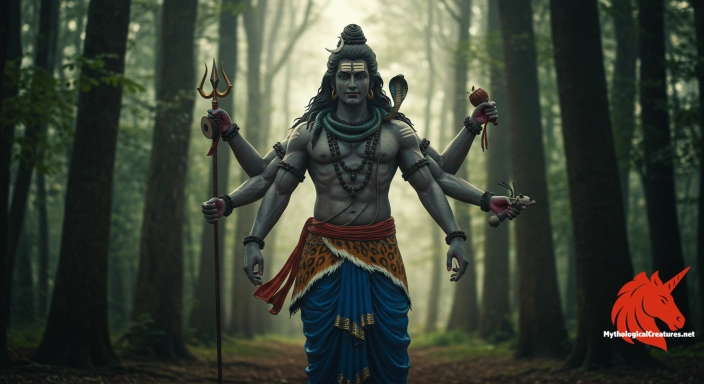
Shiva
Shiva - Embodies the cosmic cycle of creation, preservation, and dissolution, and is revered as the foremost yogi and spiritual guide in Hindu philosophy.
the legend in five swipes.
the legend in five swipes.
The First Records of Shiva
Shiva, known as 'The Auspicious One' and Mahadeva, stands as one of the most central and multifaceted deities in Hindu tradition. Emerging from ancient pre-Vedic roots, his persona has been refined over millennia into that of a supreme cosmic force whose roles span creation, preservation, and dissolution. Embodied in the complex interplay of paradoxes, he is revered not only as a fierce destroyer but also as a compassionate benefactor who nurtures the cycle of life. His dual existence as both an austere ascetic meditating on the peaks of the Himalayas and a devoted householder with Parvati and their children lends him a universal appeal. The narrative of Shiva intertwines themes of transcendence and intimacy, inviting devotees to explore the deeper mysteries of existence. This divine figure is celebrated in a wide spectrum of religious practices ranging from elaborate temple rituals to quiet contemplative meditation. His presence in sacred literature underscores a timeless message about the eternal cycles that govern the universe. The interconnectedness of his myth with philosophical ideas and cultural expressions makes him a pivotal character in the sprawling tapestry of Hindu mythology. Through his evocative symbolism, Shiva continues to inspire spiritual insight and artistic expression across diverse communities.
Which books and scrolls describe Shiva?
The many layers of Shiva’s mythology are preserved in an impressive array of ancient texts, beginning with early Vedic hymns where the fierce Rudra is seen as a prototype of his later form. Intricate narratives found in the Mahabharata, Ramayana, and the Puranas unravel a multifaceted character who oscillates between benevolence and formidable power. The Shiva Purana offers an in‐depth exploration of his cosmic adventures, illuminating his roles as both nurturer and destroyer. Complementing these canonical texts, the Linga Purana and Vayu Purana present additional facets that sometimes diverge in detail yet are unified by deep symbolic meaning. Regional oral traditions have also played a crucial role in shaping his ever-expanding legend, each retelling infusing new cultural nuances. Diverse storytellers have rendered his exploits more accessible, whether through meditative insights or by portraying his battles against demonic forces. These multiple textual and oral sources collectively reinforce the layered complexity of Shiva’s character. Varying accounts ensure that his myth remains dynamic and rich, capable of resonating with different audiences and spiritual seekers alike. The continual reinterpretation of his story stands as a testament to the enduring power of his symbolism.
Did Shiva have any weaknesses?
Shiva’s iconography is replete with striking details that immediately distinguish him from other deities. His skin, often rendered in hues of blue or ashen tones, evokes the limitless depth of the cosmic ocean and a presence beyond mortal bounds. The matted, flowing hair from which the sacred river Ganga is believed to pour forth symbolizes both purity and the perpetual stream of life. A luminous crescent moon adorns his head, a reminder of the cyclical nature of time and the eternal process of renewal. His single, potent third eye captures the essence of omniscient wisdom, capable of dispelling ignorance with a mere glance. Entwined around his neck, the serpent Vasuki represents the eternal cycle of regeneration and the duality of creation and destruction. Wielding the formidable trishula, or trident, he manifests the power to govern the forces of creation, preservation, and dissolution simultaneously. Whether depicted as an ascetic immersed in deep meditation or as the lively Nataraja—the cosmic dancer—each physical attribute is imbued with layers of symbolic meaning. Together, these features form a visual language that speaks to both the mystic and the mundane, inviting deeper reflection on the nature of existence.
Shiva: Regional Versions and Local Names
Across diverse cultural landscapes, the depiction of Shiva adapts to reflect local traditions and spiritual expressions. In South India, for instance, elaborate temple iconography celebrates him as Nataraja, the celestial dancer whose dynamic pose symbolises the relentless rhythm of the universe. Within the Himalayan belt, regional narratives accentuate his role as the solitary yogi, meditating amidst the stark, untamed beauty of lofty peaks. In many parts of India, he is seen as a compassionate family man, living harmoniously alongside his consort Parvati and their children, which adds a relatable human dimension to his otherwise transcendent presence. Beyond the Indian subcontinent, Southeast Asian cultures such as those in Bali and Java weave their own interpretations, blending indigenous aesthetics with Hindu motifs to honour his legacy. Nepalese art and tantric practices imbue Shiva with an enigmatic quality that is both mystical and accessible to the local populace. Folk traditions even cast him as a benevolent guardian spirit, a protector whose mythic powers secure communities against the forces of chaos. These regional variations not only highlight his adaptability but also underscore the universal themes of transformation and balance that his figure represents. Through these myriad local interpretations, the essence of Shiva resonates across time and geography, continuously evolving to meet the cultural needs of different peoples.
Shiva: Parallels in Other Cultures
Shiva’s profound duality and transformative energy have invited comparisons with a host of potent mythological figures around the world. The Norse god Odin, celebrated for his wisdom and shamanic quests, mirrors Shiva’s deep meditative pursuits and his enigmatic mastery of hidden truths. Similarly, aspects of his dynamic nature can be paralleled with Dionysus, whose association with both ecstasy and chaos reflects the delicate interplay between order and entropy. In many ways, his role as both creator and destroyer resonates with the dualistic spirits found in Celtic and Taoist traditions. The depiction of Shiva as Ardhanarishvara, seamlessly merging masculine and feminine principles, echoes a universal quest for harmony and balance across numerous cultures. Such archetypes underscore a common thread where divinity is portrayed as an embodiment of contradictory forces working in concert. The cross-cultural dialogues that emerge from these comparisons enrich our understanding of universal spiritual themes. Each tradition, while distinct in its portrayal, taps into the timeless narrative of cosmic transformation and the reconciliation of opposites. In this way, Shiva's myth becomes a bridge that connects diverse cultural symbols and philosophies, reflecting the shared human pursuit of understanding life’s mysteries.
Shiva in Books, Film and Games
Tracing the evolution of Shiva from the early rudimentary depictions of Rudra to the elaborate, multifaceted deity celebrated today reveals a journey rich in history and spiritual innovation. His image has been continuously refined through centuries of artistic, literary, and devotional contributions, each adding layers of depth to his character. Classical representations such as the Nataraja sculpture have immortalised his role as the cosmic dancer, symbolising an eternal play of creation and dissolution. As centuries passed, his narratives adapted to shifting spiritual, social, and philosophical contexts, ensuring that his allure remained vibrant among successive generations. In modern times, Shiva has transcended the confines of traditional religion to become a universal emblem of inner transformation, influencing contemporary practices in yoga, meditation, and holistic wellness. Modern art, cinema, and digital culture have embraced his iconography, reinterpreting its symbolism to address contemporary quests for meaning and balance. This dynamic evolution reflects how ancient myth continues to resonate in the modern world, merging timeless traditions with fresh perspectives. Today, Shiva’s legacy is not only enshrined in temple walls and sacred texts but also in everyday conversations about personal growth and spiritual liberation. His enduring myth encourages a continual reimagining of existence, inspiring both academic inquiry and personal devotion in an ever-changing cultural landscape.
Interesting Fact
One of the most intriguing aspects of Shiva is his ability to embody both extreme asceticism and vibrant family life simultaneously, illustrating the profound balance inherent in Hindu philosophy.
Mythological Treasures
Egyptian Legends: A field guide to the gods and monsters of ancient Egypt
Guardians of the living and devourers of the dead, with the role each played in judgement.
Chinese Beasts: A field guide to the dragons and demon kings of Chinese myth
From river dragons to demon kings, with the legends that shaped five thousand years of storytelling.
Japanese Yokai: A field guide to the spirits and demons of Japanese folklore
Fifteen spirits, with the signs to watch for and what the old tales say to do if you meet one.
the legend in five swipes.
For serious mythcraft
Your project belongs among the legends
If your work deepens how people understand, play with, or teach mythology, a sponsor placement here keeps it in front of the right readers all year.
Submit a sponsorship enquiryQuick Creature Info
Associations:
Our Mythic Legendary Rating:

Also Sometimes Known As:
Habitat:
Supernatural Powers:
Physical Attributes:
Abilities:
Behavior:
Lore:
References
Discover Another Mythical Legend You May Not Have Heard Of?
Uncover the mysteries of ancient folklore and expand your knowledge of legendary beings from cultures around the world.
Dare to Meet the Bistonis....

The Mythological Creatures Book Series
Yokai, Greek, Norse, Egyptian & Chinese. Five illustrated field guides to the creatures the old stories either warned or told you about.


Curated by the Mythological Creatures Team
Series editor: Mythological Creatures Directory
Primary desk: Asian & Pacific Myth Cycles Desk
(rev. November 2025)