
Vajrapani: Vajrapāṇi is a revered bodhisattva and dharmapala in Mahayana Buddhism.
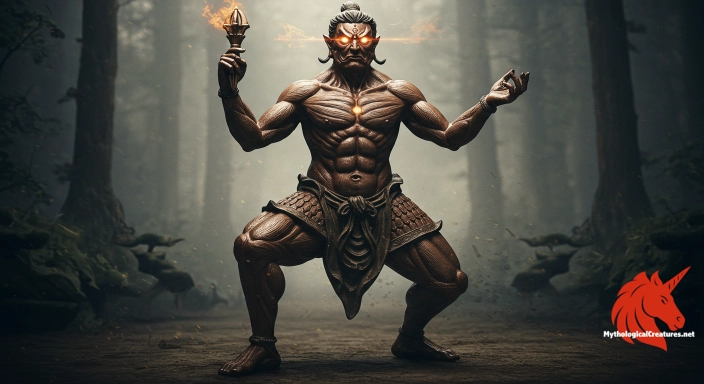
Vajrapani
Vajrapani - Symbolises the Buddha's power and serves as an early dharmapala protecting the Dharma.
Origins & First Encounters
Vajrapani emerges as a commanding figure within the tapestry of Buddhist mythology, revered as the embodiment of both strength and steadfast protection. His origins are traced back to the early days of Mahayana Buddhism, where he was recognised as a powerful bodhisattva charged with safeguarding the Buddha's spiritual realm. Over time, he became known by several names, including Chana Dorji and Chador, each reflecting his intrinsic association with the thunderbolt, or vajra. His first attestation appears in ancient Sanskrit and Pali texts, marking him as an early and influential guardian of the Buddha. Integral to the symbolic triad alongside Manjushri and Avalokiteśvara, Vajrapani represents the dynamic force of the Buddha’s power. His iconography, featuring ferocious demeanour and martial vigour, played an essential role in inspiring both devotees and artists alike. As a figure revered across different Buddhist schools, he transcends the boundaries of a single doctrine, resonating with those seeking both spiritual and physical strength. His mythos continues to be a source of inspiration, merging the ideals of compassion and might in a single, timeless persona. This enduring legacy has cemented his role as a protector and symbolic guide in the spiritual journeys of countless followers.
Source Texts & Tale Variants
Ancient literary sources paint a rich mosaic of Vajrapani’s character, with early mentions appearing in both Sanskrit scriptures and the Pali Canon. Textual traditions across Mahayana Buddhism elaborate on his unique role as the protector who embodies the Buddha’s formidable power. Numerous sutras and commentaries provide variant narratives that illustrate his emergence as a guardian deity, each echoing regional interpretations and ritual practices. In these texts, his mighty figure is interwoven with the transformative energies of the Buddha, highlighting an intrinsic link between physical potency and spiritual enlightenment. Complementing these canonical texts, regional folklore has enriched his story through oral traditions and local legends passed down over generations. Distinct portrayals in Tibetan, Chinese, and Japanese sources further amplify the multiplicity of his narrative, each contributing subtle nuances that reflect local cultural identities. Some variants emphasise his ability to ward off darkness and protect sacred spaces, particularly in monastic settings. The collated sources, both written and oral, provide an expansive view of his persona, ensuring that his myth remains both dynamic and multifaceted.
Form & Powers
Vajrapani’s physical depiction is characterised by an impressive blend of martial power and spiritual dignity. Often portrayed as a robust and muscular figure, his appearance exudes a fierce determination and unyielding energy. He is consistently shown clutching the vajra, a thunderbolt that not only symbolizes his protective power but also his role as a catalyst for divine strength. His countenance, marked by deep-set eyes and a determined gaze, conveys an intensity that mirrors the inner fire of steadfast resolve. Elaborate details, including ornate armour and traditional adornments, are common in his iconography, enhancing his formidable presence. In many artistic renditions, his bodily features are accentuated with dynamic lines and bold gestures, which capture the essence of a warrior devoted to preserving cosmic order. The artistic choices reflecting variations in size and posture across different media further illustrate a multifaceted approach to his portrayal. Each intricate detail—from the curve of his jaw to the grip on his vajra—serves as an emblem of his power to overcome both physical and metaphysical challenges.
Regional Faces
Across Asia, the portrayal of Vajrapani has been uniquely adapted to reflect diverse cultural landscapes and religious sensibilities. In India, his early representations adhere closely to classical Buddhist artistic conventions that underscore his role as a guardian of wisdom and power. Tibetan interpretations elevate him to a wrathful deity, where his fierce image is interlaced with local ritual practices and protective chants. In China, he is seamlessly integrated into the fabric of temple iconography, often appearing alongside other guardian figures to secure the sanctity of Buddhist temples. Taiwanese and Japanese portrayals similarly emphasise his dynamic role as a protector, frequently blending his traditional attributes with local mythic elements. Some regional variations further highlight his association with celestial phenomena like thunder and lightning, reinforcing his identity as the holder of universal power. This adaptability is a testament to his relevance, as each culture refines his narrative to suit its unique historical and spiritual context. The regional adaptations of Vajrapani not only underscore the universality of his protective energy but also contribute to a broader understanding of how mythic figures evolve in response to local beliefs.
Cultural Parallels
Vajrapani’s striking attributes invite compelling comparisons with protective deities from far-flung mythological traditions. His role as a wielder of the thunderbolt mirrors similar motifs found in Hindu mythology, where Indra’s vajra serves as a symbol of divine authority and might. Such imagery also resonates with figures in Western traditions, where deities like Zeus or Thor are celebrated for their command over lightning and their protective capacities. The recurrent theme of a celestial warrior who wields a potent, elemental weapon connects Vajrapani with a universal archetype of divine guardianship. This cross-cultural parallel allows for a meaningful exploration of how various mythologies use symbols to express shared human hopes for protection and cosmic order. His dual nature—embodying both fierce might and spiritual benevolence—corresponds well with similar guardian figures who strike a balance between adversity and compassion. Comparisons drawn with these figures serve to highlight not only Vajrapani’s distinct identity within Buddhism but also the common human quest to understand and harness the forces of nature. In synthesising these cultural parallels, it is evident that the art of myth-making often converges on motifs that celebrate the triumph of light over chaos.
Legacy & Modern Evolution
Throughout the centuries, the legacy of Vajrapani has evolved remarkably while retaining its core themes of guardianship and potent divine energy. Initially established as an indispensable protector in early Buddhist texts, his image was gradually embraced by many cultures, each adding layers of local symbolism and interpretative nuance. In modern times, his presence is vividly felt across diverse Buddhist traditions, from the austere halls of Tibetan monasteries to the intricately adorned temple gates in China and Japan. Contemporary art and media have also found inspiration in his formidable iconography, rendering him a timeless symbol of resilience and power. His modern depictions, whether in sculpture or digital art, continue to evoke a sense of awe, bridging ancient spiritual ideals with present-day expressions of faith. The evolution of scholarly and popular interpretations has ensured that his martial splendour remains relevant in a rapidly changing cultural landscape. This enduring respect is further reflected in practices ranging from meditation to martial arts, where his myth serves as a source of inner strength and protection. As adherents and enthusiasts continue to reinterpret his story, Vajrapani’s transformative power endures as a beacon of hope and divine intervention in the modern world.
Interesting Fact
Vajrapāṇi uniquely combines the roles of a compassionate guide and a fierce protector, reflecting the complex nature of divine power in Buddhism.
Limited sponsor opportunity
One slot, carefully chosen partners
We only feature a small number of relevant sponsors at any time. If you create serious myth content, we would like to hear from you.
Partner with usQuick Creature Info
Associations:
Our Mythic Legendary Rating:

Also Sometimes Known As:
Habitat:
Supernatural Powers:
Physical Attributes:
Abilities:
Behavior:
Lore:
Related Creatures, Tales or Lore
- AAvalokiteśvara
- MManjushri
- AAcala
References
Discover Another Mythical Legend You May Not Have Heard Of?
Uncover the mysteries of ancient folklore and expand your knowledge of legendary beings from cultures around the world.
Dare to Meet the Black Shuck....
Curated by the Mythological Creatures Team
Series editor: Mythological Creatures Directory
Primary desk: Asian & Pacific Myth Cycles Desk
(rev. November 2025)