
Vanara: Vanaras are a mythological race of forest-dwelling humanoid apes from Hindu mythology.
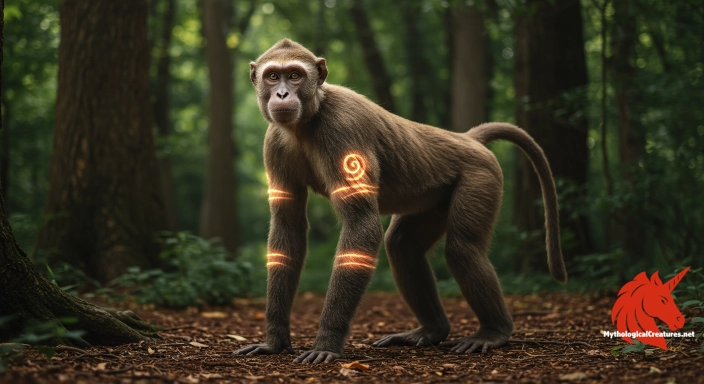
Vanara
Vanara - Represent the virtues of loyalty, strength, and the collective spirit against oppression in Hindu mythology.
Origins & First Encounters
The Vanaras are a fascinating group of mythological beings whose origins are deeply interwoven with the vibrant traditions of ancient Indian lore. Emerging from the timeless epics, they are first vividly depicted in the age-old narrative of the Ramayana, where their bravery and loyalty play a crucial role in the cosmic battle between good and evil. Their very name, meaning 'forest-dwellers', evokes an image of primal strength and an intrinsic connection with nature. Intriguingly, they portray a dual identity as both simian and humanoid, reflecting the delicate balance between wild instinct and human civilisation. The Vanaras are not merely warriors; they embody qualities of wisdom, resilience, and an unyielding spirit that celebrate the beauty of untamed nature. Their cultural presence speaks of a world where the divine and the natural seamlessly merge, offering a powerful allegory for the harmony between civilisation and the wilderness. The legendary accounts inspire both awe and spiritual reverence, symbolising an era when myth and nature were one. Over time, this mystique has ensured that the Vanaras continue to resonate with the collective imagination, transcending mere story to become emblems of worldly virtues. Their narrative, rich in symbolism and moral depth, has captivated audiences across generations. In every retelling, they remind us of an ancient world where nature’s raw beauty and human aspiration intertwined in epic grandeur.
Source Texts & Tale Variants
The earliest textual appearances of the Vanaras are found in the traditional verses of the Ramayana, a foundational epic that has shaped much of Indian cultural heritage. Their legendary adventures have been elaborated not only in the original Sanskrit texts but also in numerous regional reinterpretations that highlight different facets of their character. Several vernacular adaptations, including Tamil and Telugu versions, have enriched the core narrative with local colour and additional heroic exploits. Beyond the written word, art forms such as classical dance, temple murals, and folk theatre have preserved and elaborated on their mythic labours. Oral traditions passed down through generations continue to share variations of their stories, often tailored to reflect community values and environmental themes. These diverse texts and performances have, over centuries, allowed the Vanara myth to evolve while retaining its fundamental charm. Manuscripts and inscriptions discovered in ancient sites further attest to the profound reverence with which these creatures were once regarded. The multiplicity of story variants—from the grand epics of revered poets to lively local renditions—illustrates the dynamic nature of their myth. This layered corpus of narratives not only documents their heroic deeds but also serves as a mirror reflecting the changing social and spiritual fabric of the times. In sum, the Vanara tradition is sustained by a rich mosaic of primary sources and folkloric variants that continue to inspire and instruct.
Form & Powers
The Vanaras are consistently depicted as an enchanting blend of human and simian traits, rendering them both familiar and enigmatic. Their physical form is marked by an athletic build, agile movements, and a natural grace that speaks to their forest origins. Often, they are portrayed with a light covering of soft fur that lends an exotic yet approachable quality to their appearance. Their faces bear a striking resemblance to human expressions yet are imbued with a distinctly wild intensity, featuring bright, perceptive eyes that seem to mirror the mysteries of the jungle. Limbs that are long and flexible, coupled with a posture that exudes both strength and alertness, enable them to navigate arboreal heights with ease. Some depictions emphasise subtle simian features such as a slight tail or tufted hair, which further accentuate their unique hybridity. In a variety of artworks, variations in stature are observed, with some Vanaras appearing diminutive and sprightly while others command an imposing presence. Their physical portrayal is often enhanced by divine embellishments—radiant markings or an almost ethereal glow—that underscore their otherworldly lineage. Each detail, from the curve of a muscular limb to the expressive tilt of their head, serves as a reminder of their role as guardians of nature. The overall aesthetic of the Vanaras encapsulates a perfect synthesis of human ingenuity and the raw elegance of the wild.
Regional Faces
Across the diverse cultural landscapes of the Indian subcontinent and its neighbouring regions, the portrayal of the Vanaras has acquired distinctive local nuances. In southern India, elaborate temple festivals and classical dance dramas often feature the Vanaras as heroic figures, adorned with intricate costumes that highlight their divine attributes. In northern traditions, they are sometimes envisioned as mystical forest protectors, their adventures steeped in the rich folklore of rural communities. Southeast Asian adaptations have infused the myth with vibrant artistic interpretations, where sculptures and shadow puppetry bring to life the agile and comical aspects of these creatures. In places such as Bali and Java, the Vanara narrative is interwoven with indigenous beliefs and artistic expressions, resulting in a colourful tapestry of local legends. Folk performances and community festivals lend a unique local flavour, where the Vanaras are celebrated not only as warriors but also as emblematic figures of nature’s resilience. Variations in attire, physical gestures, and even the nature of their heroic exploits reflect regional artistic traditions and societal values. Iconography in various parts of the subcontinent may subtly adjust facial features or attire to better align with local aesthetics and narrative traditions. Such regional diversity underscores the flexibility of the Vanara myth, allowing it to be both universally recognisable and locally resonant. In every iteration, they continue to embody the enduring spirit of nature and the timeless appeal of mythic adventure.
Cultural Parallels
The Vanaras occupy a unique niche among mythological beings, inviting intriguing comparisons with other legendary entities from distinct cultural backgrounds. Certain aspects of their character strongly evoke similarities with the famed Monkey King, Sun Wukong, whose blend of mischievous agility and heroic tenacity is celebrated in East Asian folklore. Both figures are exemplary in their ability to transcend the ordinary, straddling the fine line that separates the wild from the wise. In a broader sense, the hybrid nature of the Vanaras finds echoes in various indigenous mythologies where animal symbolism is deeply interwoven with spiritual narratives. Mythical guardians and trickster figures in other cultures also reflect the interplay of human intellect and natural instinct that is so vividly portrayed in Vanara tales. These parallels highlight a shared human fascination with creatures that challenge conventional boundaries and embody both chaos and order. The symbolic resonance of such hybrid figures points to a universal desire to reconcile the untamed forces of nature with the constructs of civilisation. Cross-cultural analyses reveal that despite regional differences, these characters often serve analogous roles as custodians of nature, protectors of the innocent, and catalysts for transformative journeys. Their enduring legacies form a vibrant dialogue between myth and reality, bridging diverse cultural landscapes. Ultimately, the Vanaras and their counterparts offer profound insights into the collective human psyche, uniting disparate traditions through common themes of resilience and transcendence.
Legacy & Modern Evolution
The story of the Vanaras has demonstrated an extraordinary ability to evolve while retaining its core mythological essence over the centuries. Their initial depiction as fierce, enigmatic forest beings has gradually been enriched with layers of symbolism and cultural significance that extend into modern times. Ancient epic narratives have given way to a plethora of modern adaptations, including films, television series, and theatrical performances that continue to celebrate their heroic qualities. Iconic figures such as Hanuman, emblematic of the Vanara heritage, have become enduring cultural icons, revered by millions and celebrated in festivals and local traditions. Contemporary interpretations often highlight themes of loyalty, environmental stewardship, and the enduring struggle between good and evil, echoing the timeless spirit of the originals. Modern retellings frequently incorporate new technological media and narrative techniques to bring their dynamic story to a wider audience, ensuring that the myth remains both accessible and relevant. The enduring influence of the Vanaras can be seen in the way they inspire artists, writers, and cultural practitioners to explore the interface between mythology and modern life. Their depictions serve as a bridge between a richly storied past and an evolving present, symbolising the perpetual dialogue between humanity and nature. As environmental concerns and cultural rejuvenation take centre stage, the legacy of the Vanaras is continually reinvented, affirming their timeless appeal. In every iteration, they remain a testament to the enduring power of myth to adapt and inspire across generations.
Interesting Fact
A striking aspect of Vanara depictions is how their animalistic traits are seamlessly blended with human virtues, making them iconic figures in both traditional art and modern popular culture.
Reach myth fans
Connect your myth-driven brand with this audience
Our readers are writers, educators, gamers, and collectors who care about mythology. Enquire about a limited sponsor placement on creature pages.
Enquire about sponsorshipQuick Creature Info
Features:
Associations:
Our Mythic Legendary Rating:

Also Sometimes Known As:
Habitat:
Supernatural Powers:
Physical Attributes:
Abilities:
Behavior:
Lore:
Related Creatures, Tales or Lore
- HHanuman
- SSugriva
- SSun Wukong
References
Discover Another Mythical Legend You May Not Have Heard Of?
Uncover the mysteries of ancient folklore and expand your knowledge of legendary beings from cultures around the world.
Dare to Meet the Vengeful ghost....
Curated by the Mythological Creatures Team
Series editor: Mythological Creatures Directory
Primary desk: Asian & Pacific Myth Cycles Desk
(rev. November 2025)