
Vengeful ghost: A vengeful ghost is a restless spirit of a person who returns from the afterlife with a desire for retribution.
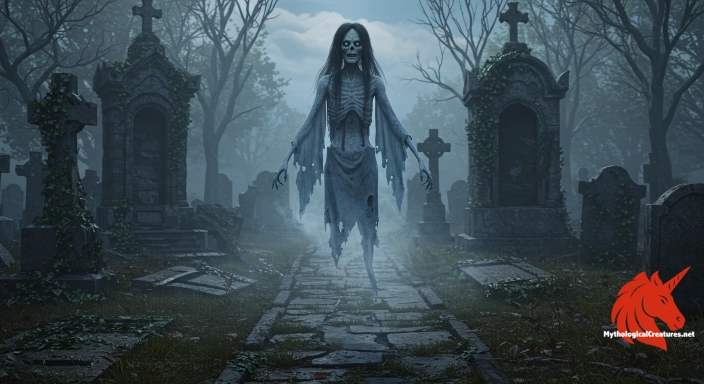
Vengeful ghost
Vengeful ghost - Represents the enduring impact of unjust death and the importance of proper rites for the dead.
Origins & First Encounters
The vengeful ghost emerges in myth as a powerful embodiment of unresolved injustice and lingering sorrow, often depicted as a soul compelled to return for righteous retribution. This archetype is rooted in ancient customs and cultural practices that emphasise the sanctity of proper burial and the moral imperatives surrounding death. The stories originate from periods when the spiritual integrity of the deceased was believed to influence the fortunes of the living. In many traditional tales, the ghost is a tragic figure whose untimely demise and untended rituals give rise to a restless presence. The character of this spirit carries with it an intrinsic connection to the nuances of guilt, betrayal, and the urgent need for balance between the natural and supernatural worlds. Its emergence is laced with both terror and sympathy, inviting observers to reflect on the consequences of human cruelty and neglect. Entities of this kind challenge the boundary between mortal existence and the afterlife, perpetually echoing the call for lost justice. The recurring theme of retribution in these narratives underscores a tension between the inevitable cycle of death and the enduring impact of unatoned misdeeds. Over time, the ghost has become a cultural symbol for the disturbed equilibrium caused by deviations from sacred rites and moral norms. The perpetual allure of these stories ensures that the vengeful ghost retains a vital space in the collective mythos of various societies.
Source Texts & Tale Variants
Early records and oral recitations have long preserved the narratives of these vengeful apparitions in diverse cultural anthologies. Multiple sources ranging from ancient scriptures to local ballads recount encounters with spirits driven by a desire for retribution after a wrongful death. Varied texts from Eastern and Western traditions illustrate different aspects of this phenomenon, each adding unique details to the evolving legend. Some manuscripts offer elaborate accounts of the conditions that lead to the ghost’s transformation, such as unfulfilled funeral rites or particularly cruel ends. Regional folklore has enriched these tales by integrating indigenous rituals, thereby lending the ghost a distinct local flavour in each narrative. Versions of the story differ markedly: while one tradition may stress the spirit’s relentless pursuit of personal enemies, another might focus on its role as a warning against social transgression. Oral traditions have played a significant role, with storytellers adjusting and reinterpreting the ghost’s intent to suit the moral framework of their time. Fragments of these ancient narratives have been preserved in literature and ephemeral art across centuries, creating a patchwork of accounts that resonate with universal themes. Each dimension in these sources contributes to a multifaceted portrayal that is both timeless and adaptable. Together, the diversity of sources reflects a collective human effort to understand and articulate the profound interplay between justice, grief, and the afterlife.
Form & Powers
The physical manifestation of the vengeful ghost is often portrayed as both ethereal and disturbingly tangible, with a translucent form that seems to fluctuate in and out of the visible realm. A common description is that of a figure draped in tattered remnants of clothing, evoking a bygone era that hints at what once was refined and respectful. The ghost frequently appears shrouded in a pallid, almost luminescent aura that lends an eerie glow against dark backgrounds. Facial features, when discernible, are typically set in a state of anguish and fury, with eyes that mirror years of unresolved pain. Some depictions include dishevelled hair that floats as if caught in an unending spectral breeze, adding to the overall sensation of eternal unrest. There is an atmosphere of decay about the figure, as though time itself has eroded both body and soul, leaving behind a fragmented imprint. Despite the ghost’s intangible nature, accounts often allude to specific physical anomalies such as elongated limbs or distorted shadows that deepen the mystery surrounding its form. The interplay between material remnants and otherworldly luminescence creates an image that is as haunting as it is arresting. In many accounts, this visual complexity is intended to symbolise both the corruption of life cut short and the residual energy of a profound injustice. Such detailed portrayals leave a lasting impression on those who dare to glimpse into the realm where human frailty meets supernatural retribution.
Regional Faces
The portrayal of the vengeful ghost adapts notably with regional cultural values and local traditions, resulting in a multitude of interpretations that reflect the unique subtleties of each heritage. In East Asian lore, spirits with a thirst for vengeance are often depicted with an ethereal grace, clothed in flowing white or grey garments, and their sorrowful demeanour is amplified by long, unkempt hair. European renditions tend to highlight the ghost’s menacing aspects, often portraying the spectre as a foreboding reminder of historical injustices and personal betrayals steeped in local legend. In South Asian cultures, the concept of a wronged spirit intersects with beliefs in reincarnation and karmic debt, imbuing the ghost with both a moral warning and an opportunity for cosmic balance. North American indigenous narratives sometimes weave the ghost’s tale with elements of the natural world, where the spirit’s anger is mirrored in the forces of nature. Latin American traditions, meanwhile, frequently cast these entities as tragic figures whose lingering presence serves as both curse and cautionary tale. African folklore also accommodates parallel tales where restless souls emerge due to the disruption of sacred rites, rendering each appearance a blend of superstition and ancestral warning. These regional variations emphasise local customs, rituals, and historical contexts that have shaped the ghost’s distinctive features over time. Integrating elements of myth, ritual, and history, each regional version presents a unique fusion of fear and reverence that underscores our collective anxieties about death and injustice. This widespread yet varied depiction reinforces the ghost’s role as an enduring symbol of unheeded moral imperatives across cultures.
Cultural Parallels
When compared with spectral figures from other mythological traditions, the vengeful ghost stands alongside a host of similarly charged entities that traverse the boundary between life and death. Its narrative is often juxtaposed with that of the Japanese onryo, whose elegance and tragic desire for vengeance highlight a striking resemblance in both form and emotional tone. In Celtic mythology, apparitions such as wraiths similarly embody the spirit of retribution and existential sorrow, underlining universal themes of unassuaged grief and unsettled accounts. Many cultural myths from various regions converge on the idea that a ghost’s return is driven by circumstances that disturb the natural order, whether through personal betrayal or neglected ritual. Comparative texts reveal that, despite marked differences in presentation, all such avatars share a profound link to the human condition, particularly the deep sense of injustice stemming from an untimely or unhonoured death. The parallel narratives not only validate the ghost’s archetypal role but also underline an inherent human fear of a disruptive retribution that transcends cultural boundaries. Each tradition employs its unique narrative devices—ranging from stylistic elegance to raw, unbridled horror—yet the underlying message remains consistent. As a motif, the ghost invites audiences to engage with complex ideas about morality, accountability, and the relentless passage of time. This cross-cultural resonance highlights how folklore adapts similar metaphors to explain and mediate the difficulties in reconciling life with unpredictable loss. In this way, the vengeful ghost contributes simultaneously to local mythologies and a global dialogue on the ethics of remembrance and retribution.
Legacy & Modern Evolution
The evolution of the vengeful ghost throughout history reveals a striking shift from a purely cautionary symbol to a complex character imbued with modern psychological depth and social commentary. Originating as an ominous reminder of neglected rituals and personal retribution, the ghost has gracefully traversed centuries, adapting to the medium of oral tradition, literature, and eventually cinema. In its earliest incarnations, the spirit served as a dire warning to those who failed to honour their dead, underscoring the intertwined nature of life, death, and duty. As contemporary society has evolved, so too have interpretations of the vengeful ghost, which is now frequently portrayed as a victim of circumstances, caught between the desire for revenge and the despair of unfulfilled closure. Modern retellings often infuse the spectral narrative with psychological complexity, reflecting on themes of isolation, moral ambiguity, and the pervasive impact of trauma. This dynamic shift is evident in popular culture, where films, novels, and stage productions reimagine these ghosts in settings that resonate with the challenges of modern life. The ghost has also become an allegory for broader societal issues, echoing the struggles inherent in the quest for justice and the redress of historical wrongs. Contemporary depictions underscore a multifaceted legacy, wherein the ghost is simultaneously feared as an agent of retribution and mourned as a tragic remnant of unresolved human conflict. This journey from the annals of folklore to modern artistic representation illustrates the timeless nature of the narrative, ensuring that the vengeful ghost remains a powerful symbol even in a rapidly changing world. Its continued presence in cultural discourse invites reflection on the enduring interplay between memory, justice, and the inevitability of mortality.
Interesting Fact
Vengeful ghosts are a cross-cultural phenomenon, adapting their characteristics based on regional beliefs and often becoming central figures in local legends of retribution and justice.
Partner with Mythological Creatures
Bring your myth-based world into ours
From game settings to narrative worlds, we work with partners who treat myths with care. Share your project for a potential sponsor slot.
Partner with usQuick Creature Info
Our Mythic Legendary Rating:

Also Sometimes Known As:
Habitat:
Supernatural Powers:
Physical Attributes:
Abilities:
Behavior:
Weaknesses:
Lore:
Related Creatures, Tales or Lore
References
Discover Another Mythical Legend You May Not Have Heard Of?
Uncover the mysteries of ancient folklore and expand your knowledge of legendary beings from cultures around the world.
Dare to Meet the Giu....
-227996a8-c562-416e-adec-02028643f851_small.webp "Depiction of Giu")
Curated by the Mythological Creatures Team
Series editor: Mythological Creatures Directory
Primary desk: Northern & European Folklore Desk
(rev. November 2025)